Overview
This unit explores the pathophysiological process of illness and disease from a clinical perspective. You will learn about the terminology, etiology, mechanisms and effects of diseases on the human body. You will develop a conceptual understanding of clinical presentation of disease through case-based learning. Case studies will be used to integrate knowledge of anatomy and physiology to discuss how normal functioning of the human body can become altered in a disease state. Attending weekly learning activities at the Rockhampton or Bundaberg campuses is mandatory.
Details
Pre-requisites or Co-requisites
BMSC11007 and BMSC11008
Important note: Students enrolled in a subsequent unit who failed their pre-requisite unit, should drop the subsequent unit before the census date or within 10 working days of Fail grade notification. Students who do not drop the unit in this timeframe cannot later drop the unit without academic and financial liability. See details in the Assessment Policy and Procedure (Higher Education Coursework).
Offerings For Term 2 - 2026
Attendance Requirements
All on-campus students are expected to attend scheduled classes - in some units, these classes are identified as a mandatory (pass/fail) component and attendance is compulsory. International students, on a student visa, must maintain a full time study load and meet both attendance and academic progress requirements in each study period (satisfactory attendance for International students is defined as maintaining at least an 80% attendance record).
Recommended Student Time Commitment
Each 6-credit Undergraduate unit at CQUniversity requires an overall time commitment of an average of 12.5 hours of study per week, making a total of 150 hours for the unit.
Class Timetable
Assessment Overview
Assessment Grading
This is a graded unit: your overall grade will be calculated from the marks or grades for each assessment task, based on the relative weightings shown in the table above. You must obtain an overall mark for the unit of at least 50%, or an overall grade of 'pass' in order to pass the unit. If any 'pass/fail' tasks are shown in the table above they must also be completed successfully ('pass' grade). You must also meet any minimum mark requirements specified for a particular assessment task, as detailed in the 'assessment task' section (note that in some instances, the minimum mark for a task may be greater than 50%). Consult the University's Grades and Results Policy for more details of interim results and final grades.
All University policies are available on the CQUniversity Policy site.
You may wish to view these policies:
- Grades and Results Policy
- Assessment Policy and Procedure (Higher Education Coursework)
- Review of Grade Procedure
- Student Academic Integrity Policy and Procedure
- Academic Progression Policy and Procedure
- Student Refund and Credit Balance Policy and Procedure
- Complaints Policy and Procedure
- Information and Communications Technology Acceptable Use Policy and Procedure
This list is not an exhaustive list of all University policies. The full list of University policies are available on the CQUniversity Policy site.
Feedback, Recommendations and Responses
Every unit is reviewed for enhancement each year. At the most recent review, the following staff and student feedback items were identified and recommendations were made.
Feedback from BMSC12017 Online Survey
The majority of the students indicated that the tutorial structure had a significant positive impact on developing a variety of academic capabilities, including knowledge development, professional communication skills, transferable/work-ready skills, and overall engagement.
Maintain and continue the current tutorial structure, as it effectively supports the development of academic capabilities, professional communication, transferable skills, and student engagement.
Feedback from BMSC12017 Online Survey
Students noted that the tutorials supported effective learning strategies, including proactive learning, building confidence in speaking about medical terminology in front of the class, and enhancing general presentation skills.
Continue designing tutorials that actively promote proactive learning, opportunities for students to practice medical terminology through speaking, and the development of general presentation skills.
Feedback from Personal reflection
Some lecture sessions may have been longer than optimal, potentially impacting student engagement and concentration.
Incorporate brief interactive activities and question and answer opportunities at regular intervals throughout the lectures to maintain student engagement and concentration.
- Discuss the basic physiological processes that underpin human disease
- Explain the terminology, etiology and mechanisms of disease processes
- Describe the correlation of pathophysiological mechanisms of disease with clinical presentations
- Apply knowledge of normal anatomy and physiology to pathophysiological conditions
- Apply effective team communication to critically evaluate clinical cases
Alignment of Assessment Tasks to Learning Outcomes
| Assessment Tasks | Learning Outcomes | ||||
|---|---|---|---|---|---|
| 1 | 2 | 3 | 4 | 5 | |
| 1 - Written Assessment - 30% | |||||
| 2 - On-campus Activity - 40% | |||||
| 3 - In-class Test(s) - 30% | |||||
Alignment of Graduate Attributes to Learning Outcomes
| Graduate Attributes | Learning Outcomes | ||||
|---|---|---|---|---|---|
| 1 | 2 | 3 | 4 | 5 | |
| 1 - Communication | |||||
| 2 - Problem Solving | |||||
| 3 - Critical Thinking | |||||
| 4 - Information Literacy | |||||
| 5 - Team Work | |||||
| 6 - Information Technology Competence | |||||
| 7 - Cross Cultural Competence | |||||
| 8 - Ethical practice | |||||
| 9 - Social Innovation | |||||
| 10 - First Nations Knowledges | |||||
| 11 - Aboriginal and Torres Strait Islander Cultures | |||||
Textbooks
Applied Pathophysiology: A Conceptual Approach
- 4th edition (2022)
- Authors: Nath, Judi & Braun, Carie
- Wolters Kluwer
- Philadelphia Philadelphia , PA , USA
- ISBN: 9781975179199
Principles of Pathophysiology
- 3rd edition (2023)
- Authors: Bullock, Shane & Hales, Majella
- Pearson Education
- Victoria , Australia
- ISBN: 9780655708377
IT Resources
- CQUniversity Student Email
- Internet
- Unit Website (Moodle)
All submissions for this unit must use the referencing style: Harvard (author-date)
For further information, see the Assessment Tasks.
r.j.batacan@cqu.edu.au
Week 1
Begin Date: 13 Jul 2026Module/Topic
Cellular and Tissue Pathophysiology
Chapter
Chapter 1 & 2 (Nath & Braun)
Chapter 1 (Bullock & Hales)
Events and Submissions/Topic
Week 2
Begin Date: 20 Jul 2026Module/Topic
Inflammation and Tissue Repair
Chapter
Chapter 3 (Nath & Braun)
Chapter 3 (Bullock & Hales)
Events and Submissions/Topic
Week 3
Begin Date: 27 Jul 2026Module/Topic
Neoplasia
Chapter
Chapter 7 (Nath & Braun)
Chapter 5 (Bullock & Hales)
Events and Submissions/Topic
Week 4
Begin Date: 03 Aug 2026Module/Topic
Fluid, Electrolyte, Acid-Base and Renal Pathophysiology
Chapter
Chapter 8, 9 & 18 (Nath & Braun)
Chapter 30, 31, 32, 33 & 34 (Bullock & Hales)
Events and Submissions/Topic
Week 5
Begin Date: 10 Aug 2026Module/Topic
Nervous System Pathophysiology
Chapter
Chapter 10 (Nath & Braun)
Chapter 9, 10 & 11 (Bullock and Hales)
Events and Submissions/Topic
Week 6
Begin Date: 17 Aug 2026Module/Topic
Disorders of the Somatic and Special Senses
Chapter
Chapter 12 (Nath & Braun)
Chapter 13 & 14 (Bullock & Hales)
Events and Submissions/Topic
Vacation Week
Begin Date: 24 Aug 2026Module/Topic
Chapter
Events and Submissions/Topic
Week 7
Begin Date: 31 Aug 2026Module/Topic
Endocrine Pathophysiology
Chapter
Chapter 13 & 20 (Nath & Braun)
Chapter 16, 17, 18, 19 & 20 (Bullock & Hales)
Events and Submissions/Topic
Week 8
Begin Date: 07 Sep 2026Module/Topic
Cardiovascular Pathophysiology
Chapter
Chapter 16 (Nath & Braun)
Chapter 21, 22, 23 & 24 (Bullock & Hales)
Events and Submissions/Topic
Week 9
Begin Date: 14 Sep 2026Module/Topic
Pulmonary Pathophysiology
Chapter
Chapter 15 (Nath & Braun)
Chapter 26, 27, 28 & 29 (Bullock & Hales)
Events and Submissions/Topic
Week 10
Begin Date: 21 Sep 2026Module/Topic
Gastrointestinal Pathophysiology
Chapter
Chapter 17 & 18 (Nath & Braun)
Chapter 35, 36, 37 & 38 (Bullock & Hales)
Events and Submissions/Topic
Week 11
Begin Date: 28 Sep 2026Module/Topic
Reproductive Pathophysiology
Chapter
Chapter 14 (Nath & Braun)
Chapter 39 & 40 (Bullock & Hales)
Events and Submissions/Topic
Week 12
Begin Date: 05 Oct 2026Module/Topic
Musculoskeletal and Integumentary System Pathophysiology
Chapter
Chapter 41, 42, 43 & 44 (Bullock & Hales)
Events and Submissions/Topic
Exam Week
Begin Date: 12 Oct 2026Module/Topic
Chapter
Events and Submissions/Topic
Vacation/Exam Week
Begin Date: 19 Oct 2026Module/Topic
Chapter
Events and Submissions/Topic
The Unit Coordinator is Dr Romeo Batacan Jr (r.j.batacan@cqu.edu.au; Ph (07) 4930 9278). Dr Batacan is a medical doctor (MD) who also has a PhD in Biomedical Science.
The teaching team consists of Dr Romeo Batacan Jr. and Dr Sarah-Jane Gregory. Dr Batacan will deliver live lectures and tutorials in Rockhampton. Dr Gregory will deliver live lectures and tutorials in Bundaberg.
Live lectures and on-campus activities will be held each week from the Rockhampton and Bundaberg campuses. Recordings of the lectures will be available on the unit's Moodle site for all students to access. The on-campus activity will consist of group case discussions. Each week, students will be randomly allocated to one of two groups, each working on a different case scenario.
1 Written Assessment
Rationale
In the clinical context, health professionals are expected to have in-depth knowledge and understanding of pathophysiological processes and their interrelationships. Demographic trends indicate a rise in aging populations alongside increasingly complex morbidities, necessitating a thorough grasp of healthcare dynamics. This assessment requires you to construct links between pathophysiology, etiology, risk factors, clinical presentations, and diagnosis; reflecting the level of comprehension essential for effective clinical communication. You must be able to give evidence-based advice within your scope of practice to educate patients and address healthcare disparities.
Task
You will be provided with an authentic clinical case study on the Moodle site. You are required to identify information within the case study which is relevant to the aspects of the disease process. You are then required to complete a written response to questions related to your case study to demonstrate your understanding of the links between pathophysiology, etiology, risk factors, clinical manifestations, and diagnosis.
Guidelines to complete the written response and the marking rubric will be available on the Moodle site.
Level of GenAI use allowed:
Level 3: You may use AI to assist with specific tasks such as drafting text, refining and evaluating your work. You must critically evaluate and modify any AI-generated content you use.
In developing your assignment, you should consult peer-reviewed journal articles and referenced textbooks. Extensive use of non-peer-reviewed sources of information is strongly discouraged.
If Generative AI is used in any way, it must be cited as per the CQU Guidelines (Academic Learning Centre). The following statement must be completed and included on the front page of the uploaded assessment:
"I have used (insert technology) to (insert how you used this) in accordance with the requirements of this unit. The reason I used this was to (explain why you used it). The details of how I used it as (insert how). I hereby declare that the submission is an appropriate representation of my individual skills and abilities to meet the requirements of the task/s."
As per academic writing requirements and assessment criteria, citations of information should be of the primary source (i.e. statistics returned by AI must be fact-checked and referenced from their original source as well as the AI source). Failure to cite primary sources as well as AI sources could be considered a breach of academic integrity.
Your use of Generative AI must be clearly outlined in an appendix including the prompt used and Generative AI response. Failure to include an appendix may result in academic integrity investigation.
Week 9 Friday (18 Sept 2026) 5:00 pm AEST
Week 12 Wednesday (7 Oct 2026)
Your submission will be assessed according to a detailed marking rubric which is available on the Moodle site.
Assessments submitted after the 72-hour grace period with no approved extension will incur a penalty of 5% per calendar day, from the end of the grace period.
- Describe the correlation of pathophysiological mechanisms of disease with clinical presentations
- Apply knowledge of normal anatomy and physiology to pathophysiological conditions
2 On-campus Activity
Rationale
The group case discussions aim to bridge theoretical knowledge with practical application, fostering a comprehensive understanding of healthcare challenges. Through diverse case scenarios, students will enhance their collaborative skills which are essential in healthcare practice. Engaging in active discussions and subsequent presentations promotes critical thinking and effective communication; preparing students to navigate complex clinical scenarios with confidence and competence.
Task
This assessment consists of 10 weekly interactive clinical case study sessions held on-campus from Week 2 through Week 11. The purpose of these sessions is to bridge theoretical knowledge with practical application, allowing you to develop essential collaborative, critical thinking, and clinical reasoning skills in a low-stakes environment.
Each weekly session is worth 10 marks and is split into two distinct, policy-compliant components to measure both your teamwork and your individual comprehension:
1. Group Case Analysis & Submission (6 Marks — Group Grade): You will be randomly allocated to a collaborative team each week and assigned a clinical case scenario. Within your team, you will analyse the case, apply pathophysiological concepts, and answer targeted clinical questions. Your team must submit your completed responses online via Moodle within the first hour of the session, including appropriate citations of your source information (5 marks). All active members of the group receive the same mark for this component. Following submission, students will participate in a presentation of their findings to practice professional oral communication skills (1 mark).
2. Individual Comprehension Checkpoint (4 Marks — Individual Grade): At the conclusion of the peer presentations and group discussions, every student will independently complete a brief, automated quiz on Moodle via their own device. This checkpoint features standard, pre-determined questions based on the core clinical themes of that week's case studies. This ensures complete equity across the cohort and verifies your individual grasp of the material without relying on ad-hoc tutor questioning.
Attendance is mandatory. Students who do not attend a session will receive 0 marks for both components of that week's activity unless a formal application for a make-up session is approved with valid documentation.
Level of GenAI use allowed:
Level 1: You must not use Al at any point during the assessment. You must demonstrate your core skills and knowledge.
The 72-hour grace period does not apply to this assessment.
Weekly, prior to the end of each scheduled session (Weeks 2–11; 10 sessions total).
Marks and feedback will be available within Moodle prior to the next scheduled session.
Written Group Response (5 marks)
The written group response will be assessed using a marking key. Marks will be awarded for the accuracy and completeness of responses to the case study questions, including the appropriate application of pathophysiological concepts, clinical reasoning, and use of supporting evidence where required.
Group Presentation (1 mark)
Students will receive 1 mark for presenting their group's findings and contributing to the class discussion.
Individual Comprehension Checkpoint (4 marks)
The individual Moodle quiz will assess each student's understanding of the key concepts and clinical reasoning addressed during the session. Marks will be awarded based on the number of correct responses.
- Discuss the basic physiological processes that underpin human disease
- Explain the terminology, etiology and mechanisms of disease processes
- Describe the correlation of pathophysiological mechanisms of disease with clinical presentations
- Apply effective team communication to critically evaluate clinical cases
3 In-class Test(s)
You will be required to complete an end-of-term online test in class. This online test will assess all content covered throughout the term from weeks 1 to 12. The test will be composed of different question types that will assess your understanding and application of key concepts discussed in the unit. More information regarding this assessment will be made available to students on Moodle.
Level of GenAI use allowed:
Level 1: You must not use Al at any point during the assessment. You must demonstrate your core skills and knowledge.
The 72-hour grace period does not apply to this assessment.
Exam Week Wednesday (14 Oct 2026) 5:00 pm AEST
All students undertake the in-class online test in person on campus.
28 October 2026
Each question will be allocated a specific number of marks. Questions will be marked as per marking scheme.
- Discuss the basic physiological processes that underpin human disease
- Explain the terminology, etiology and mechanisms of disease processes
- Apply knowledge of normal anatomy and physiology to pathophysiological conditions
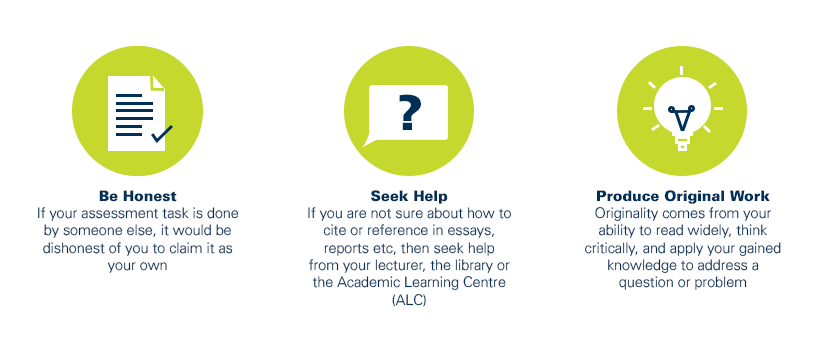
As a CQUniversity student you are expected to act honestly in all aspects of your academic work.
Any assessable work undertaken or submitted for review or assessment must be your own work. Assessable work is any type of work you do to meet the assessment requirements in the unit, including draft work submitted for review and feedback and final work to be assessed.
When you use the ideas, words or data of others in your assessment, you must thoroughly and clearly acknowledge the source of this information by using the correct referencing style for your unit. Using others’ work without proper acknowledgement may be considered a form of intellectual dishonesty.
Participating honestly, respectfully, responsibly, and fairly in your university study ensures the CQUniversity qualification you earn will be valued as a true indication of your individual academic achievement and will continue to receive the respect and recognition it deserves.
As a student, you are responsible for reading and following CQUniversity’s policies, including the Student Academic Integrity Policy and Procedure. This policy sets out CQUniversity’s expectations of you to act with integrity, examples of academic integrity breaches to avoid, the processes used to address alleged breaches of academic integrity, and potential penalties.
What is a breach of academic integrity?
A breach of academic integrity includes but is not limited to plagiarism, self-plagiarism, collusion, cheating, contract cheating, and academic misconduct. The Student Academic Integrity Policy and Procedure defines what these terms mean and gives examples.
Why is academic integrity important?
A breach of academic integrity may result in one or more penalties, including suspension or even expulsion from the University. It can also have negative implications for student visas and future enrolment at CQUniversity or elsewhere. Students who engage in contract cheating also risk being blackmailed by contract cheating services.
Where can I get assistance?
For academic advice and guidance, the Academic Learning Centre (ALC) can support you in becoming confident in completing assessments with integrity and of high standard.
What can you do to act with integrity?