Assessment Task 1 Assessment Due Date: Part A, B, C, and D are Due Friday 17:00 AEST of Weeks 3 (31 July), 6 (21 August), 9 (18 September) and 11 (2 October) respectively.
Overview
In this unit, you will advance your knowledge of the structure of cells and how they integrate into specific tissues or organs within our body systems. You will learn how cells utilise key signalling and molecular processes to proliferate and differentiate into tissues with physiological and functional properties. You will also learn how cells communicate with neighbouring cells and the extracellular environment, and the importance of this in maintaining homeostasis. You will gain knowledge in cellular pathophysiology and understand key cellular processes that are disrupted during the development of particular diseases. Finally you will have the opportunity to apply the knowledge gained in a practical environment during laboratory practical sessions.
Details
Pre-requisites or Co-requisites
Pre-requisiteBMSC12012 Molecular Cell Biology
Important note: Students enrolled in a subsequent unit who failed their pre-requisite unit, should drop the subsequent unit before the census date or within 10 working days of Fail grade notification. Students who do not drop the unit in this timeframe cannot later drop the unit without academic and financial liability. See details in the Assessment Policy and Procedure (Higher Education Coursework).
Offerings For Term 2 - 2026
Attendance Requirements
All on-campus students are expected to attend scheduled classes - in some units, these classes are identified as a mandatory (pass/fail) component and attendance is compulsory. International students, on a student visa, must maintain a full time study load and meet both attendance and academic progress requirements in each study period (satisfactory attendance for International students is defined as maintaining at least an 80% attendance record).
Recommended Student Time Commitment
Each 6-credit Undergraduate unit at CQUniversity requires an overall time commitment of an average of 12.5 hours of study per week, making a total of 150 hours for the unit.
Class Timetable
Assessment Overview
Assessment Grading
This is a graded unit: your overall grade will be calculated from the marks or grades for each assessment task, based on the relative weightings shown in the table above. You must obtain an overall mark for the unit of at least 50%, or an overall grade of 'pass' in order to pass the unit. If any 'pass/fail' tasks are shown in the table above they must also be completed successfully ('pass' grade). You must also meet any minimum mark requirements specified for a particular assessment task, as detailed in the 'assessment task' section (note that in some instances, the minimum mark for a task may be greater than 50%). Consult the University's Grades and Results Policy for more details of interim results and final grades.
All University policies are available on the CQUniversity Policy site.
You may wish to view these policies:
- Grades and Results Policy
- Assessment Policy and Procedure (Higher Education Coursework)
- Review of Grade Procedure
- Student Academic Integrity Policy and Procedure
- Academic Progression Policy and Procedure
- Student Refund and Credit Balance Policy and Procedure
- Complaints Policy and Procedure
- Information and Communications Technology Acceptable Use Policy and Procedure
This list is not an exhaustive list of all University policies. The full list of University policies are available on the CQUniversity Policy site.
Feedback, Recommendations and Responses
Every unit is reviewed for enhancement each year. At the most recent review, the following staff and student feedback items were identified and recommendations were made.
Feedback from Student feedback, Unit Coordinator, Teaching Staff, Technical Staff
The volume of activities and learning in the Residential School was challenging to complete in 2 days.
Explore extending the residential school to 3 days to allow for easier completion of all tasks and better embedding of knowledge.
Feedback from Student feedback
The structure of lectures could be revised to more explicitly align the content with each learning objective.
Divide lectures into sections with explicit reference to each learning objective.
Feedback from SUTE data
Some students did not feel that the unit provided useful knowledge / skills.
Emphasise application of the unit content in students' future medical sciences careers and the relevance to their degree overall. Provide clinically relevant examples in tutorials and lectures.
- Evaluate the cellular and molecular processes that lead to coordinated and regulated activity in tissues of the body
- Describe how specific cell structures achieve their respective cellular functions
- Explain how changes at the cellular level can influence host tissue physiology
- Explain the basic role of the fundamental signalling pathways as effectors in maintaining homeostasis
- Demonstrate sound scientific reasoning and application in experimental design and research.
Alignment of Assessment Tasks to Learning Outcomes
| Assessment Tasks | Learning Outcomes | ||||
|---|---|---|---|---|---|
| 1 | 2 | 3 | 4 | 5 | |
| 1 - Case Study - 20% | |||||
| 2 - Laboratory/Practical - 0% | |||||
| 3 - Practical Assessment - 30% | |||||
| 4 - Examination - 50% | |||||
Alignment of Graduate Attributes to Learning Outcomes
| Graduate Attributes | Learning Outcomes | ||||
|---|---|---|---|---|---|
| 1 | 2 | 3 | 4 | 5 | |
| 1 - Communication | |||||
| 2 - Problem Solving | |||||
| 3 - Critical Thinking | |||||
| 4 - Information Literacy | |||||
| 5 - Team Work | |||||
| 6 - Information Technology Competence | |||||
| 7 - Cross Cultural Competence | |||||
| 8 - Ethical practice | |||||
| 9 - Social Innovation | |||||
| 10 - First Nations Knowledges | |||||
| 11 - Aboriginal and Torres Strait Islander Cultures | |||||
Textbooks
Molecular Pathology: The Molecular Basis of Human Disease
- Edition: 2nd (2017)
- Authors: Coleman, W. & Tsongalis, G.
- ISBN: 9780128027615
- Binding: Hardcover
IT Resources
- CQUniversity Student Email
- Internet
- Unit Website (Moodle)
- Zoom
- Microsoft Powerpoint (or similar)
All submissions for this unit must use the referencing styles below:
For further information, see the Assessment Tasks.
a.balzer@cqu.edu.au
Week 1
Begin Date: 13 Jul 2026Module/Topic
Molecular pathology: apoptosis and inflammation
Chapter
1 - 5
Events and Submissions/Topic
Week 2
Begin Date: 20 Jul 2026Module/Topic
Epithelial tissue: structure, function and types
Chapter
No chapter
Events and Submissions/Topic
Week 3
Begin Date: 27 Jul 2026Module/Topic
Personalized medicine and molecular diagnosis of human disease
Chapter
6 - 13, 30, 31, and 32
Events and Submissions/Topic
Assessment 1 Part A Due Friday 17:00 AEST 31 July
Week 4
Begin Date: 03 Aug 2026Module/Topic
Cellular function of skin including molecular basis of disease
Chapter
27
Events and Submissions/Topic
Week 5
Begin Date: 10 Aug 2026Module/Topic
Cellular function of blood including molecular basis of disease
Chapter
15, 16, and 17
Events and Submissions/Topic
Week 6
Begin Date: 17 Aug 2026Module/Topic
Cellular function of the liver and kidneys including molecular basis of disease
Chapter
20 and 24
Events and Submissions/Topic
Assessment 1 Part B Due Friday 17:00 AEST 21 July
Vacation Week
Begin Date: 24 Aug 2026Module/Topic
Chapter
Events and Submissions/Topic
Week 7
Begin Date: 31 Aug 2026Module/Topic
Cellular function of the exocrine and endocrine system including molecular basis of disease
Chapter
21 and 22
Events and Submissions/Topic
ROK & MIX Assessment 2 Part A Due 17:00 AEST 6 September
Week 8
Begin Date: 07 Sep 2026Module/Topic
Cellular function of the prostate and breast including molecular basis of disease
Chapter
25 and 26
Events and Submissions/Topic
ROK & MIX Residential School
ROK & MIX Assessment 2 Part B + Assessment 3 Due 17:00 AEST 9 September
Week 9
Begin Date: 14 Sep 2026Module/Topic
Cellular function of the cardiovascular system including molecular basis of disease
Chapter
14
Events and Submissions/Topic
Assessment 1 Part C Due Friday 17:00 AEST 18 September
Week 10
Begin Date: 21 Sep 2026Module/Topic
Cellular function of the musculoskeletal system including molecular basis of disease
Chapter
28
Events and Submissions/Topic
BDG Residential School
BDG Assessment 2 Part A Due 17:00 AEST T22 September
BDG Assessment 2 Part B + Assessment 3 Due 17:00 AEST 25 September
Week 11
Begin Date: 28 Sep 2026Module/Topic
Cellular function of the nervous system including molecular basis of disease
Chapter
29
Events and Submissions/Topic
Assessment 1 Part D Due Friday 17:00 AEST 2 October
Week 12
Begin Date: 05 Oct 2026Module/Topic
Revision week
Chapter
Events and Submissions/Topic
Exam Week
Begin Date: 12 Oct 2026Module/Topic
Chapter
Events and Submissions/Topic
Vacation/Exam Week
Begin Date: 19 Oct 2026Module/Topic
Chapter
Events and Submissions/Topic
Students are required to contribute 12.5 hours per week to this subject.
Students will be provided with the following:
- 1 x 2 hour lecture
- 1 x 1 hour tutorial
Students are required to engage in self-directed study and preparation of assessments throughout the term. Attendance at Residential School is required and you must meet the laboratory and practical competencies to pass.
Any queries can be directed to the Unit Coordinator. Any subject related questions should be posted to Moodle and a response can be expected within 1 working day.
1 Case Study
Students will complete four case studies throughout the term (Part A, B, C, D). These cases will require you to apply knowledge from lectures and tutorials to clinical and research scenarios and investigate the underlying mechanisms of cell and tissue function/dysfunction.
In each case you will be required to display your understanding of the cellular and molecular processes that are occurring, identify specific molecular processes that are disrupted in pathologies/conditions versus the homeostatic condition, and how these affect tissue form and function.
The case studies may require you to access and utilise publicly available databases / or web-based simulation resources and interpret the information elicited from these to evaluate molecular or cellular information relevant to the case presented.
Each of the four cases cases is worth 5%, comprising a total of 20% of your unit mark. You must achieve 50% of the grade cumulatively across the four cases combined to pass this assessment item.
Level of GenAI use allowed: Level 3 You may use Al to assist with specific tasks such as drafting text, refining and evaluating your work. You must critically evaluate and modify any Al-generated content you use.
The 72 hour grace period applies to this assessment.
Part A, B, C, an D are Due Friday 17:00 AEST of Weeks 3 (31 July), 6 (21 July), 9 (18 September) and 11 (2 October) respectively.
Results will be released to students within 2 weeks of submission.
Marks will be allocated based on:
- the correct identification of key cellular and molecular processes occurring in each case,
- identification of key pathways that maintain homeostasis in normal physiology,
- identification of underlying molecular mechanisms that affect cell and tissue function,
- identification of tissue level (dys)function changes based on cellular mechanisms,
- correct interpretation of testing information relevant to cell, molecular and tissue based functions,
- correct utility of databases and simulations / correct outcomes of their use.
- Evaluate the cellular and molecular processes that lead to coordinated and regulated activity in tissues of the body
- Describe how specific cell structures achieve their respective cellular functions
- Explain how changes at the cellular level can influence host tissue physiology
- Explain the basic role of the fundamental signalling pathways as effectors in maintaining homeostasis
2 Laboratory/Practical
Part A
Prior to the lab you will be required to complete an online module with embedded questions to ensure you are prepared for residential school.
Part B
During the Residential School, you will be assessed on your ability to:
- work safely and professionally in a laboratory environment;
- complete experimental protocols;
- and complete written and/or verbal tasks to demonstrate sound scientific reasoning and application in experimental design and research
The laboratory manual will be provided on the unit Moodle page.
Level of GenAI use allowed: Level 2 AI PLANNING, Al may be used for pre-task activities such as brainstorming, outlining and initial research. This level focuses on the effective use of Al for planning, synthesis, and ideation, but assessments should emphasise the ability to develop and refine these ideas independently.
The 72-hour grace period does not apply to this assessment item.
Please see MyCQU for residential school dates. Part A - the pre-lab quiz will be due on the day prior to the residential school start date. Part B - Students will be assessed at residential school.
Part A - students will recieve an immediate grade and feedback when completing the pre-lab online quiz. Part B - Feedback and grading will be completed throughout the residential school.
Part A
You will be graded on the correctness of your answers to the questions presented, all of which refer to the laboratory manual and practical's you will undertake. You must get all items correct to pass. You will have a maximum of 5 attempts.
Part B
The Residential School is compulsory, and you must meet the laboratory and skills based competencies to pass the unit.
During the residential school you will be assessed on:
- safe and professional conduct in the laboratory,
- demonstration of appropriate experimental design and research,
- completion of experimental work / experimental outcomes.
The laboratory manual will contain a list of all the competencies and will be available on Moodle.
The 72-hour grace period does not apply to this assessment item.
- Demonstrate sound scientific reasoning and application in experimental design and research.
3 Practical Assessment
During the Residential School you will be required to perform experimental protocols.
You will be expected to complete a laboratory workbook throughout the sessions.
The questions presented will require you to:
- define experimental aims and hypotheses,
- record your experimental observations,
- interpret and analyse experimental outcomes,
- present visual representations of experimental information,
- perform calculations (basic and statistical),
- identify sources of error.
The workbook to be completed will be uploaded to Moodle in advance. Marks for each item in the workbook will be clearly presented.
Level of GenAI use allowed: Level 3 You may use Al to assist with specific tasks such as drafting text, refining and evaluating your work. You must critically evaluate and modify any Al-generated content you use.
The 72 hour grace period applies to this assessment.
Due at the completion of residential school. Check MyCQU for dates.
Grades will be returned 2 weeks after submission.
Marks will be allocated based on demonstration of the following criteria:
- appropriately defined experimental aims and hypotheses,
- accurate recording of experimental observations,
- correct interpretation and analysis of experimental outcomes,
- scientifically suitable presentation of experimental analysis (e.g. graphs and tables),
- correct calculations and statistical analysis,
- appropriate identification of sources of error.
Marks associated with each question will be clearly indicated.
The 72 hour grace period applies to this assessment.
- Evaluate the cellular and molecular processes that lead to coordinated and regulated activity in tissues of the body
- Demonstrate sound scientific reasoning and application in experimental design and research.
Examination
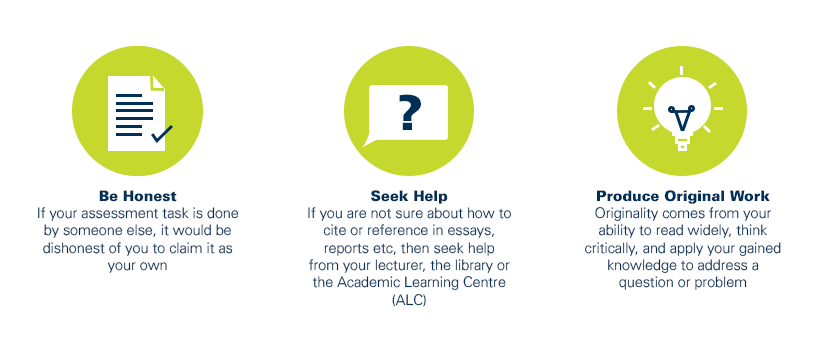
As a CQUniversity student you are expected to act honestly in all aspects of your academic work.
Any assessable work undertaken or submitted for review or assessment must be your own work. Assessable work is any type of work you do to meet the assessment requirements in the unit, including draft work submitted for review and feedback and final work to be assessed.
When you use the ideas, words or data of others in your assessment, you must thoroughly and clearly acknowledge the source of this information by using the correct referencing style for your unit. Using others’ work without proper acknowledgement may be considered a form of intellectual dishonesty.
Participating honestly, respectfully, responsibly, and fairly in your university study ensures the CQUniversity qualification you earn will be valued as a true indication of your individual academic achievement and will continue to receive the respect and recognition it deserves.
As a student, you are responsible for reading and following CQUniversity’s policies, including the Student Academic Integrity Policy and Procedure. This policy sets out CQUniversity’s expectations of you to act with integrity, examples of academic integrity breaches to avoid, the processes used to address alleged breaches of academic integrity, and potential penalties.
What is a breach of academic integrity?
A breach of academic integrity includes but is not limited to plagiarism, self-plagiarism, collusion, cheating, contract cheating, and academic misconduct. The Student Academic Integrity Policy and Procedure defines what these terms mean and gives examples.
Why is academic integrity important?
A breach of academic integrity may result in one or more penalties, including suspension or even expulsion from the University. It can also have negative implications for student visas and future enrolment at CQUniversity or elsewhere. Students who engage in contract cheating also risk being blackmailed by contract cheating services.
Where can I get assistance?
For academic advice and guidance, the Academic Learning Centre (ALC) can support you in becoming confident in completing assessments with integrity and of high standard.
What can you do to act with integrity?