Overview
This unit will provide you with evidence based learning and practice to maximise your diagnostic capabilities for the accurate detection, identification and management of infectious diseases of humans. This unit will provide you with a comprehensive knowledge and understanding of infectious diseases, the laboratory identification of causative pathogens as well as their pathogenicity and epidemiology. The unit will also include provision of the skills necessary to undertake common practical laboratory processes in clinical bacteriology.
Details
Pre-requisites or Co-requisites
Prerequisite: MBIO19012 Microbiology Co-requisite: BMSC12012 Molecular Cell Biology or BIOL12106 Molecular Biology
Important note: Students enrolled in a subsequent unit who failed their pre-requisite unit, should drop the subsequent unit before the census date or within 10 working days of Fail grade notification. Students who do not drop the unit in this timeframe cannot later drop the unit without academic and financial liability. See details in the Assessment Policy and Procedure (Higher Education Coursework).
Offerings For Term 1 - 2026
Attendance Requirements
All on-campus students are expected to attend scheduled classes - in some units, these classes are identified as a mandatory (pass/fail) component and attendance is compulsory. International students, on a student visa, must maintain a full time study load and meet both attendance and academic progress requirements in each study period (satisfactory attendance for International students is defined as maintaining at least an 80% attendance record).
Recommended Student Time Commitment
Each 6-credit Undergraduate unit at CQUniversity requires an overall time commitment of an average of 12.5 hours of study per week, making a total of 150 hours for the unit.
Class Timetable
Assessment Overview
Assessment Grading
This is a graded unit: your overall grade will be calculated from the marks or grades for each assessment task, based on the relative weightings shown in the table above. You must obtain an overall mark for the unit of at least 50%, or an overall grade of 'pass' in order to pass the unit. If any 'pass/fail' tasks are shown in the table above they must also be completed successfully ('pass' grade). You must also meet any minimum mark requirements specified for a particular assessment task, as detailed in the 'assessment task' section (note that in some instances, the minimum mark for a task may be greater than 50%). Consult the University's Grades and Results Policy for more details of interim results and final grades.
All University policies are available on the CQUniversity Policy site.
You may wish to view these policies:
- Grades and Results Policy
- Assessment Policy and Procedure (Higher Education Coursework)
- Review of Grade Procedure
- Student Academic Integrity Policy and Procedure
- Academic Progression Policy and Procedure
- Student Refund and Credit Balance Policy and Procedure
- Complaints Policy and Procedure
- Information and Communications Technology Acceptable Use Policy and Procedure
This list is not an exhaustive list of all University policies. The full list of University policies are available on the CQUniversity Policy site.
Feedback, Recommendations and Responses
Every unit is reviewed for enhancement each year. At the most recent review, the following staff and student feedback items were identified and recommendations were made.
Feedback from SUTE data
More interactive resources could be added to the unit.
The use of Kahoot! and interactive weekly practice quizzes will be explored to enhance student learning.
Feedback from Self-reflection
Greater integration of newer technologies into the residential school would enhance the "job readiness" of students.
The possibility of sourcing and integrating newer technologies into the residential school will be investigated to assess feasability.
- Discuss the clinical significance and laboratory detection of bacterial commensal flora, pathogens and opportunistic pathogens of each of the human body systems
- Appraise the use of molecular techniques for identifying bacteria causing human disease
- Use practical skills to isolate, identify and test the basic antimicrobial resistance of pathogenic bacteria
- Discuss the mechanisms of antimicrobial resistance in bacteria
- Apply appropriate quality control processes for the practice of bacteriology.
Alignment of Assessment Tasks to Learning Outcomes
| Assessment Tasks | Learning Outcomes | ||||
|---|---|---|---|---|---|
| 1 | 2 | 3 | 4 | 5 | |
| 1 - Laboratory/Practical - 0% | |||||
| 2 - Presentation - 20% | |||||
| 3 - Written Assessment - 30% | |||||
| 4 - Examination - 50% | |||||
Alignment of Graduate Attributes to Learning Outcomes
| Graduate Attributes | Learning Outcomes | ||||
|---|---|---|---|---|---|
| 1 | 2 | 3 | 4 | 5 | |
| 1 - Communication | |||||
| 2 - Problem Solving | |||||
| 3 - Critical Thinking | |||||
| 4 - Information Literacy | |||||
| 5 - Team Work | |||||
| 6 - Information Technology Competence | |||||
| 7 - Cross Cultural Competence | |||||
| 8 - Ethical practice | |||||
| 9 - Social Innovation | |||||
| 10 - First Nations Knowledges | |||||
| 11 - Aboriginal and Torres Strait Islander Cultures | |||||
Textbooks
Bailey and Scott's Diagnostic Microbiology
- 16th edition (2025)
- Authors: Patricia M Tile
- Elsevier
- St Louis St Louis , Missouri , USA
- ISBN: 9780443118913
- Binding: Other
Additional Textbook Information
Paper and eBook copies can be purchased at the University Shop here: https://shop.cqu.edu.au/
IT Resources
- CQUniversity Student Email
- Internet
- Unit Website (Moodle)
- Zoom (both microphone and webcam capability)
All submissions for this unit must use the referencing styles below:
For further information, see the Assessment Tasks.
w.deasy@cqu.edu.au
Week 1
Begin Date: 09 Mar 2026Module/Topic
Staphylococci/Streptococci
Chapter
Bailey and Scott's Diagnostic Microbiology Chapters 13 and 14 (15th Ed)
Events and Submissions/Topic
Recorded Lecture and Live/Zoom Tutorial:
Welcome to the unit and an overview of the subject content, learning materials and assessments.
Week 2
Begin Date: 16 Mar 2026Module/Topic
Aerobic Gram positive bacilli/ Filamentous Gram positive bacilli
Chapter
Bailey and Scott's Diagnostic Microbiology Chapters 15,16, 17 and 18 (15th Ed)
Events and Submissions/Topic
Recorded Lecture and Live/Zoom Tutorial on week 1 content
Week 3
Begin Date: 23 Mar 2026Module/Topic
Enterobacterales/Pathogenic Enterobacterales
Chapter
Bailey and Scott's Diagnostic Microbiology Chapter 19 (15th Ed)
Events and Submissions/Topic
Recorded Lecture and Live/Zoom Tutorial on week 2 content
Week 4
Begin Date: 30 Mar 2026Module/Topic
Oxidase positive Gram negative bacilli/Facultative Gram negative bacilli
Chapter
Bailey and Scott's Diagnostic Microbiology Chapters 20 21, 22, 25, 29, 31, 32, 33, 34, 35, 36, 37 and 38 (15th Ed)
Events and Submissions/Topic
Recorded Lecture and Live/Zoom Tutorial on week 3 content
Week 5
Begin Date: 06 Apr 2026Module/Topic
Gram negative cocci - Moraxella catarrhalis and Neisseriaceae/Anaerobes
Chapter
Bailey and Scott's Diagnostic Microbiology Chapters 39, 40 and 41 (15th Ed)
Events and Submissions/Topic
Recorded Lecture and Live/Zoom Tutorial on week 4 content
Week 6
Begin Date: 13 Apr 2026Module/Topic
Mycobacteria/Spirochaetes, Mycoplasmas & Ureaplasma, Chlamydiae and Rickettsiae
Chapter
Bailey and Scott's Diagnostic MicrobiologyChapters 42, 43, 44, and 45 (15th Ed)
Events and Submissions/Topic
Live/recorded Lecture and Zoom Tutorial on week 5 content
Vacation Week
Begin Date: 20 Apr 2026Module/Topic
Individual study time
Chapter
Events and Submissions/Topic
Week 7
Begin Date: 27 Apr 2026Module/Topic
Urinary tract infections, Antimicrobial therapies and Antibiotic resistance
Chapter
Bailey and Scott's Diagnostic Microbiology Chapter 72 (15th Ed)
Events and Submissions/Topic
Recorded Lecture and Live/Zoom Tutorial on week 6 content
Week 8
Begin Date: 04 May 2026Module/Topic
Eye, ear, nose and throat & respiratory tract infections
Chapter
Bailey and Scott's Diagnostic Microbiology Chapters 68, 69 and 71 (15th Ed)
Events and Submissions/Topic
Recorded Lecture and Live/Zoom Tutorial on week 7 content
Compulsory Residential School: 05/05/2026 to 07/05/2026
Journal Club Presentation Due: Week 8 Thursday (7 May 2026) 1:00 pm AEST
Week 9
Begin Date: 11 May 2026Module/Topic
Skin, soft tissue and wound infections
Chapter
Bailey and Scott's Diagnostic Microbiology Chapter 75 (15th Ed)
Events and Submissions/Topic
Recorded Lecture and Live/Zoom Tutorial on week 8 content
Residential School Practical Due: Week 9 Thursday (14 May 2026) 5:00 pm AEST
Week 10
Begin Date: 18 May 2026Module/Topic
Genital tract infections and Gastrointestinal tract infections
Chapter
Bailey and Scott's Diagnostic Microbiology Chapters 73 and 74 (15th Ed)
Events and Submissions/Topic
Recorded Lecture and Live/Zoom Tutorial on week 9 content
Written Assessment Due: Week 10 Thursday (21 May 2026) 5:00 pm AEST
Week 11
Begin Date: 25 May 2026Module/Topic
Infections of sterile sites / Automation and molecular testing
Chapter
Bailey and Scott's Diagnostic Microbiology Chapters 76, 72, 77 and 8 (15th Ed)
Events and Submissions/Topic
Recorded Lecture and Live/Zoom Tutorial on week 10 content
Week 12
Begin Date: 01 Jun 2026Module/Topic
Testing for antimicrobial susceptibility
Chapter
Bailey and Scott's Diagnostic Microbiology Chapter 11 (15th Ed)
Events and Submissions/Topic
Recorded Lecture and Live/Zoom Tutorial on week 11 content
Exam Week
Begin Date: 08 Jun 2026Module/Topic
Chapter
Events and Submissions/Topic
Vacation/Exam Week
Begin Date: 15 Jun 2026Module/Topic
Chapter
Events and Submissions/Topic
The unit coordinator for BMSC12011 in term 1 2026 is Dr Will Deasy.
All lectures are pre-recorded and all tutorials are delivered both live and over Zoom
1 Presentation
During this assessment students will work in pairs to present a recent, high impact journal article (last 3 years) within the discipline of diagnostic microbiology to the class on the final day of the residential school. The presentation will incorporate information regarding aims, methods, outcomes and relevance to provide context to the paper's contribution to both the literature and to microbiology as a whole.
The 72-hour grace period does not apply to this assessment.
Level of GenAI use allowed: Level 2: You may use AI for planning, idea development, and research. Your final submission should show how you have
developed and refined these ideas.
Week 8 Thursday (7 May 2026) 1:00 pm AEST
Presentation will occur on the final day of the residential school
Week 9 Thursday (14 May 2026)
Feedback and marks will be available through Moodle
Students will work in pairs to prepare a 10 minute journal club presentation using a high impact paper in the field of microbiology from the past 3 years. The presentation will provide:
- Introduce the topic of the chosen paper and cover the background material in sufficient detail to allow the audience to understand the entirety of the presented material (10 marks).
- Provides a detailed overview of the aims and hypotheses of the chosen paper (10 marks).
- Discuss the methods and the key outcome measures used with a description of why these measures were chosen (10 marks).
- Provide a detailed explanation of the study outcomes and provide a strong reflection on how these outcomes met/did not meet the study aims (15 marks).
- Provide a thoughtful analysis of the study’s impact on the field of microbiology and/or clinical diagnostics. Demonstrate the magnitude of this impact to the audience in a clear and concise way that allows them to understand the position of the research within the literature (25 marks).
- Provide realistic and informed options for future research and/or how this current research could be impact laboratory diagnostics in human health (10 marks)
- Presentation (10 marks).
- Contribution to presentation (10 marks).
As per academic writing requirements and assessment criteria; citations of information should be of the primary source (i.e statistics returned by AI must be fact-checked and referenced from their original source as well as the AI source). Failure to cite primary sources as well as AI sources could be considered breach of academic integrity.
- Discuss the clinical significance and laboratory detection of bacterial commensal flora, pathogens and opportunistic pathogens of each of the human body systems
- Appraise the use of molecular techniques for identifying bacteria causing human disease
2 Laboratory/Practical
This unit has a compulsory 3-day residential school that runs on the Rockhampton North Campus. Students will undertake the laboratory analysis of case studies in clinical microbiology, designed to mimic true diagnostic microbiology laboratory cases. Students will be required to document their observations and findings in a laboratory workbook which will be provided on the Unit Moodle Site. Assessment for this task will be through the submission of student's laboratory workbooks. Criteria for the workbook assessment will also be available through Moodle.
The 72-hour grace period does not apply to this assessment.
Level of GenAI use allowed: Level 1: You must not use AI at any point during the assessment. You must demonstrate your core skills and knowledge.
Week 9 Thursday (14 May 2026) 5:00 pm AEST
The Lab workbook will be submitted via the Unit Moodle site.
Week 11 Thursday (28 May 2026)
Assessment will be returned via Turnitin feedback studio in Moodle.
Students will be assessed on their practicals skills including staining, biochemical testing and rapid testing techniques and assessed using through submission of their laboratory workbook. Students require a total score of 50% on their workbook submission to achieve a pass grade.
- Use practical skills to isolate, identify and test the basic antimicrobial resistance of pathogenic bacteria
- Apply appropriate quality control processes for the practice of bacteriology.
3 Written Assessment
This assessment is an opportunity to research in further detail the application of assays based on the polymerase chain reaction (PCR) and matrix-assisted laser desorption ionization time of flight mass spectrometry (MALDI-TOF-MS) for specific bacterial pathogen detection in terms of diagnostic technology.
The application of these two assays to the clinical microbiology laboratory has revolutionized diagnosis in terms of speed and enhanced specificity. In this assessment you will choose one group of clinically significant bacteria for example, Staphylococci, Streptococci, Salmonella, E. coli, Pseudomonas (A complete list will be available on the Moodle site) and complete a 2500 word literature review on the application of PCR and MALDI-TOF technology in detection of these pathogens.
You will also be required to provide a background on the pathogenicity of your chosen bacterium and on the technical development of PCR and MALDI-TOF, providing an assessment of their diagnostic utility for the identification of your chosen organism in diagnostic pathology.
To achieve this you will need to:
1: Choose a specific bacterium from a list of clinically relevant bacteria which will be available on the Moodle site. If you are unsure of the suitability of your choice for this assessment, please consult with the unit coordinator. A comprehensive explanation of the defining features of each of the bacteria will be available through the learning materials provided during Week 2.
2: Research the literature relevant to your chosen bacterium. Scientific journal articles should form the basis for this literature search.
3: Prepare a 2500 literature review summarizing the application of both PCR and MALDI-TOF in detection of the bacterium protein, with appropriate citation to your sources of literature.
Level of GenAI use allowed: Level 2: You may use AI for planning, idea development, and research. Your final submission should show how you have
developed and refined these ideas.
Week 10 Thursday (21 May 2026) 5:00 pm AEST
Please submit this assessment via the unit Moodle site.
Week 12 Thursday (4 June 2026)
Return will be online via the Turnitin feedback studio.
Provide a succinct introduction of the chosen microorganism and both techniques, covering all aspects relevant to both the disease/s and the organism responsible. Cover all important aspects of the organisms pathogenicity including major virulence factors, toxins etc. Provide a succinct description of the selected studies including the methods used, the results obtained. Analyse and contextualise the results and quality assurance data presented. Provide a conclusion that provides a detailed comparison of both techniques including a thoughtful discussion of the strengths and weaknesses of both assays when compared to both each other and to both standard culture techniques and other assays used in diagnostic microbiology laboratories.
- Discuss the clinical significance and laboratory detection of bacterial commensal flora, pathogens and opportunistic pathogens of each of the human body systems
- Appraise the use of molecular techniques for identifying bacteria causing human disease
Examination
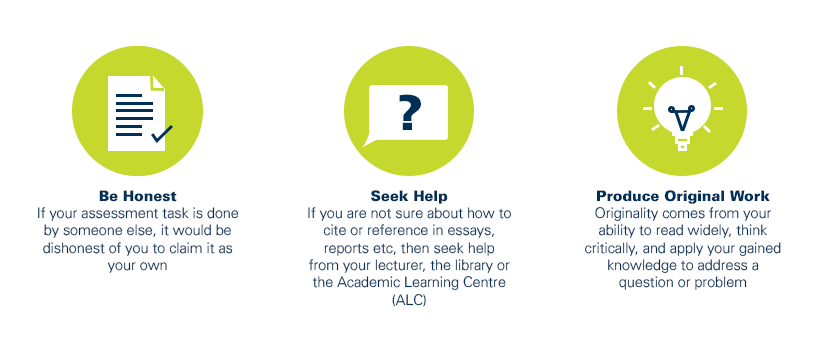
As a CQUniversity student you are expected to act honestly in all aspects of your academic work.
Any assessable work undertaken or submitted for review or assessment must be your own work. Assessable work is any type of work you do to meet the assessment requirements in the unit, including draft work submitted for review and feedback and final work to be assessed.
When you use the ideas, words or data of others in your assessment, you must thoroughly and clearly acknowledge the source of this information by using the correct referencing style for your unit. Using others’ work without proper acknowledgement may be considered a form of intellectual dishonesty.
Participating honestly, respectfully, responsibly, and fairly in your university study ensures the CQUniversity qualification you earn will be valued as a true indication of your individual academic achievement and will continue to receive the respect and recognition it deserves.
As a student, you are responsible for reading and following CQUniversity’s policies, including the Student Academic Integrity Policy and Procedure. This policy sets out CQUniversity’s expectations of you to act with integrity, examples of academic integrity breaches to avoid, the processes used to address alleged breaches of academic integrity, and potential penalties.
What is a breach of academic integrity?
A breach of academic integrity includes but is not limited to plagiarism, self-plagiarism, collusion, cheating, contract cheating, and academic misconduct. The Student Academic Integrity Policy and Procedure defines what these terms mean and gives examples.
Why is academic integrity important?
A breach of academic integrity may result in one or more penalties, including suspension or even expulsion from the University. It can also have negative implications for student visas and future enrolment at CQUniversity or elsewhere. Students who engage in contract cheating also risk being blackmailed by contract cheating services.
Where can I get assistance?
For academic advice and guidance, the Academic Learning Centre (ALC) can support you in becoming confident in completing assessments with integrity and of high standard.
What can you do to act with integrity?