Overview
This unit prepares you for entry into the clinical environment by developing your knowledge and understanding of key physiological processes associated with the cardiovascular and respiratory systems, and introducing you to fundamental techniques used to measure cardiorespiratory function. You will enhance knowledge about the anatomy and physiology of the cardiovascular and respiratory systems, how the functionality of these two systems is interlinked, how pathological alterations in either system will result in systemic effects and, how major classes of medications mediate their effects within and between the two systems. Successful completion of this unit will require you attend all practical activities, perform fundamental cardiorespiratory measurements and interpret data collected from these procedures.
Details
Pre-requisites or Co-requisites
BMSC11002 Human Body Systems 2 OR BMSC11010 Human Anatomy and Physiology 1 AND BMSC11011 Human Anatomy and Physiology 2 OR BMSC11007 Medical Anatomy and Physiology 1 AND BMSC11008 Medical Anatomy and Physiology 2
Important note: Students enrolled in a subsequent unit who failed their pre-requisite unit, should drop the subsequent unit before the census date or within 10 working days of Fail grade notification. Students who do not drop the unit in this timeframe cannot later drop the unit without academic and financial liability. See details in the Assessment Policy and Procedure (Higher Education Coursework).
Offerings For Term 1 - 2026
Attendance Requirements
All on-campus students are expected to attend scheduled classes - in some units, these classes are identified as a mandatory (pass/fail) component and attendance is compulsory. International students, on a student visa, must maintain a full time study load and meet both attendance and academic progress requirements in each study period (satisfactory attendance for International students is defined as maintaining at least an 80% attendance record).
Recommended Student Time Commitment
Each 6-credit Undergraduate unit at CQUniversity requires an overall time commitment of an average of 12.5 hours of study per week, making a total of 150 hours for the unit.
Class Timetable
Assessment Overview
Assessment Grading
This is a graded unit: your overall grade will be calculated from the marks or grades for each assessment task, based on the relative weightings shown in the table above. You must obtain an overall mark for the unit of at least 50%, or an overall grade of 'pass' in order to pass the unit. If any 'pass/fail' tasks are shown in the table above they must also be completed successfully ('pass' grade). You must also meet any minimum mark requirements specified for a particular assessment task, as detailed in the 'assessment task' section (note that in some instances, the minimum mark for a task may be greater than 50%). Consult the University's Grades and Results Policy for more details of interim results and final grades.
All University policies are available on the CQUniversity Policy site.
You may wish to view these policies:
- Grades and Results Policy
- Assessment Policy and Procedure (Higher Education Coursework)
- Review of Grade Procedure
- Student Academic Integrity Policy and Procedure
- Academic Progression Policy and Procedure
- Student Refund and Credit Balance Policy and Procedure
- Complaints Policy and Procedure
- Information and Communications Technology Acceptable Use Policy and Procedure
This list is not an exhaustive list of all University policies. The full list of University policies are available on the CQUniversity Policy site.
Feedback, Recommendations and Responses
Every unit is reviewed for enhancement each year. At the most recent review, the following staff and student feedback items were identified and recommendations were made.
Feedback from SUTE
Students indicated that they like the Moodle lesson lecture format which contains short pre-recorded lectures followed by quiz activities after each one.
The Moodle lesson format with short pre-recorded lectures followed by quiz activities will be retained when any updates are conducted.
Feedback from SUTE
Even though materials and instructions were provided, some students felt that more clarity was needed regarding the written assessment.
Review the instructions and rubric to ensure expectations are clearly communicated in future iterations.
- Explain key physiological processes associated with the cardiovascular and respiratory systems
- Explain how a pathological alteration in either the cardiovascular or respiratory systems will have systemic impacts
- Perform cardiorespiratory measurements and interpret the results
- Accurately interpret ECG rhythm strips to aid in the diagnosis of common cardiac conditions
- Identify how major classes of cardiovascular and respiratory medications mediate their effects.
Alignment of Assessment Tasks to Learning Outcomes
| Assessment Tasks | Learning Outcomes | ||||
|---|---|---|---|---|---|
| 1 | 2 | 3 | 4 | 5 | |
| 1 - Practical Assessment - 0% | |||||
| 2 - Written Assessment - 40% | |||||
| 3 - Online Test - 60% | |||||
Alignment of Graduate Attributes to Learning Outcomes
| Graduate Attributes | Learning Outcomes | ||||
|---|---|---|---|---|---|
| 1 | 2 | 3 | 4 | 5 | |
| 1 - Communication | |||||
| 2 - Problem Solving | |||||
| 3 - Critical Thinking | |||||
| 4 - Information Literacy | |||||
| 5 - Team Work | |||||
| 6 - Information Technology Competence | |||||
| 7 - Cross Cultural Competence | |||||
| 8 - Ethical practice | |||||
| 9 - Social Innovation | |||||
| 10 - First Nations Knowledges | |||||
| 11 - Aboriginal and Torres Strait Islander Cultures | |||||
Textbooks
Cardiopulmonary Anatomy & Physiology: Essentials of respiratory care
- 7th Edition (2020)
- Authors: Terry Des Jardins
- Cengage
- Boston Boston , MA , USA
- ISBN: 9780357699805
IT Resources
- CQUniversity Student Email
- Internet
- Unit Website (Moodle)
All submissions for this unit must use the referencing styles below:
For further information, see the Assessment Tasks.
d.carlson@cqu.edu.au
Week 1
Begin Date: 09 Mar 2026Module/Topic
Anatomy and physiology of the cardiorespiratory system
Chapter
Revision from A&P units
Chapter 1 - Respiratory anatomy and physiology
Chapter 5 - Cardiovascular anatomy and physiology
Events and Submissions/Topic
Week 2
Begin Date: 16 Mar 2026Module/Topic
Ventilation
Control of ventilation
Chapter
Chapter 2 - Ventilation
Chapter 9 - Control of ventilation
Events and Submissions/Topic
On-campus practical: Heart and lung dissection
Week 3
Begin Date: 23 Mar 2026Module/Topic
Pulmonary function tests
Diffusion of pulmonary gases
Chapter
Chapter 3 - Pulmonary function measurements
Chapter 4 - Diffusion of pulmonary gases
Events and Submissions/Topic
Week 4
Begin Date: 30 Mar 2026Module/Topic
Gas transport
Ventilation-perfusion relationships
Chapter
Chapter 6 - O2 and CO2 transport
Chapter 8 - Ventilation-perfusion relationships
Events and Submissions/Topic
On-campus practical: Spirometry
Week 5
Begin Date: 06 Apr 2026Module/Topic
Acid-base balance
The cardiorespiratory and renal systems
Chapter
Chapter 7 - Acid-base relationships and regulation
Chapter 16 - Renal failure and its effects on the cardiopulmonary system
Events and Submissions/Topic
Week 6
Begin Date: 13 Apr 2026Module/Topic
Cardiac electrophysiology
Chapter
Chapter 12 - Electrophysiology of the heart
Chapter 14 - ECG interpretation
Events and Submissions/Topic
Vacation Week
Begin Date: 20 Apr 2026Module/Topic
Chapter
Events and Submissions/Topic
Week 7
Begin Date: 27 Apr 2026Module/Topic
12-Lead ECG and ECG interpretation
Chapter
Chapter 13 - The standard 12-lead ECG system
Chapter 14 - ECG interpretation
Events and Submissions/Topic
On-campus practical: Cardiac electrophysiology, heart sounds, and peripheral circulation
Written Assessment Due: Week 7 Monday (27 Apr 2026) 5:00 pm AEST
Week 8
Begin Date: 04 May 2026Module/Topic
The effects of exercise on the cardiorespiratory system
Chapter
Chapter 18 - Exercise and its effects on the cardiopulmonary system
Events and Submissions/Topic
On-campus practical: 12 Lead ECG and ECG Analysis
Week 9
Begin Date: 11 May 2026Module/Topic
Introduction to cardiorespiratory pharmacology
Chapter
See Moodle site for readings
Events and Submissions/Topic
On-campus practical: Exercise tolerance - 6 minute walk test, and acid-base balance case scenarios.
Week 10
Begin Date: 18 May 2026Module/Topic
Applying theory to clinical practice
Chapter
See Moodle site for details
Events and Submissions/Topic
Residential school for Mix mode students (18-19 May 2026).
Week 11
Begin Date: 25 May 2026Module/Topic
Revision
Chapter
Events and Submissions/Topic
Week 12
Begin Date: 01 Jun 2026Module/Topic
End of term assessment
Chapter
Events and Submissions/Topic
Exam Week
Begin Date: 08 Jun 2026Module/Topic
Chapter
Events and Submissions/Topic
Vacation/Exam Week
Begin Date: 15 Jun 2026Module/Topic
Chapter
Events and Submissions/Topic
The unit coordinator this term is Dr Debra Carlson.
Please direct all communications regarding the unit to the unit coordinator, the best way to contact the unit coordinator is
Email: d.carlson@cqu.edu.au
Telephone: 07 4930 6364
and via the Q&A forum on the Moodle site.
Teaching Team:
The teaching team for this unit consists of Debra Carlson (unit coordinator), Roslyn Clapperton, Tanya Palmer and Georgina Whish-Wilson.
Debra is based on the Rockhampton campus and will be delivering the tutorial sessions and facilitating the Rockhampton practical sessions and residential school.
Roslyn and Tanya will facilitate the Bundaberg practical sessions, and Georgina will facilitate the Cairns practical sessions.
Practical Classes/ Residential School:
Students enrolled on campus in either Rockhampton (ROK), Bundaberg (BDG) or Cairns (CNS) are required to attend on-campus practical sessions scheduled during the term. Please review the scheduled day and times on your timetable.
Attendance is compulsory. You must attend each practical session in order to complete the competencies associated with each session.
Mixed mode (MIX) students are required to attend the residential school that will be held on the Rockhampton campus. Please review your timetable for the scheduled dates. Attendance is compulsory as all competencies will be assessed during these sessions.
All students are required to wear appropriate attire to all practical sessions during practical classes and residential school, as professionalism will be continually assessed. Please ensure that you have the appropriate footwear (i.e. closed-in shoes) at all practical sessions.
Study Load:
As per Australian education standards, you are expected to commit 150 hours of engagement to your study of this unit. Example study plan:
- 1-2 hours per week for completing assigned reading.
- 2-3 hours per week attending lectures and revising content through study notes.
- 2-3 hours per week completing the weekly study questions and attending tutorials.
- 3-4 hours per week preparing your assessments and studying for the final online test.
1 Practical Assessment
The 72-hour grade period does not apply to this assessment.
During the practical sessions and residential school, you will be required to complete a series of tasks related to the content covered in the unit. These activities include spirometry, performing and interpreting electrocardiograms (ECGs), including a 12-lead ECG, conducting a six-minute walk test (6MWT) and acid-base balance interpretation. During each of these tasks, you will be assessed according to a series of practical competencies such as communication skills, professionalism, technical skills, and knowledge. Details of the competencies assessed can be located on the Moodle page.
This is a Pass/Fail assessment. In order to receive a passing grade, you must be deemed competent in all competencies assessed during the practical sessions or residential school.
Level of Gen AI use allowed:
Level 1: You must not use AI at any point during the assessment.
The practical assessment competency sheet will be completed during the practical sessions or residential school.
Students will receive immediate feedback on their practical assessment competency at the conclusion of the practical session or residential school.
- Attendance, engagement and completion of all practical sessions is compulsory in order to be deemed competent in the practical session and pass the practical assessment.
- A Pass / Fail grade will be awarded depending on the level of competency and knowledge displayed during the practical assessment.
- If any practical assessment task is not marked as competent, students will be allowed a second attempt at that practical assessment task during the practical class or residential school.
- You must pass the Practical Assessment to be eligible to pass the unit.
- Perform cardiorespiratory measurements and interpret the results
- Accurately interpret ECG rhythm strips to aid in the diagnosis of common cardiac conditions
2 Written Assessment
Aim
This assessment item requires you to demonstrate your knowledge and understanding of how the cardiovascular and respiratory systems are connected and work together, as well as changes that can occur in their normal function. You will also need to describe how a disruption in one system can influence the other, and clearly explain the links between them.
Task
There are two (2) steps to completing this assessment.
Step 1 – Topic Selection requires you to select a topic from those provided in the assessment tile on Moodle and research this topic. The topic selection will open on Monday of week 1 at 9am AEST and close on Friday of week 3 at 5pm AEST.
There are limited places available for each topic so please ensure that you select a topic prior to it closing. If you do not select a topic prior to closing the unit coordinator will assign you a topic and notify you of your topic allocation. If a topic fills prior to closing then any students who have not selected a topic will be assigned the topic which is not full and will be notified by the unit coordinator.
Step 2 – Written Assessment
This assessment requires you to produce a 1200-1500 word research brief / evidence snapshot based on a clinical question from the provided case scenario based on your topic selection.
Important: This is not an essay – you will present information in the required structure using bullet points, a summary table and a concise written explanation.
After selecting your topic and reviewing the provided case scenario and clinical question, you are required to search for and summarise 5 - 8 peer‑reviewed research articles that support your response to the clinical question. Your goal is to demonstrate that you understand how the cardiovascular and respiratory systems are linked and work together, and how an alteration in one system can directly impact the function of the other. For example, changes in heart function can alter blood flow through the lungs, while respiratory impairment can affect oxygen delivery to the heart and body. Understanding these interactions is essential for interpreting clinical symptoms and planning patient care.
The research brief / evidence snapshot must include the following:
- Indicate why the clinical question provided for the case scenario is important by focusing on the normal physiology of the cardiovascular and respiratory systems and how they work together; 3-4 bullet points.
- A summary table of your findings that provides a snapshot of your evidence. Your table should contain the study details, design/population, key findings, limitations, and clinical takeaway for each journal article.
- A 500-600 word explanation that brings together the findings from all the studies and clearly describes what the research shows about the relationship between the two systems, including how changes in one system can affect the function of the other.
- Describe any implications for clinical practice; 3-5 bullet points.
- A 100-150 word closing summary that highlights the overall findings and reinforces the connection between the cardiovascular and respiratory systems.
- Include in-text references where appropriate and provide a reference list, as per the current CQUni APA or Harvard referencing guidelines.
This assessment helps you build skills in reading research, understanding how the cardiovascular and respiratory systems are linked, and applying evidence to clinical situations.
Evidence Requirements
- In this task you must use peer-reviewed journal articles, current clinical guidelines and referenced textbooks only.
- A maximum of eight (8) resources are to be used for this assessment; including a maximum of two (2) StatPearls articles. Not complying with this will affect your marks as per the rubric.
- Ensure that all resources are current and have been published within the last 10 years.
- Any clinical guidelines used are to be the most current available. If the clinical guidelines are more than 10 years old then please indicate that you have completed a thorough literature search to ensure that those you have provided are the current guidelines.
Note: Internet websites and non-peer-reviewed sources of information are not to be used in this assessment. Use of these will affect your Evidence selection, quality and critical appraisal, as well as Referencing in the marking rubric.
Level of Gen AI use allowed:
Level 3: You may use AI to assist with specific tasks such as drafting text, refining and evaluating your work. You must critically evaluate and modify any AI-generated content you use.
Students are permitted to use Generative AI for the assessment in the following ways:
- Developing literature search strategies
- Guidance on developing arguments
- Assistance in formatting and grammar
If Generative AI is used in any way, it must be cited as per the CQU Guidelines (Academic Learning Centre). The following statement must be completed and included on the cover page of the uploaded assessment:
"I have used (insert technology) to (insert how you used this) in accordance with the requirements of this unit. The reason I used this was to (explain why you used it). The details of how I used it as (insert how). I hereby declare that the submission is an appropriate representation of my individual skills and abilities to meet the requirements of the task/s."
As per academic writing requirements and assessment criteria; citations of information should be of the primary source (i.e., statistics returned by AI must be fact-checked and referenced from their original source as well as the AI source). Failure to cite primary sources as well as AI sources could be considered breach of academic integrity.
Your use of Generative AI must be clearly outlined in an appendix including the prompt used and Generative AI response. Failure to include an appendix may result in academic integrity investigation.
Formatting:
- This is not an essay; however, use of proper sentences, spelling and grammar is required.
- A cover page is required which includes your full name, student ID number, unit code, assessment title, due date, word count, referencing style utilised in your assessment (i.e. APA or Harvard referencing style) and your Generative AI information (as above) if relevant, if you have not used Generative AI then please state this.
- Student name and student number are to be included in the header. Do not include a footer.
- Double line spacing must be used.
- Font in either Arial, Calibri or Times New Roman, 12-point.
- Word limit: 1200-1500 words, this includes your table and in-text citations.
Week 7 Monday (27 Apr 2026) 5:00 pm AEST
Week 9 Friday (15 May 2026)
Feedback for the assessment will be available in the Moodle site.
- The written assessment will be marked in accordance with a detailed marking rubric that can be found in the assessment tile on the Moodle site.
- The written assessment equals 40% of the total unit marks, and the minimum requirement for this assessment task is 50% of the available marks.
- All submissions after the 72-hour grace period will be penalised 5% per calendar day unless an application for an extension has been approved.
- All extensions must be made through the extension request system on Moodle with appropriate documentation that complies with the Assessment Policy and Procedure.
- Explain key physiological processes associated with the cardiovascular and respiratory systems
- Explain how a pathological alteration in either the cardiovascular or respiratory systems will have systemic impacts
3 Online Test
The 72-hour grace period does not apply to this assessment.
Aim
The aim of the online test is to assess your knowledge and understanding of the content covered during each week of the term. Also, to evaluate your ability to accurately apply theoretical knowledge of cardiovascular and respiratory measurements to practical scenarios and interpreting results in a clinically relevant context.
Online test details:
- Opens: Week 12, Thursday at 9:00am
- Closes: Week 12, Thursday at 9:00pm
- Timing: You will have three (3) hours to complete the test during the 12 hour period that it is open.
- Topics assessed: Weeks 1 to 10
- Attempts allowed: One (1)
- The online test will contribute 60% to your final grade.
- There is a minimum requirement for the assessment task: 50% of the available marks.
- There will be no option to complete the assessment prior to the opening date and time listed in the unit profile and on the Moodle site.
Level of Gen AI use allowed:
Level 1: You must not use AI at any point during the assessment. You must demonstrate your core skills and knowledge.
Each assessment question is uniquely designed and requires precise, context‑specific detail; using AI‑generated responses will likely result in incorrect or incomplete information that does not meet the assessment requirements.
Week 12 Thursday (4 June 2026) 9:00 pm AEST
The end-of-term online test will open at 9am AEST and will close at 9pm AEST.
Marks will be available once all students have completed the online test and all manual marking has been completed.
- The online test will be a combination of automatically and manually marked questions.
- A variety of different question styles including multiple choice, short and long-answer written responses will be used in the online test to assess the content in a variety of contexts.
- The online test equals 60% of the total unit marks, and you are required to achieve a minimum of 50% of the marks available for this assessment task to pass the unit.
- All extension requests must be made through the extension request system on Moodle with appropriate documentation that complies with the Assessment Policy and Procedure.
- Once the online test has closed, you will not be able to access it unless you have an approved extension or have arranged with the Unit Coordinator to reopen it; any late submissions will incur a penalty of 5% per calendar day.
- Explain key physiological processes associated with the cardiovascular and respiratory systems
- Explain how a pathological alteration in either the cardiovascular or respiratory systems will have systemic impacts
- Accurately interpret ECG rhythm strips to aid in the diagnosis of common cardiac conditions
- Identify how major classes of cardiovascular and respiratory medications mediate their effects.
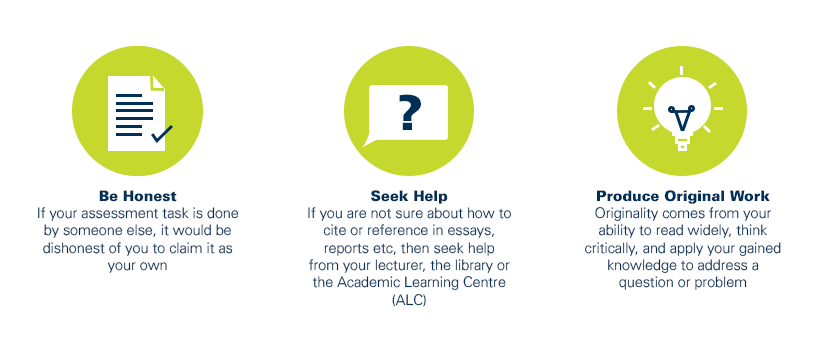
As a CQUniversity student you are expected to act honestly in all aspects of your academic work.
Any assessable work undertaken or submitted for review or assessment must be your own work. Assessable work is any type of work you do to meet the assessment requirements in the unit, including draft work submitted for review and feedback and final work to be assessed.
When you use the ideas, words or data of others in your assessment, you must thoroughly and clearly acknowledge the source of this information by using the correct referencing style for your unit. Using others’ work without proper acknowledgement may be considered a form of intellectual dishonesty.
Participating honestly, respectfully, responsibly, and fairly in your university study ensures the CQUniversity qualification you earn will be valued as a true indication of your individual academic achievement and will continue to receive the respect and recognition it deserves.
As a student, you are responsible for reading and following CQUniversity’s policies, including the Student Academic Integrity Policy and Procedure. This policy sets out CQUniversity’s expectations of you to act with integrity, examples of academic integrity breaches to avoid, the processes used to address alleged breaches of academic integrity, and potential penalties.
What is a breach of academic integrity?
A breach of academic integrity includes but is not limited to plagiarism, self-plagiarism, collusion, cheating, contract cheating, and academic misconduct. The Student Academic Integrity Policy and Procedure defines what these terms mean and gives examples.
Why is academic integrity important?
A breach of academic integrity may result in one or more penalties, including suspension or even expulsion from the University. It can also have negative implications for student visas and future enrolment at CQUniversity or elsewhere. Students who engage in contract cheating also risk being blackmailed by contract cheating services.
Where can I get assistance?
For academic advice and guidance, the Academic Learning Centre (ALC) can support you in becoming confident in completing assessments with integrity and of high standard.
What can you do to act with integrity?