Overview
This unit supports you to identify and develop core professional practices and skills required by all graduates to succeed in your chosen career in the field of Medical Sciences. You will learn about medical science disciplines and develop foundation skills and knowledge. You will learn about your personal attributes; and develop study, organisational and planning skills which can be applied to your future career. An inter disciplinary, integrated approach will be provided so that you will understand the interrelationships across all disciplines of medical science and how each one is associated with clinical work, research and education. You will learn about your chosen profession and career options and plan your course and overall study path to build the knowledge and skills to reach your desired career outcomes. Throughout this unit, your academic, critical and creative thinking skills will be enhanced so that you can effectively engage in future studies.
Details
Pre-requisites or Co-requisites
There are no requisites for this unit.
Important note: Students enrolled in a subsequent unit who failed their pre-requisite unit, should drop the subsequent unit before the census date or within 10 working days of Fail grade notification. Students who do not drop the unit in this timeframe cannot later drop the unit without academic and financial liability. See details in the Assessment Policy and Procedure (Higher Education Coursework).
Offerings For Term 1 - 2026
Attendance Requirements
All on-campus students are expected to attend scheduled classes - in some units, these classes are identified as a mandatory (pass/fail) component and attendance is compulsory. International students, on a student visa, must maintain a full time study load and meet both attendance and academic progress requirements in each study period (satisfactory attendance for International students is defined as maintaining at least an 80% attendance record).
Recommended Student Time Commitment
Each 6-credit Undergraduate unit at CQUniversity requires an overall time commitment of an average of 12.5 hours of study per week, making a total of 150 hours for the unit.
Class Timetable
Assessment Overview
Assessment Grading
This is a graded unit: your overall grade will be calculated from the marks or grades for each assessment task, based on the relative weightings shown in the table above. You must obtain an overall mark for the unit of at least 50%, or an overall grade of 'pass' in order to pass the unit. If any 'pass/fail' tasks are shown in the table above they must also be completed successfully ('pass' grade). You must also meet any minimum mark requirements specified for a particular assessment task, as detailed in the 'assessment task' section (note that in some instances, the minimum mark for a task may be greater than 50%). Consult the University's Grades and Results Policy for more details of interim results and final grades.
All University policies are available on the CQUniversity Policy site.
You may wish to view these policies:
- Grades and Results Policy
- Assessment Policy and Procedure (Higher Education Coursework)
- Review of Grade Procedure
- Student Academic Integrity Policy and Procedure
- Academic Progression Policy and Procedure
- Student Refund and Credit Balance Policy and Procedure
- Complaints Policy and Procedure
- Information and Communications Technology Acceptable Use Policy and Procedure
This list is not an exhaustive list of all University policies. The full list of University policies are available on the CQUniversity Policy site.
Feedback, Recommendations and Responses
Every unit is reviewed for enhancement each year. At the most recent review, the following staff and student feedback items were identified and recommendations were made.
Feedback from Student feedback
Student interactions were low and may require more attention through the term
Continue to encourage students to engage by asking questions particularly during tutorial time. Emphasise the importance of engagement to get the most out of the unit.
Feedback from Staff feedback
The Assessment 1 rubric was not clearly written
Rewrite rubric so requirements are clearer. This will make marking easier and improve student understanding of assessment requirements.
Feedback from Student feedback
Students enjoyed the inclusion of relatable examples and real-life scenarios
Maintain content and look to add more real-life or theoretical scenarios to content.
- Reflect on individual personal skills and capabilities necessary to develop the attributes expected of graduates in a chosen medical science profession.
- Demonstrate learning success and resilience utilising introductory academic writing, critical thinking, organising, problem-solving and planning skills.
- Develop requisite discipline knowledge, underlying principles and concepts as a basis for career success.
- Create and maintain a professional e-Portfolio that synthesises knowledge of self, careers and disciplines to map academic, career and learning paths.
Alignment of Assessment Tasks to Learning Outcomes
| Assessment Tasks | Learning Outcomes | |||
|---|---|---|---|---|
| 1 | 2 | 3 | 4 | |
| 1 - Written Assessment - 30% | ||||
| 2 - Laboratory/Practical - 30% | ||||
| 3 - Portfolio - 40% | ||||
Alignment of Graduate Attributes to Learning Outcomes
| Graduate Attributes | Learning Outcomes | |||
|---|---|---|---|---|
| 1 | 2 | 3 | 4 | |
| 1 - Communication | ||||
| 2 - Problem Solving | ||||
| 3 - Critical Thinking | ||||
| 4 - Information Literacy | ||||
| 5 - Team Work | ||||
| 6 - Information Technology Competence | ||||
| 7 - Cross Cultural Competence | ||||
| 8 - Ethical practice | ||||
| 9 - Social Innovation | ||||
| 10 - First Nations Knowledges | ||||
| 11 - Aboriginal and Torres Strait Islander Cultures | ||||
Textbooks
An Introduction to Medical Statistics
- Edition: 4th (2015)
- Authors: Martin Bland
- Oxford University Press, Incorporated
- Oxford Oxford , England
- ISBN: 0199589925
Medical Statistics from Scratch: An Introduction for Health Professionals
- Edition: 4th (2019)
- Authors: David Bowers
- John Wiley & Sons, Incorporated
- Newark Newark , NJ , USA
- ISBN: 9781119523888
IT Resources
- CQUniversity Student Email
- Internet
- Unit Website (Moodle)
All submissions for this unit must use the referencing styles below:
For further information, see the Assessment Tasks.
n.jarbou@cqu.edu.au
Week 1
Begin Date: 09 Mar 2026Module/Topic
Introduction and Foundation Academic Skills
Chapter
Events and Submissions/Topic
Week 2
Begin Date: 16 Mar 2026Module/Topic
WHS in Medical Science
Chapter
Events and Submissions/Topic
Internal Students
3-hour practical
On Wednesday
Location:
Rockhampton North campus, Room ROK 33/G.25 09:00 AM - 12:00 PM
Bundaberg campus, Room BDG 09/G.01 08:00 AM - 11:00 AM
Week 3
Begin Date: 23 Mar 2026Module/Topic
Bioethics
Chapter
Events and Submissions/Topic
Internal Students
3-hour practical
On Wednesday
Location:
Rockhampton North campus, Room ROK 33/G.25 09:00 AM - 12:00 PM
Bundaberg campus, Room BDG 09/G.01 08:00 AM - 11:00 AM
Week 4
Begin Date: 30 Mar 2026Module/Topic
Industry standards, professional conduct & privacy
Chapter
Events and Submissions/Topic
Internal Students
3-hour practical
On Wednesday
Location:
Rockhampton North campus, Room ROK 33/G.25 09:00 AM - 12:00 PM
Bundaberg campus, Room BDG 09/G.01 08:00 AM - 11:00 AM
Week 5
Begin Date: 06 Apr 2026Module/Topic
Professional Communication Skills
Chapter
Events and Submissions/Topic
Internal Students
3-hour practical
On Wednesday
Location:
Rockhampton North campus, Room ROK 33/G.25 09:00 AM - 12:00 PM
Bundaberg campus, Room BDG 09/G.01 08:00 AM - 11:00 AM
Break Week
Begin Date: 13 Apr 2026Module/Topic
Chapter
Events and Submissions/Topic
Week 6
Begin Date: 20 Apr 2026Module/Topic
Australian Healthcare System and Socioeconomics in Health/Medical Science
Chapter
Events and Submissions/Topic
Week 7
Begin Date: 27 Apr 2026Module/Topic
Introduction to Cross-Cultural Concepts for Medical Sciences
Chapter
Events and Submissions/Topic
Week 8
Begin Date: 04 May 2026Module/Topic
First Nations Health
Chapter
Events and Submissions/Topic
Week 9
Begin Date: 11 May 2026Module/Topic
Introduction to Evidence-Based Practice for Medical Sciences
Chapter
Events and Submissions/Topic
Week 10
Begin Date: 18 May 2026Module/Topic
Careers in Medical Science
Chapter
Events and Submissions/Topic
Week 11
Begin Date: 25 May 2026Module/Topic
WIL and Planning Your Study Load
Chapter
Events and Submissions/Topic
Week 12
Begin Date: 01 Jun 2026Module/Topic
Revision and Assessment
Chapter
Events and Submissions/Topic
Exam Week
Begin Date: 08 Jun 2026Module/Topic
Chapter
Events and Submissions/Topic
Vacation/Exam Week
Begin Date: 15 Jun 2026Module/Topic
Chapter
Events and Submissions/Topic
There are no prescribed textbooks for this unit. All weekly readings, content and activities will be uploaded to the unit Moodle site.
Each week students will be expected to complete the following:
- 1 hour lecture (online, face to face, or recorded)
- 1 hour tutorial (online, face to face, or recorded)
- 3-5 hours of self-directed study
- 3-5 hours preparing assessments
Online sessions will be facilitated via Zoom and meeting links will be provided on the Moodle site. Recordings of lectures and tutorials will be made available on the unit Moodle site.
This unit contains mandatory practical classes which are associated with Assessment 2 (Laboratory/Practical). Internal students are to attend a 3-hour practical class in weeks 2, 3, 4 and 5. Mixed mode students will attend a 2-day residential school. All students must attend and complete the assessment to pass the unit. Please check the timetable for dates and times of internal practical classes and the residential school.
1 Written Assessment
In this assessment, you will respond to a case study. This task is designed to develop your foundational academic research, writing, communication, and organisational skills, while assessing your understanding of the Australian healthcare system, ethical principles, and relevant cultural and social considerations.
Students are introduced to scenarios that reflect common professional challenges encountered across medical science–related disciplines, including pathology, biotechnology, nutrition, medicine, and clinical measurement. The ability to interpret such scenarios, identify key professional and ethical issues, and propose appropriate responses is fundamental to professional practice in health and medical science.
This assessment draws upon foundational knowledge introduced in unit modules covering ethics, professional standards, socioeconomics, and cultural competency. Students are expected to apply this knowledge in a reflective, structured, and evidence-informed manner, appropriate for first-year level study. A minimum mark of 50% is required to pass this assessment.
Detailed instructions and a marking rubric are provided on the unit Moodle site.
Level of GenAI use allowed:
Level 3: You may use Al to assist with specific tasks such as drafting text, refining and evaluating your work. You
must critically evaluate and modify any Al-generated content you use.
Week 8 Friday (8 May 2026) 12:00 pm AEST
Week 10 Friday (22 May 2026)
Students will be assessed on the following criteria:
1- Understanding of the Case Study Context
- Accurate interpretation of the case study and identification of relevant professional, ethical, and contextual issues.
2- Application of Ethical and Professional Principles
- Appropriate application of ethical frameworks, professional standards, and relevant policies discussed in the unit.
3-Consideration of Cultural and Social Factors
- Demonstrated awareness of cultural, social, and socioeconomic factors relevant to the case study scenario.
4- Problem Identification and Response Development
- Clear identification of key issues and development of appropriate, realistic, and professionally informed responses.
5- Use of Evidence and Unit Content
- Effective use of unit materials and, where appropriate, relevant sources to support responses.
6- Academic Writing and Structure
- Clear, well-structured written responses using appropriate academic language and conventions.
7- Organization and Clarity
- Logical organization of ideas, clarity of expression, and adherence to assessment instructions.
8- Scientific Referencing
- Harvard or APA referencing style
- Reflect on individual personal skills and capabilities necessary to develop the attributes expected of graduates in a chosen medical science profession.
- Demonstrate learning success and resilience utilising introductory academic writing, critical thinking, organising, problem-solving and planning skills.
2 Laboratory/Practical
This assessment evaluates students’ ability to demonstrate professional, safe, and effective laboratory practice, which is fundamental to success in the medical sciences. Students are assessed across four supervised practical sessions on their capacity to work safely, professionally, and collaboratively within a laboratory environment.
Assessment is conducted through direct observation by teaching staff and the completion of written and/or verbal tasks associated with laboratory activities. Students are expected to demonstrate appropriate professional behaviour, preparedness, and adherence to laboratory safety protocols throughout all practical sessions.
This assessment is conducted during the 3-hour internal practical sessions in Weeks 2–5 for internal students/ or /across two scheduled laboratory sessions in Week 8 for mixed-mode students.
As a result, assessment due dates differ by cohort. For internal students, the assessment is due in Week 6, Monday 13 April at 12:00 pm. For mixed-mode students, the assessment is due in Week 9, Monday 11 May at 12:00 pm.
Due to the practical and observational nature of this assessment, late submissions are not permitted, and a minimum mark of 50% is required to pass.
Assessment due date depends on cohort: • Internal students: Week 6 – Monday 13 April, 12:00 pm • Mixed-mode students: Week 9 – Monday 11 May, 12:00 pm
Assessment will be returned within two weeks of the due date.
Students will be assessed on the following criteria:
1- Professional behavior and preparedness
2- Laboratory safety practices
3- Organization and workflow management
4- Completion of laboratory tasks and workbook
5- Safe and effective use of laboratory equipment
6- Chemical handling and waste disposal
7- Hazard minimization and infection control
8- Interpersonal and professional communication
- Demonstrate learning success and resilience utilising introductory academic writing, critical thinking, organising, problem-solving and planning skills.
- Develop requisite discipline knowledge, underlying principles and concepts as a basis for career success.
3 Portfolio
This assessment requires students to develop a professional portfolio that documents and evidence skills, competencies, and achievements relevant to professional practice in medical science.
Students will construct a professional LinkedIn profile. This task is designed to support career readiness, encourage professional self-reflection, and develop your ability to effectively communicate your skills, achievements, and employability attributes to potential employers and professional networks.
The portfolio should demonstrate learning and skill development achieved throughout the unit and may include relevant artefacts, such as written assessments, reflections, certificates, skill summaries, or other evidence of professional capability. Students are encouraged to continue building and refining their portfolio throughout their degree.
A PDF version of the completed LinkedIn portfolio must be submitted via the unit Moodle site.
Week 12 Friday (5 June 2026) 12:00 pm AEST
Exam Week Friday (12 June 2026)
Students will be assessed on the following criteria:
1- Professional identity and career alignment
2- Evidence of skills and competencies
3- Quality and relevance of artefacts
4- Reflection and skill articulation
5- Organization and presentation
6- Communication and professional tone
7- Compliance with submission requirements
- Reflect on individual personal skills and capabilities necessary to develop the attributes expected of graduates in a chosen medical science profession.
- Create and maintain a professional e-Portfolio that synthesises knowledge of self, careers and disciplines to map academic, career and learning paths.
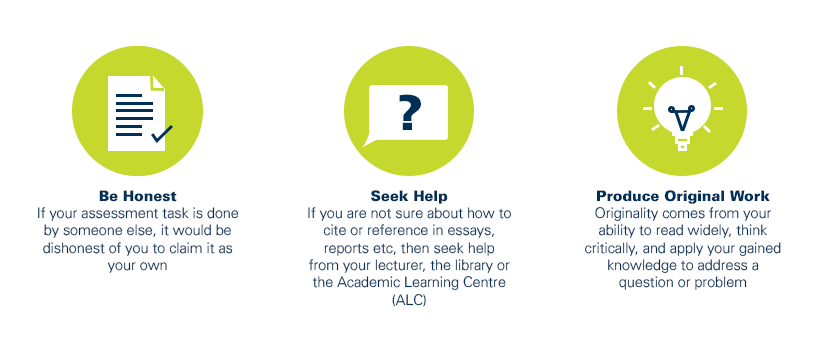
As a CQUniversity student you are expected to act honestly in all aspects of your academic work.
Any assessable work undertaken or submitted for review or assessment must be your own work. Assessable work is any type of work you do to meet the assessment requirements in the unit, including draft work submitted for review and feedback and final work to be assessed.
When you use the ideas, words or data of others in your assessment, you must thoroughly and clearly acknowledge the source of this information by using the correct referencing style for your unit. Using others’ work without proper acknowledgement may be considered a form of intellectual dishonesty.
Participating honestly, respectfully, responsibly, and fairly in your university study ensures the CQUniversity qualification you earn will be valued as a true indication of your individual academic achievement and will continue to receive the respect and recognition it deserves.
As a student, you are responsible for reading and following CQUniversity’s policies, including the Student Academic Integrity Policy and Procedure. This policy sets out CQUniversity’s expectations of you to act with integrity, examples of academic integrity breaches to avoid, the processes used to address alleged breaches of academic integrity, and potential penalties.
What is a breach of academic integrity?
A breach of academic integrity includes but is not limited to plagiarism, self-plagiarism, collusion, cheating, contract cheating, and academic misconduct. The Student Academic Integrity Policy and Procedure defines what these terms mean and gives examples.
Why is academic integrity important?
A breach of academic integrity may result in one or more penalties, including suspension or even expulsion from the University. It can also have negative implications for student visas and future enrolment at CQUniversity or elsewhere. Students who engage in contract cheating also risk being blackmailed by contract cheating services.
Where can I get assistance?
For academic advice and guidance, the Academic Learning Centre (ALC) can support you in becoming confident in completing assessments with integrity and of high standard.
What can you do to act with integrity?