Overview
The unit provides an introduction to: building auditing and professional responsibilities associated with undertaking services audits; processes associated with auditing building services for compliance with BCA, relevant legislation and codes for automated systems, fire services, and so on; the regulatory requirements in approaching auditing; best practice application of building service audits; and the application of audits during both design and refurbishment of buildings. N.B. Students should have completed introductory studies in building services to ensure an adequate level of entry knowledge.
Details
Pre-requisites or Co-requisites
Prereq: BLAR11043 or [BLAR12001 & BLAR12005]
Important note: Students enrolled in a subsequent unit who failed their pre-requisite unit, should drop the subsequent unit before the census date or within 10 working days of Fail grade notification. Students who do not drop the unit in this timeframe cannot later drop the unit without academic and financial liability. See details in the Assessment Policy and Procedure (Higher Education Coursework).
Offerings For Term 3 - 2026
Attendance Requirements
All on-campus students are expected to attend scheduled classes - in some units, these classes are identified as a mandatory (pass/fail) component and attendance is compulsory. International students, on a student visa, must maintain a full time study load and meet both attendance and academic progress requirements in each study period (satisfactory attendance for International students is defined as maintaining at least an 80% attendance record).
Recommended Student Time Commitment
Each 6-credit Undergraduate unit at CQUniversity requires an overall time commitment of an average of 12.5 hours of study per week, making a total of 150 hours for the unit.
Class Timetable
Assessment Overview
| Assessment Task | Part Weighting (% of assessment) |
Assessment Security Level | Gen AI Guidance Levels |
|---|---|---|---|
| 1. Assessment 1 (20% of unit ) | |||
| Fire Safety Audit Brief and Audit Plan (Case Study) | 100% of 20% | Medium | AI Integration (Authentic Professional Use) |
| 2. Assessment 2 (30% of unit ) | |||
| Building Services Audit of a Dwelling (Case Study) | 100% of 30% | Low | AI Integration (Authentic Professional Use) |
| 3. ASSESSMENT 3 (50% of unit · 2 parts ) | |||
| Part 1 – Report- Whole of Building Refurbishment Audits (Case Study) | 40% of 50% | Medium | AI Integration (Authentic Professional Use) |
| Part 2 – Live Presentation- Whole of Building Refurbishment (Presentation) | 60% of 50% | High | No Gen AI Use |
Assessment Grading
This is a graded unit: your overall grade will be calculated from the marks or grades for each assessment task, based on the relative weightings shown in the table above. You must obtain an overall mark for the unit of at least 50%, or an overall grade of 'pass' in order to pass the unit. If any 'pass/fail' tasks are shown in the table above they must also be completed successfully ('pass' grade). You must also meet any minimum mark requirements specified for a particular assessment task, as detailed in the 'assessment task' section (note that in some instances, the minimum mark for a task may be greater than 50%). Consult the University's Grades and Results Policy for more details of interim results and final grades.
All University policies are available on the CQUniversity Policy site.
You may wish to view these policies:
- Grades and Results Policy
- Assessment Policy and Procedure (Higher Education Coursework)
- Review of Grade Procedure
- Student Academic Integrity Policy and Procedure
- Academic Progression Policy and Procedure
- Student Refund and Credit Balance Policy and Procedure
- Complaints Policy and Procedure
- Information and Communications Technology Acceptable Use Policy and Procedure
This list is not an exhaustive list of all University policies. The full list of University policies are available on the CQUniversity Policy site.
Feedback, Recommendations and Responses
Every unit is reviewed for enhancement each year. At the most recent review, the following staff and student feedback items were identified and recommendations were made.
Feedback from Student
The subject matter and resources needed to be reevaluated into a more cohesive package; nonetheless, it was a good learning experience.
Improvements shall be made to the technical learning material and assessment tasks to ensure that learning content is current, relates to learning outcomes and aligns with the provided assessment tasks.
Feedback from Lecturer
The assessment tasks were difficult for students to understand and respond to.
Future assessment tasks shall be written in an appropriately structured and clear manner that enables students to easily understand the intent and expectations of the specific tasks. Alignment with the learning outcomes and providing clear marking rubrics shall also form part of these assessment tasks.
- Demonstrate the knowledge and skills required to fulfil responsibilities of undertaking service audits.
- Apply "best practice" processes associated with auditing building services for compliance with BCA, relevant legislation, Australian Standards and industry codes.
- Interpret and apply the regulatory requirements in approaching auditing.
- Appraise and apply different audits during both design and refurbishment of buildings.
N/A
Alignment of Assessment Tasks to Learning Outcomes
| Assessment Tasks | Learning Outcomes | |||
|---|---|---|---|---|
| 1 | 2 | 3 | 4 | |
|
1.
Assessment 1
(20% of unit )
Case Study
|
||||
|
2.
Assessment 2
(30% of unit )
Case Study
|
||||
|
3.
Assessment 3
(50% of unit · 2 parts
)
Part 1 -
Case Study
Part 2 -
Presentation
|
||||
Alignment of Graduate Attributes to Learning Outcomes
| Graduate Attributes | Learning Outcomes | |||
|---|---|---|---|---|
| 1 | 2 | 3 | 4 | |
| 1 - Communication | ||||
| 2 - Problem Solving | ||||
| 3 - Critical Thinking | ||||
| 4 - Information Literacy | ||||
| 5 - Team Work | ||||
| 6 - Information Technology Competence | ||||
| 7 - Cross Cultural Competence | ||||
| 8 - Ethical practice | ||||
| 9 - Social Innovation | ||||
| 10 - First Nations Knowledges | ||||
Textbooks
National Construction Code Complete Series
- (2025)
- Authors: The Australian Building Codes Board
- The Australian Building Codes Board
- Canberra Canberra , ACT , Australia
- Binding: Hardcover
IT Resources
- CQUniversity Student Email
- Internet
- Unit Website (Moodle)
- Zoom app on your smart phone or access to Zoom on your laptop
- Micorsoft Office or equivalent (wordprocessing) software for preparation of assessment items in the appropriate format
- Microphone and headset (and prefereably a camera) to participate in Zoom sessions
All submissions for this unit must use the referencing style: Harvard (author-date)
For further information, see the Assessment Tasks.
s.poulter@cqu.edu.au
Week 1
Begin Date: 09 Nov 2026Module/Topic
Introduction to building services auditing
Chapter
Topic 1
Events and Submissions/Topic
Week 2
Begin Date: 16 Nov 2026Module/Topic
Regulatory requirements and professional responsibilities in auditing
Chapter
Topic 2
Events and Submissions/Topic
Week 3
Begin Date: 23 Nov 2026Module/Topic
Approaches to building auditing
Chapter
Topic 3
Events and Submissions/Topic
Week 4
Begin Date: 30 Nov 2026Module/Topic
Fire safety and services auditing
Chapter
Topic 4
Events and Submissions/Topic
Week 5
Begin Date: 07 Dec 2026Module/Topic
Fire safety and services auditing (continued)
Chapter
Topic 4
Events and Submissions/Topic
Assessment 1 is due on Monday of Week 5.
Fire Safety Audit Brief and Audit Plan Due: Week 5 Wednesday (9 Dec 2026) 11:59 pm AEST
Week 6
Begin Date: 14 Dec 2026Module/Topic
Undertaking an energy efficiency audit
Chapter
Topic 5
Events and Submissions/Topic
Mid-Term Break
Begin Date: 21 Dec 2026Module/Topic
Chapter
Events and Submissions/Topic
Week 7
Begin Date: 04 Jan 2027Module/Topic
Undertaking an energy efficiency audit (continued)
Chapter
Topic 5
Events and Submissions/Topic
Week 8
Begin Date: 11 Jan 2027Module/Topic
Auditing HVAC systems
Chapter
Topic 6
Events and Submissions/Topic
Week 9
Begin Date: 18 Jan 2027Module/Topic
Auditing lighting and electrical services
Chapter
Topic 7
Events and Submissions/Topic
Assessment 2 is due on Monday of Week 9.
Building Services Audit of a Dwelling Due: Week 9 Wednesday (20 Jan 2027) 11:59 am AEST
Week 10
Begin Date: 25 Jan 2027Module/Topic
Auditing lighting and electrical services (continued)
Chapter
Topic 7
Events and Submissions/Topic
Week 11
Begin Date: 01 Feb 2027Module/Topic
Auditing water services
Chapter
Topic 8
Events and Submissions/Topic
Week 12
Begin Date: 08 Feb 2027Module/Topic
Refurbishment, maintenance and sustainability auditing
Chapter
Topic 9
Events and Submissions/Topic
Live Presentation- Whole of Building Refurbishment Due: Week 12 Tuesday (9 Feb 2027) 7:00 pm AEST
Exam Week
Begin Date: 15 Feb 2027Module/Topic
Chapter
Events and Submissions/Topic
Week 12
Begin Date: 07 Feb 2028Module/Topic
Refurbishment, maintenance and sustainability auditing
Chapter
Topic 9
Events and Submissions/Topic
1. Assessment 1 ( 20% of unit )
Case Study
Following engagement, an auditor will prepare an audit brief to propose the audit methodology, including the scope, the benchmarks for compliance, defining the relevant stakeholders, consultation bodies and approximate scheduling for the audit process to take place.
The intent of the audit brief is to develop an appropriate audit structure that all relevant stakeholders can consider, discuss and hopefully agree upon, even if modifications need to be made.
Consultation with the client and other relevant stakeholders following production of the audit brief is important to establish agreement and a level of ownership/comfort with the audit process.
Following consultation of the audit brief and possible refinement, the audit itself needs to be appropriately planned to enable efficient, consistent, compliant and complete auditing processes that align with the agreed audit brief.
The purpose of this assessment is to engage with each of these processes, establish an understanding of the contents of each process and respond to appropriate challenges associated with each process.
AI ASSESSMENT SCALE - AI PLANNING
You may use Al for planning, idea development, and research. Your final submission should show how you have developed and refined these ideas
Week 5 Wednesday (9 Dec 2026) 11:59 pm AEST
Report
Week 7 Wednesday (6 Jan 2027)
Grades and Marking sheet uploaded to Moodle
The assessment will address the following attributes:
- Clarity & succinctness of expression
- Adequate coverage of topics discussed
- Use of supporting information where appropriate and associated references.
- Original thought.
- Overall presentation and the ability to communicate using correct spelling, grammar and punctuation.
- Where appropriate the use of graphs, illustrations and other diagrams that visually support the context of your submission
- Demonstration of the core knowledge associated with this course and appropriate application of this knowledge.
Before or on the nominated due date, upload your work following the on-screen instructions.
Your submission will be processed through the similarity detection software, Turnitin. You may amend your work based on the detection report.
You must ensure that the submission is your own and that any cited work has been correctly referenced as per the CQU requirements.
- Demonstrate the knowledge and skills required to fulfil responsibilities of undertaking service audits.
- Apply "best practice" processes associated with auditing building services for compliance with BCA, relevant legislation, Australian Standards and industry codes.
- Interpret and apply the regulatory requirements in approaching auditing.
2. Assessment 2 ( 30% of unit )
Case Study
This assessment is aimed at exploring and understanding the foundational steps of a building-services audit using a familiar dwelling as a case study. Students learn to define an audit scope, gather and evaluate evidence, identify which regulatory requirements and guidance may apply, recognise the limitations associated with a visual inspection, and report findings with safe, proportionate recommendations.
The assessment develops the ability to distinguish what was observed, what the evidence supports, and what requires further checking by a more experienced person. It aligns with the learning outcomes two and three of this unit.
AI ASSESSMENT SCALE - AI PLANNING
You may use Al for planning, idea development, and research. Your final submission should show how you have developed and refined these ideas
Week 9 Wednesday (20 Jan 2027) 11:59 am AEST
Audit Plan, Service Assessment Results and Audit Report
Week 11 Wednesday (3 Feb 2027)
Grades and marking sheet uploaded to Moodle
The assessment will address the following attributes:
- Clarity & succinctness of expression
- Adequate coverage of topics discussed
- Use of supporting information where appropriate and associated references.
- Original thought.
- Overall presentation and the ability to communicate using correct spelling, grammar and punctuation.
- Where appropriate the use of graphs, illustrations and other diagrams that visually support the context of your submission.
- Demonstration of the core knowledge associated with this course and appropriate application of this knowledge.
Before or on the nominated due date, upload your work following the on-screen instructions.
Your submission will be processed through the similarity detection software, Turnitin. You may amend your work based on the detection report.
You must ensure that the submission is your own and that any cited work has been correctly referenced as per the CQU requirements.
- Apply "best practice" processes associated with auditing building services for compliance with BCA, relevant legislation, Australian Standards and industry codes.
- Interpret and apply the regulatory requirements in approaching auditing.
3. ASSESSMENT 3 ( 50% of unit · 2 parts )
Part 1 - Case Study
This assessment is aimed at developing your ability to understand how building audits guide decisions throughout a building project, and specifically for the renovation of a building. By examining audits in both design and refurbishment, you will learn how audit findings can identify risks, evaluate building performance, and support practical recommendations.
While learning how to carry out audits provides an insight into the skills and knowledge that must be acquired to carry out these audit tasks properly, establishing the benefits of specific audits to assist the planning of the building project allows the varied understanding of the benefits, and the limitations, of specific audit types.
This part of the assessment will require you to investigate into the benefits and limitations associated with selected audit types when planning a whole of building refurbishment.
AI ASSESSMENT SCALE - AI PLANNING
You may use Al for planning, idea development, and research. Your final submission should show how you have developed and refined these ideas
Week 12 Wednesday (10 Feb 2027) 11:59 pm AEST
Report
Exam Week Wednesday (17 Feb 2027)
Grades with Marking Sheet Uploaded to Moodle
The assessment will address the following attributes:
- Clarity & succinctness of expression
- Adequate coverage of topics discussed
- Use of supporting information where appropriate and associated references.
- Original thought.
- Overall presentation and the ability to communicate using correct spelling, grammar and punctuation.
- Where appropriate the use of graphs, illustrations and other diagrams that visually support the context of your submission.
- Demonstration of the core knowledge associated with this course and appropriate application of this knowledge.
- Your presentation slides should be produced in electronic format.
Before or on the nominated due date, upload your work following the on-screen instructions.
Your submission will be processed through the similarity detection software, Turnitin. You may amend your work based on the detection report.
You must ensure that the submission is your own and that any cited work has been correctly referenced as per the CQU requirements.
- Apply "best practice" processes associated with auditing building services for compliance with BCA, relevant legislation, Australian Standards and industry codes.
- Interpret and apply the regulatory requirements in approaching auditing.
- Appraise and apply different audits during both design and refurbishment of buildings.
Part 2 - Presentation
This assessment is aimed at developing your ability to understand how building audits guide decisions throughout a building project, and specifically for the renovation of a building. By examining audits in both design and refurbishment, you will learn how audit findings can identify risks, evaluate building performance, and support practical recommendations.
While learning how to carry out audits provides an insight into the skills and knowledge that must be acquired to carry out these audit tasks properly, establishing the benefits of specific audits to assist the planning of the building project allows the varied understanding of the benefits, and the limitations, of specific audit types.
This part of the assessment will require you to present to your class and lecturer on the main findings detailed within your report within Part 1 of this third assessment.
AI ASSESSMENT SCALE- NO AI USE
GEN AI cannot be used to complete this part of this assessment.
Week 12 Tuesday (9 Feb 2027) 7:00 pm AEST
Live presentation with Q&A
Exam Week Wednesday (17 Feb 2027)
Grades with Marking Sheet Uploaded to Moodle
The assessment will address the following attributes:
- Clarity & succinctness of expression
- Adequate coverage of topics discussed
- Use of supporting information where appropriate and associated references.
- Original thought.
- Overall presentation and the ability to communicate using correct spelling, grammar and punctuation.
- Where appropriate the use of graphs, illustrations and other diagrams that visually support the context of your submission.
- Demonstration of the core knowledge associated with this course and appropriate application of this knowledge.
Your presentation slides should be produced in electronic format.
Before or on the nominated due date, upload your work following the on-screen instructions.
Your submission will be processed through the similarity detection software, Turnitin. You may amend your work based on the detection report.
You must ensure that the submission is your own and that any cited work has been correctly referenced as per the CQU requirements.
- Apply "best practice" processes associated with auditing building services for compliance with BCA, relevant legislation, Australian Standards and industry codes.
- Interpret and apply the regulatory requirements in approaching auditing.
- Appraise and apply different audits during both design and refurbishment of buildings.
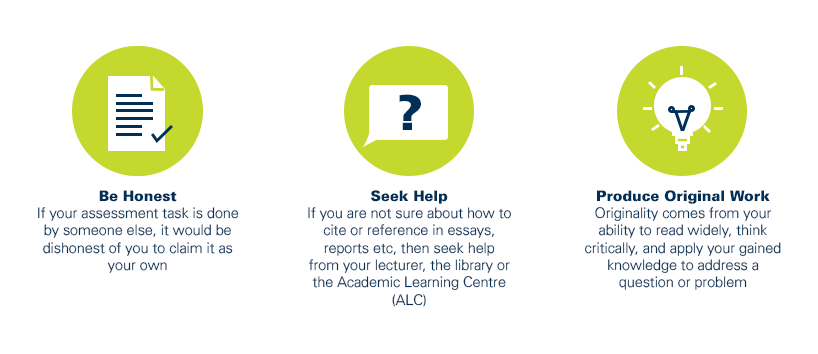
As a CQUniversity student you are expected to act honestly in all aspects of your academic work.
Any assessable work undertaken or submitted for review or assessment must be your own work. Assessable work is any type of work you do to meet the assessment requirements in the unit, including draft work submitted for review and feedback and final work to be assessed.
When you use the ideas, words or data of others in your assessment, you must thoroughly and clearly acknowledge the source of this information by using the correct referencing style for your unit. Using others’ work without proper acknowledgement may be considered a form of intellectual dishonesty.
Participating honestly, respectfully, responsibly, and fairly in your university study ensures the CQUniversity qualification you earn will be valued as a true indication of your individual academic achievement and will continue to receive the respect and recognition it deserves.
As a student, you are responsible for reading and following CQUniversity’s policies, including the Student Academic Integrity Policy and Procedure. This policy sets out CQUniversity’s expectations of you to act with integrity, examples of academic integrity breaches to avoid, the processes used to address alleged breaches of academic integrity, and potential penalties.
What is a breach of academic integrity?
A breach of academic integrity includes but is not limited to plagiarism, self-plagiarism, collusion, cheating, contract cheating, and academic misconduct. The Student Academic Integrity Policy and Procedure defines what these terms mean and gives examples.
Why is academic integrity important?
A breach of academic integrity may result in one or more penalties, including suspension or even expulsion from the University. It can also have negative implications for student visas and future enrolment at CQUniversity or elsewhere. Students who engage in contract cheating also risk being blackmailed by contract cheating services.
Where can I get assistance?
For academic advice and guidance, the Academic Learning Centre (ALC) can support you in becoming confident in completing assessments with integrity and of high standard.
What can you do to act with integrity?