Overview
This unit provides an understanding of issues and methods used in fire safety design, develop an appreciation of the role of fire safety engineering in the building industry and be prepared to communicate effectively with professionals in the building industry about fire safety design.
Details
Pre-requisites or Co-requisites
There are no requisites for this unit.
Important note: Students enrolled in a subsequent unit who failed their pre-requisite unit, should drop the subsequent unit before the census date or within 10 working days of Fail grade notification. Students who do not drop the unit in this timeframe cannot later drop the unit without academic and financial liability. See details in the Assessment Policy and Procedure (Higher Education Coursework).
Offerings For Term 3 - 2026
Attendance Requirements
All on-campus students are expected to attend scheduled classes - in some units, these classes are identified as a mandatory (pass/fail) component and attendance is compulsory. International students, on a student visa, must maintain a full time study load and meet both attendance and academic progress requirements in each study period (satisfactory attendance for International students is defined as maintaining at least an 80% attendance record).
Recommended Student Time Commitment
Each 6-credit Undergraduate unit at CQUniversity requires an overall time commitment of an average of 12.5 hours of study per week, making a total of 150 hours for the unit.
Class Timetable
Assessment Overview
| Assessment Task | Part Weighting (% of assessment) |
Assessment Security Level | Gen AI Guidance Levels |
|---|---|---|---|
| 1. Assessment 1 (20% of unit ) | |||
| Fire Safety Measure Defects and Standards of Reference (Case Study) | 100% of 20% | Low | AI-Assisted (Guided Collaboration) |
| 2. Assessment 2 (20% of unit ) | |||
| Fire Door Assessment and Bushfire Attack Level Assessment (Case Study) | 100% of 20% | Low | AI-Assisted (Guided Collaboration) |
| 3. Assessment 3 (50% of unit · 2 parts ) | |||
| Part 1 – Part 1- Professional Report (Case Study) | 40% of 50% | Low | AI Integration (Authentic Professional Use) |
| Part 2 – Part 2- Live oral presentation with slides (Presentation) | 60% of 50% | High | No Gen AI Use |
| 4. Assessment 4 (Quiz) (10% of unit ) | |||
| Online Quiz (Online Quiz(zes)) | 100% of 10% | Low | AI-Assisted (Guided Collaboration) |
Assessment Grading
This is a graded unit: your overall grade will be calculated from the marks or grades for each assessment task, based on the relative weightings shown in the table above. You must obtain an overall mark for the unit of at least 50%, or an overall grade of 'pass' in order to pass the unit. If any 'pass/fail' tasks are shown in the table above they must also be completed successfully ('pass' grade). You must also meet any minimum mark requirements specified for a particular assessment task, as detailed in the 'assessment task' section (note that in some instances, the minimum mark for a task may be greater than 50%). Consult the University's Grades and Results Policy for more details of interim results and final grades.
All University policies are available on the CQUniversity Policy site.
You may wish to view these policies:
- Grades and Results Policy
- Assessment Policy and Procedure (Higher Education Coursework)
- Review of Grade Procedure
- Student Academic Integrity Policy and Procedure
- Academic Progression Policy and Procedure
- Student Refund and Credit Balance Policy and Procedure
- Complaints Policy and Procedure
- Information and Communications Technology Acceptable Use Policy and Procedure
This list is not an exhaustive list of all University policies. The full list of University policies are available on the CQUniversity Policy site.
Feedback, Recommendations and Responses
Every unit is reviewed for enhancement each year. At the most recent review, the following staff and student feedback items were identified and recommendations were made.
Feedback from Student
The real life examples the lecturer uses are very beneficial. Being shown plans from actual projects and photographs of real world inspections provides excellent context and compliments the course content well.
Real-world examples will continue to be included. Filmed fire safety inspections will be added to the content, particularly during lectures/tutorials, to encourage discussion of real-world situations and what to expect during inspections.
Feedback from Lecturer
Annotated diagrams and photos of fire safety measures assisted students in understanding complex fire safety measures
study notes and lectures would continue to present fire safety measures in an easy to interpret manner.
Feedback from Lecturer
A tutorial was dedicated to examining the post incident example demonstrating the benefits of good fire safety and drawbacks of poor fire safety.
A tutorial will continue to be dedicated to discussing a real life incident related to fire safety to draw distinctions between the technical nature of fire safety measures and the practical responsibility associated with the installation, commissioning and maintenance of these measures.
- Assess prescriptive and performance-based solutions for fire safety design
- Analyse and apply knowledge of the causes of fire and smoke in buildings
- Understand behaviour of the built environment when subjected to fire conditions
- Explain National Construction Code prescribed fire safety control measures and risk and cost considerations
N/A
Alignment of Assessment Tasks to Learning Outcomes
| Assessment Tasks | Learning Outcomes | |||
|---|---|---|---|---|
| 1 | 2 | 3 | 4 | |
|
1.
Assessment 1
(20% of unit )
Case Study
|
||||
|
2.
Assessment 2
(20% of unit )
Case Study
|
||||
|
3.
Assessment 3
(50% of unit · 2 parts
)
Part 1 -
Case Study
Part 2 -
Presentation
|
||||
|
4.
Assessment 4
(10% of unit )
Online Quiz(zes)
|
||||
Alignment of Graduate Attributes to Learning Outcomes
| Graduate Attributes | Learning Outcomes | |||
|---|---|---|---|---|
| 1 | 2 | 3 | 4 | |
| 1 - Communication | ||||
| 2 - Problem Solving | ||||
| 3 - Critical Thinking | ||||
| 4 - Information Literacy | ||||
| 5 - Team Work | ||||
| 6 - Information Technology Competence | ||||
| 7 - Cross Cultural Competence | ||||
| 8 - Ethical practice | ||||
| 9 - Social Innovation | ||||
| 10 - First Nations Knowledges | ||||
Textbooks
There are no required textbooks.
IT Resources
- CQUniversity Student Email
- Internet
- Unit Website (Moodle)
- Microphone and camera for use with Zoom
- Word processing software such as MS Word
All submissions for this unit must use the referencing style: Harvard (author-date)
For further information, see the Assessment Tasks.
s.poulter@cqu.edu.au
Week 1
Begin Date: 09 Nov 2026Module/Topic
Topic 1: Introduction and Regulatory Compliance for Design
Chapter
Events and Submissions/Topic
Week 2
Begin Date: 16 Nov 2026Module/Topic
Topic 2: Portable Fire Extinguishers, Fire Hose Reels and Fire Blankets
Chapter
Events and Submissions/Topic
Week 3
Begin Date: 23 Nov 2026Module/Topic
Topic 3: Emergency Lighting and Illuminated Exit Signs
Chapter
Events and Submissions/Topic
Week 4
Begin Date: 30 Nov 2026Module/Topic
Topic 4: Fire Detection Systems
Chapter
Events and Submissions/Topic
Week 5
Begin Date: 07 Dec 2026Module/Topic
Topic 5: Smoke Hazard Management Systems
Chapter
Events and Submissions/Topic
Week 6
Begin Date: 14 Dec 2026Module/Topic
Topic 6: Passive Fire Safety Systems
Chapter
Events and Submissions/Topic
Mid-Term Break
Begin Date: 21 Dec 2026Module/Topic
Chapter
Events and Submissions/Topic
Week 7
Begin Date: 04 Jan 2027Module/Topic
Topic 7: Emergency Lifts and Egress Systems
Chapter
Events and Submissions/Topic
Week 8
Begin Date: 11 Jan 2027Module/Topic
Topic 8: Bushfire Protection
Chapter
Events and Submissions/Topic
Week 9
Begin Date: 18 Jan 2027Module/Topic
Topic 9: Fire Hydrant Systems
Chapter
Events and Submissions/Topic
Week 10
Begin Date: 25 Jan 2027Module/Topic
Topic 10: Sprinkler Systems
Chapter
Events and Submissions/Topic
Week 11
Begin Date: 01 Feb 2027Module/Topic
Topic 11: Fire Engineered Systems
Chapter
Events and Submissions/Topic
Week 12
Begin Date: 08 Feb 2027Module/Topic
Topic 12: Inspections and Audits
Chapter
Events and Submissions/Topic
Part 2- Live oral presentation with slides Due: Week 12 Thursday (11 Feb 2027) 6:00 pm AEST
Exam Week
Begin Date: 15 Feb 2027Module/Topic
Chapter
Events and Submissions/Topic
1. Assessment 1 ( 20% of unit )
Case Study
As a building surveyor, it is critical that you can determine relevant building regulation to undertake an assessment of a building element. Using incorrect National Construction Code or Australian Standard requirements can jeopardise your assessment results.
The main objectives of this assessment are for students to effectively locate the correct building regulation in order to undertake an assessment of a fire safety measure.
You will need access to the current and previous editions of the Building Code of Australia and Australian Standards in order to complete this assignment. Australian Standards can be accessed through the CQU library.
AI ASSESSMENT SCALE - AI PLANNING
You may use Al for planning, idea development, and research. Your final submission should show how you have developed and refined these ideas
Week 5 Wednesday (9 Dec 2026) 11:59 pm AEST
Report
Week 7 Wednesday (6 Jan 2027)
Grades and Marking Sheet uploaded to Moodle
The assessment will address the following attributes:
- Clarity & succinctness of expression
- Adequate coverage of topics discussed
- Use of supporting information where appropriate and associated references.
- Original thought.
- Overall presentation and the ability to communicate using correct spelling, grammar and punctuation.
- Where appropriate the use of graphs, illustrations and other diagrams that visually support the context of your submission.
- Demonstration of the core knowledge associated with this course and appropriate application of this knowledge.
Your assessment should be produced in electronic format.
Before or on the nominated due date, upload your work following the on-screen instructions.
Your submission will be processed through the similarity detection software, Turnitin. You may amend your work based on the detection report.
You must ensure that the submission is your own and that any cited work has been correctly referenced as per the CQU requirements.
- Assess prescriptive and performance-based solutions for fire safety design
- Analyse and apply knowledge of the causes of fire and smoke in buildings
- Understand behaviour of the built environment when subjected to fire conditions
- Explain National Construction Code prescribed fire safety control measures and risk and cost considerations
2. Assessment 2 ( 20% of unit )
Case Study
As a building surveyor, we are often placed in a position of assessing fire safety measures using NCC and relevant Standards, even where we have reasonable doubt that the specific fire safety measure is non-compliant before assessment. Using a structured assessment process with a checklist, we are able to consistently and completely assess a fire safety measure to all relevant technical benchmarks. This first assessment task will require you to develop a technical inspection checklist, and then to use that checklist to inspect and evaluate a fire safety measure.
Bushfire attack level assessments are an important way of establishing how risk exposed a building is to a bushfire source. The bushfire attack level can then be used to determine specific construction methods of design considerations for proposed and existing buildings. This second assessment task will require you to use the simplified bushfire attack level assessment methodology to determine the correct bushfire attack level for a given scenario.
AI ASSESSMENT SCALE - AI PLANNING
You may use Al for planning, idea development, and research. Your final submission should show how you have developed and refined these ideas
Week 9 Wednesday (20 Jan 2027) 11:59 pm AEST
Report
Week 11 Wednesday (3 Feb 2027)
Grades and marking sheet uploaded to Moodle
The assessment will address the following attributes:
- Clarity & succinctness of expression
- Adequate coverage of topics discussed
- Use of supporting information where appropriate and associated references.
- Original thought.
- Overall presentation and the ability to communicate using correct spelling, grammar and punctuation.
- Where appropriate the use of graphs, illustrations and other diagrams that visually support the context of your submission.
- Demonstration of the core knowledge associated with this course and appropriate application of this knowledge.
Your assessment should be produced in electronic format.
Before or on the nominated due date, upload your work following the on-screen instructions.
Your submission will be processed through the similarity detection software, Turnitin. You may amend your work based on the detection report.
You must ensure that the submission is your own and that any cited work has been correctly referenced as per the CQU requirements.
- Assess prescriptive and performance-based solutions for fire safety design
- Understand behaviour of the built environment when subjected to fire conditions
- Explain National Construction Code prescribed fire safety control measures and risk and cost considerations
3. Assessment 3 ( 50% of unit · 2 parts )
Part 1 - Case Study
Analyse an Australian building fire through the findings of a coroner’s report. Explain how the fire started and developed, assess the building’s fire safety design and controls, and recommend proportionate improvements using the relevant National Construction Code (NCC) framework.
The case study is the 2012 fire at the Quakers Hill Nursing Home in New South Wales, examined in a joint inquest. The findings discuss the fire’s cause and spread, the building’s fire safety measures, and lessons for care facilities. You should use the coroner’s findings as your principal case source and distinguish clearly between the coroner’s findings, other evidence, and your own analysis.
This first part of the assessment will require you to report your findings in relation to this incident focusing on particular questions raised in the assessment task.
AI ASSESSMENT SCALE - AI PLANNING
You may use Al for planning, idea development, and research. Your final submission should show how you have developed and refined these ideas
Week 12 Wednesday (10 Feb 2027) 11:59 pm AEST
Report
Exam Week Wednesday (17 Feb 2027)
Grades and marking sheet uploaded to Moodle
The assessment will address the following attributes:
- Clarity & succinctness of expression
- Adequate coverage of topics discussed
- Use of supporting information where appropriate and associated references.
- Original thought.
- Overall presentation and the ability to communicate using correct spelling, grammar and punctuation.
- Where appropriate the use of graphs, illustrations and other diagrams that visually support the context of your submission.
- Demonstration of the core knowledge associated with this course and appropriate application of this knowledge.
Your assessment should be produced in electronic format.
Before or on the nominated due date, upload your work following the on-screen instructions.
Your submission will be processed through the similarity detection software, Turnitin. You may amend your work based on the detection report.
You must ensure that the submission is your own and that any cited work has been correctly referenced as per the CQU requirements.
- Assess prescriptive and performance-based solutions for fire safety design
- Analyse and apply knowledge of the causes of fire and smoke in buildings
- Explain National Construction Code prescribed fire safety control measures and risk and cost considerations
Part 2 - Presentation
Analyse an Australian building fire through the findings of a coroner’s report. Explain how the fire started and developed, assess the building’s fire safety design and controls, and recommend proportionate improvements using the relevant National Construction Code (NCC) framework.
The case study is the 2012 fire at the Quakers Hill Nursing Home in New South Wales, examined in a joint inquest. The findings discuss the fire’s cause and spread, the building’s fire safety measures, and lessons for care facilities. You should use the coroner’s findings as your principal case source and distinguish clearly between the coroner’s findings, other evidence, and your own analysis.
This second part of the assessment will require you to present your findings in a live oral presentation focusing on particular questions raised in the assessment task regarding this fire incident.
AI ASSESSMENT SCALE- NO AI USE
GEN AI cannot be used to complete this part of this assessment.
Week 12 Thursday (11 Feb 2027) 6:00 pm AEST
Live oral Presentation with supporting slides
Week 12 Thursday (11 Feb 2027)
Grades and marking sheet uploaded to Moodle
The assessment will address the following attributes:
- Clarity & succinctness of expression
- Adequate coverage of topics discussed
- Use of supporting information where appropriate and associated references.
- Original thought.
- Overall presentation and the ability to communicate using correct spelling, grammar and punctuation.
- Where appropriate the use of graphs, illustrations and other diagrams that visually support the context of your submission.
- Demonstration of the core knowledge associated with this course and appropriate application of this knowledge.
Your assessment slides should be produced in electronic format.
Before or on the nominated due date, upload your work following the on-screen instructions.
Your submission will be processed through the similarity detection software, Turnitin. You may amend your work based on the detection report.
You must ensure that the presentation is your own and that any cited work has been correctly referenced as per the CQU requirements.
- Assess prescriptive and performance-based solutions for fire safety design
- Analyse and apply knowledge of the causes of fire and smoke in buildings
- Explain National Construction Code prescribed fire safety control measures and risk and cost considerations
4. Assessment 4 (Quiz) ( 10% of unit )
Online Quiz(zes)
This online quiz presents a range of questions relating to key topics contained in the study notes and lectures.
Exam Week Wednesday (17 Feb 2027) 11:59 pm AEST
Completed quiz
Exam Week Wednesday (17 Feb 2027)
Grades are returned immediately upon completion of the quiz
The online quiz assessment will focus on key topics contained within the study notes and lecture material.
Twenty multiple choice questions will be provided.
Students are encouraged to use the study materials provided for this unit when completing the quiz to refresh knowledge they have gained during the term.
- Explain National Construction Code prescribed fire safety control measures and risk and cost considerations
As a CQUniversity student you are expected to act honestly in all aspects of your academic work.
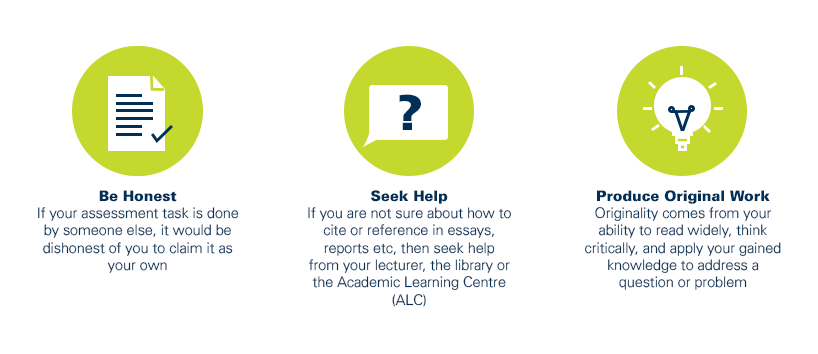
Any assessable work undertaken or submitted for review or assessment must be your own work. Assessable work is any type of work you do to meet the assessment requirements in the unit, including draft work submitted for review and feedback and final work to be assessed.
When you use the ideas, words or data of others in your assessment, you must thoroughly and clearly acknowledge the source of this information by using the correct referencing style for your unit. Using others’ work without proper acknowledgement may be considered a form of intellectual dishonesty.
Participating honestly, respectfully, responsibly, and fairly in your university study ensures the CQUniversity qualification you earn will be valued as a true indication of your individual academic achievement and will continue to receive the respect and recognition it deserves.
As a student, you are responsible for reading and following CQUniversity’s policies, including the Student Academic Integrity Policy and Procedure. This policy sets out CQUniversity’s expectations of you to act with integrity, examples of academic integrity breaches to avoid, the processes used to address alleged breaches of academic integrity, and potential penalties.
What is a breach of academic integrity?
A breach of academic integrity includes but is not limited to plagiarism, self-plagiarism, collusion, cheating, contract cheating, and academic misconduct. The Student Academic Integrity Policy and Procedure defines what these terms mean and gives examples.
Why is academic integrity important?
A breach of academic integrity may result in one or more penalties, including suspension or even expulsion from the University. It can also have negative implications for student visas and future enrolment at CQUniversity or elsewhere. Students who engage in contract cheating also risk being blackmailed by contract cheating services.
Where can I get assistance?
For academic advice and guidance, the Academic Learning Centre (ALC) can support you in becoming confident in completing assessments with integrity and of high standard.
What can you do to act with integrity?