Overview
This unit provides an introduction to modern construction technology with an emphasis on high-rise building construction in Australia. You will explore how contemporary construction systems, structural methods, materials, and temporary works influence the planning and delivery of complex projects. The unit introduces key legislative and regulatory requirements that govern high-rise construction, including the National Construction Code, Australian Standards, and relevant workplace health and safety frameworks. You will learn how modern technologies, such as advanced formwork systems, vertical transportation methods, façade systems, and innovative building services, contribute to safety, cost, quality, and time performance on high-rise projects. The unit also examines the interrelationship between construction technology, sustainability, risk management, and construction sequencing. By the end of the unit, you will be able to critically analyse, compare, and justify construction technology solutions in the Australian context.
Details
Pre-requisites or Co-requisites
There are no requisites for this unit.
Important note: Students enrolled in a subsequent unit who failed their pre-requisite unit, should drop the subsequent unit before the census date or within 10 working days of Fail grade notification. Students who do not drop the unit in this timeframe cannot later drop the unit without academic and financial liability. See details in the Assessment Policy and Procedure (Higher Education Coursework).
Offerings For Term 1 - 2026
Attendance Requirements
All on-campus students are expected to attend scheduled classes - in some units, these classes are identified as a mandatory (pass/fail) component and attendance is compulsory. International students, on a student visa, must maintain a full time study load and meet both attendance and academic progress requirements in each study period (satisfactory attendance for International students is defined as maintaining at least an 80% attendance record).
Recommended Student Time Commitment
Each 6-credit Postgraduate unit at CQUniversity requires an overall time commitment of an average of 12.5 hours of study per week, making a total of 150 hours for the unit.
Class Timetable
Assessment Overview
Assessment Grading
This is a graded unit: your overall grade will be calculated from the marks or grades for each assessment task, based on the relative weightings shown in the table above. You must obtain an overall mark for the unit of at least 50%, or an overall grade of 'pass' in order to pass the unit. If any 'pass/fail' tasks are shown in the table above they must also be completed successfully ('pass' grade). You must also meet any minimum mark requirements specified for a particular assessment task, as detailed in the 'assessment task' section (note that in some instances, the minimum mark for a task may be greater than 50%). Consult the University's Grades and Results Policy for more details of interim results and final grades.
All University policies are available on the CQUniversity Policy site.
You may wish to view these policies:
- Grades and Results Policy
- Assessment Policy and Procedure (Higher Education Coursework)
- Review of Grade Procedure
- Student Academic Integrity Policy and Procedure
- Academic Progression Policy and Procedure
- Student Refund and Credit Balance Policy and Procedure
- Complaints Policy and Procedure
- Information and Communications Technology Acceptable Use Policy and Procedure
This list is not an exhaustive list of all University policies. The full list of University policies are available on the CQUniversity Policy site.
Feedback, Recommendations and Responses
Every unit is reviewed for enhancement each year. At the most recent review, the following staff and student feedback items were identified and recommendations were made.
Feedback from SUTE
Link content to real-world application.
Videos on construction processes were included in the workshop slides. It is recommended that some site visits be included for a better understanding of Australian construction practices.
Feedback from UC reflection
Classroom arrangement for the online quiz.
The A3 is an online quiz, and students can take it from any location. Nevertheless, some students could not locate a suitable venue to complete the quiz. Consequently, it is advisable to utilise a classroom to ensure that all students may be seated in a single location to complete the quiz without complications.
- Critically evaluate modern construction technologies and methods used in high-rise building projects within the Australian and international sectors
- Synthesise and assess how contemporary construction technologies influence construction planning, risk management, and delivery performance in terms of time, cost, and quality
- Critically analyse the economic, environmental, social, and cultural sustainability implications of construction technology choices
- Generate and justify innovative solutions to complex construction technology problems using advanced cognitive, technical, and creative skills.
The Royal Australian Institute of Building has provided provisional approval (this is from the previous UUP).
Alignment of Assessment Tasks to Learning Outcomes
| Assessment Tasks | Learning Outcomes | |||
|---|---|---|---|---|
| 1 | 2 | 3 | 4 | |
| 1 - Written Assessment - 20% | ||||
| 2 - Presentation - 10% | ||||
| 3 - Case Study - 50% | ||||
| 4 - Online Quiz(zes) - 20% | ||||
Alignment of Graduate Attributes to Learning Outcomes
| Graduate Attributes | Learning Outcomes | |||
|---|---|---|---|---|
| 1 | 2 | 3 | 4 | |
| 1 - Knowledge | ||||
| 2 - Communication | ||||
| 3 - Cognitive, technical and creative skills | ||||
| 4 - Research | ||||
| 5 - Self-management | ||||
| 6 - Ethical and Professional Responsibility | ||||
| 7 - Leadership | ||||
| 8 - First Nations Knowledges | ||||
| 9 - Aboriginal and Torres Strait Islander Cultures | ||||
Textbooks
There are no required textbooks.
IT Resources
- CQUniversity Student Email
- Internet
- Unit Website (Moodle)
- Word processing software such as MS Word
- Online access Australian Standards (through CQU Library)
- CQUniveristy Library Resources
All submissions for this unit must use the referencing style: Harvard (author-date)
For further information, see the Assessment Tasks.
h.khan@cqu.edu.au
Week 1
Begin Date: 09 Mar 2026Module/Topic
A brief introduction to legislation, building permits, public protection, and demolition.
Chapter
Events and Submissions/Topic
On-going quizzes are supplied at tutorials
Assignments 1 handed out—see Moodle for details
Week 2
Begin Date: 16 Mar 2026Module/Topic
Basement excavation, underpinning, underground wall construction, and dewatering.
Chapter
Events and Submissions/Topic
On-going quizzes are supplied at tutorials.
Week 3
Begin Date: 23 Mar 2026Module/Topic
Site logistics, vertical access, and waste management.
Chapter
Events and Submissions/Topic
On-going quizzes are supplied at tutorials.
Week 4
Begin Date: 30 Mar 2026Module/Topic
Foundations and footings.
Chapter
Events and Submissions/Topic
On-going quizzes are supplied at tutorials.
Week 5
Begin Date: 06 Apr 2026Module/Topic
Core construction, bracing, and formwork.
Chapter
Events and Submissions/Topic
On-going quizzes are supplied at tutorials.
Week 6
Begin Date: 13 Apr 2026Module/Topic
Students presentation
Chapter
Events and Submissions/Topic
Assignment 1: To be handed in
Assignment No 1 Part A: Written Assessment (20%) – Individual Due: Week 6 Thursday (16 Apr 2026) 11:59 pm AEST
ASSIGNMENT nO 1 Part B: Group Presentation (10%) – Individual Mark within Group Context Due: Week 6 Thursday (16 Apr 2026) 11:45 pm AEST
Vacation Week
Begin Date: 20 Apr 2026Module/Topic
Vacation Week: No lectures or tutorials
Chapter
Events and Submissions/Topic
Week 7
Begin Date: 27 Apr 2026Module/Topic
Slab, floor, column, & beams.
Chapter
Events and Submissions/Topic
On-going quizzes are supplied at tutorials.
Assignments 2 handed out.
Week 8
Begin Date: 04 May 2026Module/Topic
External facades and cladding
Chapter
Events and Submissions/Topic
On-going quizzes are supplied at tutorials.
Week 9
Begin Date: 11 May 2026Module/Topic
Building services & fire protection
Chapter
Events and Submissions/Topic
On-going quizzes are supplied at tutorials.
Week 10
Begin Date: 18 May 2026Module/Topic
Roofing, drainage, and waterproofing.
Chapter
Events and Submissions/Topic
On-going quizzes are supplied at tutorials.
Week 11
Begin Date: 25 May 2026Module/Topic
Building motion stability & vertical transport systems.
Chapter
Events and Submissions/Topic
On-going quizzes are supplied at tutorials.
Week 12
Begin Date: 01 Jun 2026Module/Topic
Internal fitout, commissioning, & handover.
Chapter
Events and Submissions/Topic
Assignment 2: hand-in date
Assignment No 2 - see Moodle site for details Due: Week 12 Thursday (4 June 2026) 11:59 pm AEST
Exam Week
Begin Date: 08 Jun 2026Module/Topic
ONLINE TEST DURING LECTURE TIMES: SPECIFIC DATE AND TIME TO BE ADVISED
Chapter
Events and Submissions/Topic
Vacation/Exam Week
Begin Date: 15 Jun 2026Module/Topic
Chapter
Events and Submissions/Topic
1 Written Assessment
Students are required to select one construction technology introduced in Weeks 1–5 (e.g., demolition, excavation, retaining structures, underpinning, foundation systems, crane management, vertical transport systems, or other key site services).
The task requires students to critically analyse how the selected technology is executed within the Australian construction context, with specific reference to:
National Construction Code (NCC) requirements
Relevant Australian Standards
Applicable Codes of Practice
Safety and compliance considerations
High-rise construction applications
Technical execution methods
Students must demonstrate independent research, technical understanding, and legislative interpretation. The written component remains strictly individual and must reflect the student’s own analysis and academic integrity.
You need to commence the 3000-word assignment immediately.
N.B. Go to the Moodle site for specific details.
AI ASSESSMENT SCALE - AI PLANNING
You may use Al for planning, idea development, and research. Your final submission should show how you have developed and refined these ideas.
Due Date Information
Week 6 Thursday (16 Apr 2026) 11:59 pm AEST
Submit on line via Moodle and pdf through Turnitin
Week 7 Thursday (30 Apr 2026)
Marks and feedback will be released as soon as all the marking process is completed. Students will be advised
The assignment will be assessed on the quality of the work submitted, relevance, and coherence to the specific question and tasks. This includes clear argumentation and use of quality references (in-text and bibliography). The content prepared is to expand beyond the learning material provided and demonstrate the student's development of the unit learning outcomes and graduate attributes.
- Critically evaluate modern construction technologies and methods used in high-rise building projects within the Australian and international sectors
- Synthesise and assess how contemporary construction technologies influence construction planning, risk management, and delivery performance in terms of time, cost, and quality
2 Presentation
Students who select the same construction technology (maximum four per topic) will form a presentation group. Each group will deliver a structured 10-minute presentation (approximately 2.5 minutes per student).
Within the group, each student must focus on a distinct variation or method of the selected technology (for example, raft footing vs combined footing within foundation systems). Each student will explain:
The technical execution of their selected variation
Legislative and compliance requirements under NCC and Australian Standards
Practical considerations in high-rise construction
Key safety and site management issues
Although the presentation is delivered as a group, marks are allocated individually based on:
Technical accuracy
Depth of explanation
Clarity of communication
Professional presentation style
Individual contribution
AI ASSESSMENT SCALE - AI PLANNING
You may use Al for planning, idea development, and research. Your final submission should show how you have developed and refined these ideas.
Due Date Information
Note: “This assessment is exempted from the 72-hour submission grace period and must be completed by the stated submission date/time”
Week 6 Thursday (16 Apr 2026) 11:45 pm AEST
All students will deliver their presentations during the scheduled class time.
Week 7 Thursday (30 Apr 2026)
Marks and feedback will be released as soon as all the marking process is completed. Students will be advised
The presentation will be assessed on the clarity, technical accuracy, and depth of understanding demonstrated by each student. Students must clearly explain their selected construction technology variation and appropriately apply relevant NCC provisions, Australian Standards, and Codes of Practice. Assessment will also consider the quality of analysis, professional use of terminology, logical structure, and effectiveness of delivery. Although presented in a group, marks will be awarded individually based on each student’s contribution, preparation, and communication performance.
- Critically evaluate modern construction technologies and methods used in high-rise building projects within the Australian and international sectors
- Synthesise and assess how contemporary construction technologies influence construction planning, risk management, and delivery performance in terms of time, cost, and quality
3 Case Study
Assignment 2: General description - Undertake a literature review to identify two case studies—one Australian and one international (preferably from your home country)—of high-rise building projects that used innovative technology or systems to facilitate construction.
1. Provide a detailed overview of both projects and the technology used. Your research is crucial in comparing how both countries' processes and legislative requirements differ.
2. Based on your research, analyse and evaluate how this innovative (modern) technology addresses managing risks, positively and negatively impacts cost and time, and how it differs between countries.
3. Critically analyse the impact of technology on economic, environmental, social, and cultural sustainability and formulate a conclusion with your recommendations for improving future construction technology processes.
You need to commence the 3500-word maximum assignment immediately in order to obtain the research bibliography evidence.
N.B. Go to the Moodle site for specific details.
A minimum score of 40% (20/50) is necessary to pass Assessment 2.
AI ASSESSMENT SCALE - AI PLANNING
You may use Al for planning, idea development, and research. Your final submission should show how you have developed and refined these ideas.
Due Date Information
Week 12 Thursday (4 June 2026) 11:59 pm AEST
Submit on line via Moodle and pdf via Turnitin
Vacation/Exam Week Thursday (18 June 2026)
Marks and feedback will be released as soon as the marking process is completed
The assignment will be assessed on the quality of the work submitted, relevance, and coherence to the specific question and tasks. This includes clear argumentation and use of quality references (in-text and bibliography). The content prepared is to expand beyond the learning material provided and demonstrate the student's development of the unit learning outcomes and graduate attributes.
- Critically analyse the economic, environmental, social, and cultural sustainability implications of construction technology choices
- Generate and justify innovative solutions to complex construction technology problems using advanced cognitive, technical, and creative skills.
4 Online Quiz(zes)
CLASS TEST DURING EXAM WEEK: SPECIFIC DATE AND TIME TO BE ADVISED
Assessment 3 is a supervised quiz designed to evaluate each student’s individual understanding of the unit content. The quiz will be assessed on the accuracy of responses, depth of conceptual understanding, and ability to apply knowledge to scenario-based questions covering all relevant learning outcomes. Students will be expected to demonstrate sound interpretation of construction technologies, legislative frameworks (including NCC and relevant Australian Standards), and principles of risk, time, cost, and compliance management. Performance will reflect the student’s ability to apply technical reasoning independently under supervised conditions, consistent with postgraduate expectations.
AI ASSESSMENT SCALE - NO AI
You must not use Al at any point during the assessment. You must demonstrate your core skills and knowledge.
Note: “This assessment is exempted from the 72-hour submission grace period and must be completed by the stated submission date/time”
Exam Week Thursday (11 June 2026) 11:45 pm AEST
Exam Week Thursday (11 June 2026)
Please see Moodle for details.
- Critically evaluate modern construction technologies and methods used in high-rise building projects within the Australian and international sectors
- Synthesise and assess how contemporary construction technologies influence construction planning, risk management, and delivery performance in terms of time, cost, and quality
- Critically analyse the economic, environmental, social, and cultural sustainability implications of construction technology choices
- Generate and justify innovative solutions to complex construction technology problems using advanced cognitive, technical, and creative skills.
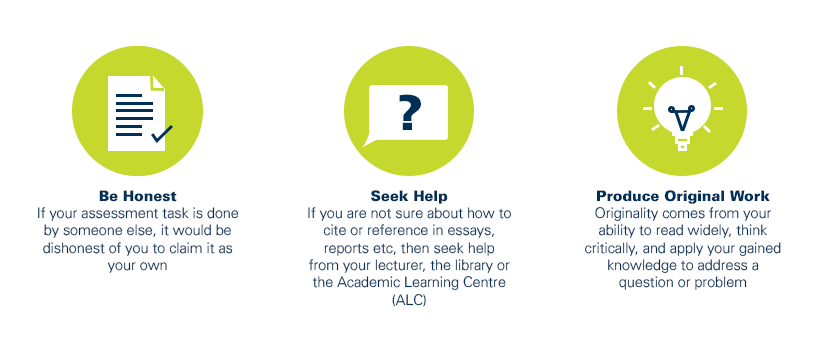
As a CQUniversity student you are expected to act honestly in all aspects of your academic work.
Any assessable work undertaken or submitted for review or assessment must be your own work. Assessable work is any type of work you do to meet the assessment requirements in the unit, including draft work submitted for review and feedback and final work to be assessed.
When you use the ideas, words or data of others in your assessment, you must thoroughly and clearly acknowledge the source of this information by using the correct referencing style for your unit. Using others’ work without proper acknowledgement may be considered a form of intellectual dishonesty.
Participating honestly, respectfully, responsibly, and fairly in your university study ensures the CQUniversity qualification you earn will be valued as a true indication of your individual academic achievement and will continue to receive the respect and recognition it deserves.
As a student, you are responsible for reading and following CQUniversity’s policies, including the Student Academic Integrity Policy and Procedure. This policy sets out CQUniversity’s expectations of you to act with integrity, examples of academic integrity breaches to avoid, the processes used to address alleged breaches of academic integrity, and potential penalties.
What is a breach of academic integrity?
A breach of academic integrity includes but is not limited to plagiarism, self-plagiarism, collusion, cheating, contract cheating, and academic misconduct. The Student Academic Integrity Policy and Procedure defines what these terms mean and gives examples.
Why is academic integrity important?
A breach of academic integrity may result in one or more penalties, including suspension or even expulsion from the University. It can also have negative implications for student visas and future enrolment at CQUniversity or elsewhere. Students who engage in contract cheating also risk being blackmailed by contract cheating services.
Where can I get assistance?
For academic advice and guidance, the Academic Learning Centre (ALC) can support you in becoming confident in completing assessments with integrity and of high standard.
What can you do to act with integrity?