Overview
This unit develops a detail understanding of the impacts and role of industry specific contracts (including lump sum, cost plus, design and build) in the design and construction process including study of: contract types, documents, registration, tendering, analysis, scheduling, general conditions; introduction to Specifications as a part of contract documentation; quality control; introduction to programming techniques; variations to contracts; Conditions of Engagement of Engineering and Architectural Consultants. It looks at organisational structures which ensure effective outcomes including modeling and operations research, decision theory, decision trees, linear and dynamic programming. It provides an understanding of when to use standard or customised forms of building contracts and provides an introduction to the use of Partnering, Alliance Contracting, BOOT contracts and other non traditional forms of contracts. Case studies will be used to demonstrate unit content.
Details
Pre-requisites or Co-requisites
There are no requisites for this unit.
Important note: Students enrolled in a subsequent unit who failed their pre-requisite unit, should drop the subsequent unit before the census date or within 10 working days of Fail grade notification. Students who do not drop the unit in this timeframe cannot later drop the unit without academic and financial liability. See details in the Assessment Policy and Procedure (Higher Education Coursework).
Offerings For Term 1 - 2026
Attendance Requirements
All on-campus students are expected to attend scheduled classes - in some units, these classes are identified as a mandatory (pass/fail) component and attendance is compulsory. International students, on a student visa, must maintain a full time study load and meet both attendance and academic progress requirements in each study period (satisfactory attendance for International students is defined as maintaining at least an 80% attendance record).
Recommended Student Time Commitment
Each 6-credit Undergraduate unit at CQUniversity requires an overall time commitment of an average of 12.5 hours of study per week, making a total of 150 hours for the unit.
Class Timetable
Assessment Overview
Assessment Grading
This is a graded unit: your overall grade will be calculated from the marks or grades for each assessment task, based on the relative weightings shown in the table above. You must obtain an overall mark for the unit of at least 50%, or an overall grade of 'pass' in order to pass the unit. If any 'pass/fail' tasks are shown in the table above they must also be completed successfully ('pass' grade). You must also meet any minimum mark requirements specified for a particular assessment task, as detailed in the 'assessment task' section (note that in some instances, the minimum mark for a task may be greater than 50%). Consult the University's Grades and Results Policy for more details of interim results and final grades.
All University policies are available on the CQUniversity Policy site.
You may wish to view these policies:
- Grades and Results Policy
- Assessment Policy and Procedure (Higher Education Coursework)
- Review of Grade Procedure
- Student Academic Integrity Policy and Procedure
- Academic Progression Policy and Procedure
- Student Refund and Credit Balance Policy and Procedure
- Complaints Policy and Procedure
- Information and Communications Technology Acceptable Use Policy and Procedure
This list is not an exhaustive list of all University policies. The full list of University policies are available on the CQUniversity Policy site.
Feedback, Recommendations and Responses
Every unit is reviewed for enhancement each year. At the most recent review, the following staff and student feedback items were identified and recommendations were made.
Feedback from Student Unit and Teaching Evaluation (SUTE) in T1, 2025
Students indicated that the contracts covered in the unit would benefit from being more current and aligned with contemporary industry practice.
Conduct regular reviews of unit content to ensure the inclusion of current and widely used contract types. Most importantly, we will strengthen alignment with industry standards through consultation with industry partners and professional bodies. Moreover, we will integrate recent case studies and practical examples to reflect contemporary contractual practices and enhance the relevance of student learning.
Feedback from Student Unit and Teaching Evaluation (SUTE) in T1, 2025
Students identified that Moodle resources could be improved by placing greater emphasis on relevant contract types (such as Design and Construct, Project Management, and domestic contracts) with more detailed explanations and discussions. They also suggested reducing the emphasis on PPP and BOLT civil works contracts, which were perceived as less directly applicable.
Revise the Moodle materials to prioritise contract types such as Design and Construct, Project Management, and domestic contracts, while reducing emphasis on PPP and BOLT contracts. We will enhance the depth of content by incorporating detailed explanations, annotated examples, and practical case studies aligned with assessment tasks. In addition, we will engage industry input and use ongoing student feedback to ensure the content remains current, relevant, and effective.
Feedback from Student Unit and Teaching Evaluation (SUTE) in T1, 2025
Students indicated that the Moodle site was difficult to navigate and appeared disorganised, which impacted their ability to locate and engage with learning materials efficiently.
Redesign the Moodle site to improve clarity and logical flow through a structured weekly format, supported by consistent labelling and formatting across all resources. In addition, we will regularly review and streamline content to remove redundancies and ensure materials remain organised, accessible, and user-friendly.
- Explain the need for formal contracts, and the traditional and non-traditional approaches to contracts.
- Describe the use of building contract documents and tender processes.
- Prepare a specification within your area of expertise, being aware of its critical relationship to the other contract documents and the commercial outcome of the project.
- Describe industry protocols for employing consultants, clearly stating the scope of their services.
Alignment of Assessment Tasks to Learning Outcomes
| Assessment Tasks | Learning Outcomes | |||
|---|---|---|---|---|
| 1 | 2 | 3 | 4 | |
| 1 - Online Quiz(zes) - 20% | ||||
| 2 - Case Study - 45% | ||||
| 3 - Reflective Practice Assignment - 35% | ||||
Alignment of Graduate Attributes to Learning Outcomes
| Graduate Attributes | Learning Outcomes | |||
|---|---|---|---|---|
| 1 | 2 | 3 | 4 | |
| 1 - Communication | ||||
| 2 - Problem Solving | ||||
| 3 - Critical Thinking | ||||
| 4 - Information Literacy | ||||
| 5 - Team Work | ||||
| 6 - Information Technology Competence | ||||
| 7 - Cross Cultural Competence | ||||
| 8 - Ethical practice | ||||
| 9 - Social Innovation | ||||
| 10 - First Nations Knowledges | ||||
| 11 - Aboriginal and Torres Strait Islander Cultures | ||||
Textbooks
There are no required textbooks.
IT Resources
- CQUniversity Student Email
- Internet
- Unit Website (Moodle)
- Zoom access for weekly meetings
All submissions for this unit must use the referencing style: Harvard (author-date)
For further information, see the Assessment Tasks.
f.afzal@cqu.edu.au
Week 1
Begin Date: 09 Mar 2026Module/Topic
Introduction to the unit
Chapter
Events and Submissions/Topic
Week 2
Begin Date: 16 Mar 2026Module/Topic
The Contract
Chapter
Events and Submissions/Topic
Week 3
Begin Date: 23 Mar 2026Module/Topic
Specifications
Chapter
Events and Submissions/Topic
Week 4
Begin Date: 30 Mar 2026Module/Topic
The Tendering Process
Chapter
Events and Submissions/Topic
Week 5
Begin Date: 06 Apr 2026Module/Topic
Engaging with Consultants
Chapter
Events and Submissions/Topic
Week 6
Begin Date: 13 Apr 2026Module/Topic
Quality Control
Chapter
Events and Submissions/Topic
Vacation Week
Begin Date: 20 Apr 2026Module/Topic
Chapter
Events and Submissions/Topic
Week 7
Begin Date: 27 Apr 2026Module/Topic
Non-Standard Contracts
Chapter
Events and Submissions/Topic
Week 8
Begin Date: 04 May 2026Module/Topic
Risk Management
Chapter
Events and Submissions/Topic
Week 9
Begin Date: 11 May 2026Module/Topic
Assessment Presentations
Chapter
Events and Submissions/Topic
Week 10
Begin Date: 18 May 2026Module/Topic
Guest Lecture
Chapter
Events and Submissions/Topic
Week 11
Begin Date: 25 May 2026Module/Topic
Course Review
Chapter
Events and Submissions/Topic
Week 12
Begin Date: 01 Jun 2026Module/Topic
Online Quiz
Chapter
Events and Submissions/Topic
Online Quiz Due: Week 12 Thursday (4 June 2026) 6:00 pm AEST
Exam Week
Begin Date: 08 Jun 2026Module/Topic
Chapter
Events and Submissions/Topic
Vacation/Exam Week
Begin Date: 15 Jun 2026Module/Topic
Chapter
Events and Submissions/Topic
1 Case Study
Students work with a detailed, locally contextualised project brief (e.g., medium‑size commercial building) to produce an integrated set of contract‑related artefacts and justify them orally.
Task 1: Report (25%)
Task 2: In class presentation (20%)
Week 9 Monday (11 May 2026) 11:45 pm AEST
Report and PPT to be submitted on Moodle
Week 11 Monday (25 May 2026)
Detailed assessment criteria will be available on Moodle.
AI Assessment Scale: AI Collaboration (You may use Al to assist with specific tasks such as drafting text, refining and evaluating your work. You must critically evaluate and modify any Al-generated content you use).
- Describe the use of building contract documents and tender processes.
- Prepare a specification within your area of expertise, being aware of its critical relationship to the other contract documents and the commercial outcome of the project.
2 Reflective Practice Assignment
A staged reflective journal or portfolio where students connect unit concepts to their own workplace/placement experience , with explicit attention to contracts, specifications and consultant relationships.
Task 1: Thematic reflections (20%)- Students will maintain a 200 word weekly reflection Journal (due in week 12)
Task 2: Integrative reflection (15%)- Students articulate how their understanding of contracts, specifications and consultant engagements has changed in a five minute recorded reflection.
Week 12 Monday (1 June 2026) 11:45 pm AEST
reflective journal and video to be submitted on Moodle
Vacation/Exam Week Monday (15 June 2026)
Detailed assessment criteria will be available on Moodle.
AI Assessment Scale: AI Collaboration (You may use Al to assist with specific tasks such as drafting text, refining and evaluating your work. You must critically evaluate and modify any Al-generated content you use).
- Explain the need for formal contracts, and the traditional and non-traditional approaches to contracts.
- Prepare a specification within your area of expertise, being aware of its critical relationship to the other contract documents and the commercial outcome of the project.
- Describe industry protocols for employing consultants, clearly stating the scope of their services.
3 Online Quiz(zes)
There will be an online Quiz in week 12
Week 12 Thursday (4 June 2026) 6:00 pm AEST
Exam Week Thursday (11 June 2026)
AI Assessment Scale = No AI (You must not use Al at any point during the assessment. You must demonstrate your core skills and knowledge).
This assessment is exempted from the 72-hour submission grace period and must be completed by the stated submission date/time.
- Explain the need for formal contracts, and the traditional and non-traditional approaches to contracts.
- Describe the use of building contract documents and tender processes.
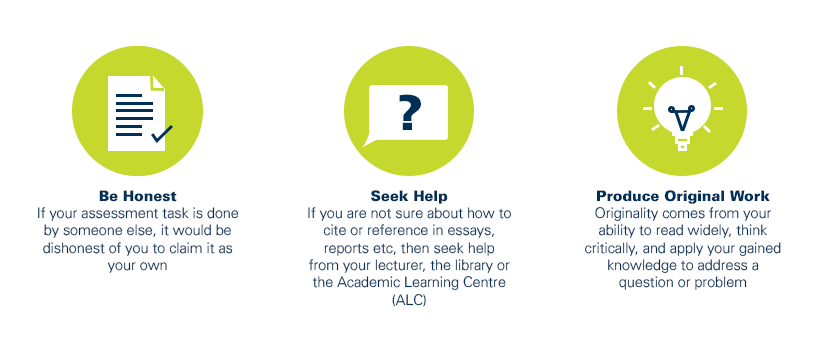
As a CQUniversity student you are expected to act honestly in all aspects of your academic work.
Any assessable work undertaken or submitted for review or assessment must be your own work. Assessable work is any type of work you do to meet the assessment requirements in the unit, including draft work submitted for review and feedback and final work to be assessed.
When you use the ideas, words or data of others in your assessment, you must thoroughly and clearly acknowledge the source of this information by using the correct referencing style for your unit. Using others’ work without proper acknowledgement may be considered a form of intellectual dishonesty.
Participating honestly, respectfully, responsibly, and fairly in your university study ensures the CQUniversity qualification you earn will be valued as a true indication of your individual academic achievement and will continue to receive the respect and recognition it deserves.
As a student, you are responsible for reading and following CQUniversity’s policies, including the Student Academic Integrity Policy and Procedure. This policy sets out CQUniversity’s expectations of you to act with integrity, examples of academic integrity breaches to avoid, the processes used to address alleged breaches of academic integrity, and potential penalties.
What is a breach of academic integrity?
A breach of academic integrity includes but is not limited to plagiarism, self-plagiarism, collusion, cheating, contract cheating, and academic misconduct. The Student Academic Integrity Policy and Procedure defines what these terms mean and gives examples.
Why is academic integrity important?
A breach of academic integrity may result in one or more penalties, including suspension or even expulsion from the University. It can also have negative implications for student visas and future enrolment at CQUniversity or elsewhere. Students who engage in contract cheating also risk being blackmailed by contract cheating services.
Where can I get assistance?
For academic advice and guidance, the Academic Learning Centre (ALC) can support you in becoming confident in completing assessments with integrity and of high standard.
What can you do to act with integrity?