Overview
This unit will introduce you to the procedures, principles and methods of construction used for residential buildings and other structures designated by the National Construction Code (NCC) as being within Building Class 1 or 10. Students who have successfully completed BLCN11033 should not enrol in this unit.
Details
Pre-requisites or Co-requisites
There are no requisites for this unit.
Important note: Students enrolled in a subsequent unit who failed their pre-requisite unit, should drop the subsequent unit before the census date or within 10 working days of Fail grade notification. Students who do not drop the unit in this timeframe cannot later drop the unit without academic and financial liability. See details in the Assessment Policy and Procedure (Higher Education Coursework).
Offerings For Term 1 - 2026
Attendance Requirements
All on-campus students are expected to attend scheduled classes - in some units, these classes are identified as a mandatory (pass/fail) component and attendance is compulsory. International students, on a student visa, must maintain a full time study load and meet both attendance and academic progress requirements in each study period (satisfactory attendance for International students is defined as maintaining at least an 80% attendance record).
Recommended Student Time Commitment
Each 6-credit Undergraduate unit at CQUniversity requires an overall time commitment of an average of 12.5 hours of study per week, making a total of 150 hours for the unit.
Class Timetable
Assessment Overview
Assessment Grading
This is a graded unit: your overall grade will be calculated from the marks or grades for each assessment task, based on the relative weightings shown in the table above. You must obtain an overall mark for the unit of at least 50%, or an overall grade of 'pass' in order to pass the unit. If any 'pass/fail' tasks are shown in the table above they must also be completed successfully ('pass' grade). You must also meet any minimum mark requirements specified for a particular assessment task, as detailed in the 'assessment task' section (note that in some instances, the minimum mark for a task may be greater than 50%). Consult the University's Grades and Results Policy for more details of interim results and final grades.
All University policies are available on the CQUniversity Policy site.
You may wish to view these policies:
- Grades and Results Policy
- Assessment Policy and Procedure (Higher Education Coursework)
- Review of Grade Procedure
- Student Academic Integrity Policy and Procedure
- Academic Progression Policy and Procedure
- Student Refund and Credit Balance Policy and Procedure
- Complaints Policy and Procedure
- Information and Communications Technology Acceptable Use Policy and Procedure
This list is not an exhaustive list of all University policies. The full list of University policies are available on the CQUniversity Policy site.
Feedback, Recommendations and Responses
Every unit is reviewed for enhancement each year. At the most recent review, the following staff and student feedback items were identified and recommendations were made.
Feedback from Unit Evaluation survey.
I believe that there needs to be more explanation for each assessment task. Considering this is an online subject I felt very confused and alone when I was reading the questions.
The unit lecturer will provide more direction with respect to assessment task requirements. It is noted that the lecturer provided live tutorial sessions, presenting an opportunity for students to engage directly and seek direction about assessment tasks.
- Describe the importance of the housing industry to a community and the prevailing regulations for Australian projects
- Explain the residential procurement process and the human roles required
- Apply knowledge of the functions of materials, and details of major building components to develop a residential construction plan that incorporate waste management strategies and complies with regulatory inspection requirements.
- Prepare drawings and construct a physical model for a residential project.
- Apply knowledge of temporary works (including scaffolding, formwork, falsework, and plant selection processes) to plan and justify their use in residential construction projects.
Alignment of Assessment Tasks to Learning Outcomes
| Assessment Tasks | Learning Outcomes | ||||
|---|---|---|---|---|---|
| 1 | 2 | 3 | 4 | 5 | |
| 1 - Written Assessment - 30% | |||||
| 2 - Project (applied) - 50% | |||||
| 3 - Online Quiz(zes) - 20% | |||||
Alignment of Graduate Attributes to Learning Outcomes
| Graduate Attributes | Learning Outcomes | ||||
|---|---|---|---|---|---|
| 1 | 2 | 3 | 4 | 5 | |
| 1 - Communication | |||||
| 2 - Problem Solving | |||||
| 3 - Critical Thinking | |||||
| 4 - Information Literacy | |||||
| 5 - Team Work | |||||
| 6 - Information Technology Competence | |||||
| 7 - Cross Cultural Competence | |||||
| 8 - Ethical practice | |||||
| 9 - Social Innovation | |||||
| 10 - First Nations Knowledges | |||||
| 11 - Aboriginal and Torres Strait Islander Cultures | |||||
Textbooks
Building Construction Handbook
- Edition: 12th (2020)
- Authors: Roy Chudley & Roger Greeno
- Routledge
- Abingdon Abingdon , Oxon , UK
- ISBN: 9780367135430
- Binding: Paperback
Building your own home: A comprehensive guide for owner-builders
- (2020)
- Authors: George Wilkie
- New Holland
- Wahroonga Wahroonga , NSW , Australia
- ISBN: 9781742572161
Site Establishment, Formwork and Framing
- Edition: 4th (2020)
- Authors: Adrian Laws
- Cengage Learning
- South Melbourne South Melbourne , VIC , Australia
- ISBN: 9780170422529
- Binding: Paperback
The Australian House Building Manual
- Edition: 9 (2020)
- Authors: Allan Staines
- Pinedale Press
- Caloundra Caloundra , Queensland , Australia
- ISBN: 9781875217076
IT Resources
- CQUniversity Student Email
- Internet
- Unit Website (Moodle)
- Computer headset (microphone speaker combo)
- Microsoft Office or equivalent software
- Web camera (webcam)
- Zoom access WEEKLY
All submissions for this unit must use the referencing style: Harvard (author-date)
For further information, see the Assessment Tasks.
o.ogunmakinde@cqu.edu.au
Week 1
Begin Date: 09 Mar 2026Module/Topic
1. Introduction to design and construction of domestic buildings
Chapter
Recommended reading textbook: George Wilkie, chapters 4, 5, 6, 8, and 9, and other resources provided on the weekly Moodle learning site.
Events and Submissions/Topic
This topic introduces students to how houses are planned, designed, and built. Students learn the basic steps involved in turning an idea for a home into a real building, starting from understanding what a client needs, through sketching early design ideas, to preparing simple drawings.
Introduction to Assessment 1 (30%), which addresses learning outcomes 1 and 2.
Week 2
Begin Date: 16 Mar 2026Module/Topic
1. Introduction to design and construction of domestic buildings (continued)
Chapter
Recommended reading textbook: George Wilkie, chapters 4, 5, 6, 8, and 9, and other resources provided on the weekly Moodle learning site.
Events and Submissions/Topic
This topic introduces students to how houses are planned, designed, and built. Students learn the basic steps involved in turning an idea for a home into a real building, starting from understanding what a client needs, through sketching early design ideas, to preparing simple drawings.
Week 3
Begin Date: 23 Mar 2026Module/Topic
2. The procurement process
Chapter
Recommended reading textbook: George Wilkie, chapters 16, 17, 18, 19, and 20, and other resources provided on the weekly Moodle learning site.
Events and Submissions/Topic
This topic introduces students to how residential building projects are planned, organised, and delivered from start to finish. Students learn what “procurement” means in construction and explore the main steps involved, including selecting a builder, choosing the right contract type, obtaining quotes, and understanding how materials, labour, and services are sourced.
Week 4
Begin Date: 30 Mar 2026Module/Topic
3. Domestic building components
Chapter
Please refer to the Moodle site for specific text readings and additional unit information.
Events and Submissions/Topic
This topic introduces students to the main structural and non‑structural parts that make up a residential building. Students learn about the purpose and basic functions of key components, including footings, slabs, floors, walls, roofs, windows, doors, and building services and how these elements work together to create a safe and functional home.
Week 5
Begin Date: 06 Apr 2026Module/Topic
3. Domestic building components (continued)
Chapter
Please refer to the Moodle site for specific text readings and additional unit information.
Events and Submissions/Topic
This topic introduces students to the main structural and non‑structural parts that make up a residential building. Students learn about the purpose and basic functions of key components, including footings, slabs, floors, walls, roofs, windows, doors, and building services and how these elements work together to create a safe and functional home.
Introduction to Assessment 2 (50%), which addresses learning outcomes 3, 4, and 5.
Assessment 1 Due: Week 5 Monday (6 Apr 2026) 11:45 pm AEST
Week 6
Begin Date: 13 Apr 2026Module/Topic
4. Temporary structures: scaffoldings, formwork, falsework
Chapter
Please refer to the Moodle site for specific text readings and additional unit information.
Events and Submissions/Topic
This topic introduces students to the temporary structures used to support construction activities on residential building sites. Students learn the purpose and basic principles of scaffolding, which provides safe access and working platforms; formwork, which shapes and contains concrete until it hardens; and falsework, which temporarily supports formwork and other building elements during construction.
Vacation Week
Begin Date: 20 Apr 2026Module/Topic
No scheduled class
Chapter
Consider using this week to work on assessment 2 or take a wellness break.
Events and Submissions/Topic
Week 7
Begin Date: 27 Apr 2026Module/Topic
4. Temporary structures: scaffoldings, formwork, falsework (continued)
Chapter
Please refer to the Moodle site for specific text readings and additional unit information.
Events and Submissions/Topic
This topic introduces students to the temporary structures used to support construction activities on residential building sites. Students learn the purpose and basic principles of scaffolding, which provides safe access and working platforms; formwork, which shapes and contains concrete until it hardens; and falsework, which temporarily supports formwork and other building elements during construction.
Week 8
Begin Date: 04 May 2026Module/Topic
5. Waste minimisation
Chapter
Please refer to the Moodle site for specific text readings and additional unit information.
Events and Submissions/Topic
This topic introduces students to the importance of reducing waste on residential construction sites. Students learn about the common sources of waste, such as off‑cuts, packaging, spoil, and incorrect ordering, and explore practical strategies for preventing, reusing, and recycling materials.
Week 9
Begin Date: 11 May 2026Module/Topic
6. Residential construction drawings
Chapter
Recommended reading textbook: George Wilkie, chapters 12, 13, 14, and 15, and other resources provided on the weekly Moodle learning site.
Events and Submissions/Topic
This topic introduces students to the different types of drawings used in residential construction and how they communicate design and construction information. Students learn to recognise and interpret key drawing types such as site plans, floor plans, elevations, sections, and detail drawings. The topic also covers basic drawing conventions, including scales, symbols, dimensions, and notation, helping students understand how builders, designers, and trades use drawings to plan and construct a home.
Assessment 2 Due: Week 9 Monday (11 May 2026) 11:45 pm AEST
Week 10
Begin Date: 18 May 2026Module/Topic
7. Construction plant
Chapter
Please refer to the Moodle site for specific text readings and additional unit information.
Events and Submissions/Topic
This topic introduces students to the types of mechanical equipment (often called construction plant) used on residential building sites to assist with excavation, lifting, compaction, and material handling. Students learn about common plants, such as excavators, skid‑steer loaders, concrete mixers, compactors, and small cranes, including what each machine does and when it is used in domestic construction.
Introduction to Assessment 3 (20%), which addresses learning outcomes 1, 2, 3, 4, and 5.
Week 11
Begin Date: 25 May 2026Module/Topic
8. Inspection procedures
Chapter
Please refer to the Moodle site for specific text readings and additional unit information.
Events and Submissions/Topic
This topic introduces students to the basic inspection procedures used in residential construction to ensure that building work meets safety, quality, and regulatory requirements. Students learn why inspections are necessary, who carries them out (such as building certifiers, supervisors, and specialised inspectors), and at which key stages of a project inspections commonly occur (e.g., footing, slab, framing, and final inspections).
Week 12
Begin Date: 01 Jun 2026Module/Topic
9. Revision
Chapter
Review the reading and learning materials covered in this unit.
Events and Submissions/Topic
This session provides students with an opportunity to review and consolidate the key concepts covered throughout the unit. Students revisit major themes such as building components, construction drawings, temporary structures, construction plant, procurement, inspections, and site management.
Exam Week
Begin Date: 08 Jun 2026Module/Topic
No exam for this unit
Chapter
Events and Submissions/Topic
Vacation/Exam Week
Begin Date: 15 Jun 2026Module/Topic
Chapter
Events and Submissions/Topic
1 Written Assessment
This assessment is designed to address Learning Outcomes 1 and 2, which focus on your understanding of Australian residential construction regulations and the procurement processes used within the residential building sector.
For this written assessment, you are required to conduct independent research and provide well‑supported responses to a series of questions. These questions will guide you through key aspects of regulatory requirements, industry standards, and procurement pathways commonly applied in Australian residential construction projects.
You are encouraged to research using a combination of industry publications, government websites, academic sources, and professional guidelines to support your answers.
For further guidance, including detailed assessment instructions, marking criteria, formatting expectations, and submission procedures, please refer to the Assessment section on the unit Moodle site. Ensure you review all relevant materials to complete the task successfully and meet all submission requirements.
AI Assessment Scale: AI Planning (You may use AI for planning, idea development, and research. Your final submission should show how you have developed and refined these ideas.)
Week 5 Monday (6 Apr 2026) 11:45 pm AEST
Your submission must be done via the assessment link in Moodle by uploading your file following the on-screen instructions.
Vacation Week Monday (20 Apr 2026)
If there is any delay, we will notify you via Moodle.
Your assessment submission must be in an electronic format.
Before or on the nominated due date, upload your work following the on-screen instructions. Your submission will be processed through the similarity detection software, Turnitin. You may amend your work based on the detection report. You must ensure that the work is your own or has been correctly referenced to the appropriate author(s), aligning with the unit's Academic Integrity Statement.
The assessment will be assessed on the following criteria:
-
A clear understanding of relevant legislation, codes, and standards, such as the National Construction Code (NCC), state/territory building regulations, and local council requirements.
-
An informed explanation of procurement methods, including their characteristics, advantages, limitations, and suitability for residential projects.
-
The ability to reference credible sources and apply regulatory knowledge to practical construction scenarios where required.
-
The use of appropriate professional written and visual communications to support your submission
-
Clarity and succinctness of expression.
For further guidance, including detailed assessment instructions, marking criteria, formatting expectations, and submission procedures, please refer to the Assessment section on the unit Moodle site. Ensure you review all relevant materials to complete the task successfully and meet all submission requirements.
- Describe the importance of the housing industry to a community and the prevailing regulations for Australian projects
- Explain the residential procurement process and the human roles required
2 Project (applied)
This assessment is designed to demonstrate your achievement of Learning Outcomes 3, 4, and 5, which focus on your understanding of building materials, major building components, and the ability to apply this knowledge in the context of residential construction. The task requires both technical knowledge and practical skills as you design, document, and communicate the construction of a residential building.
In this assessment, you will be required to:
1. Demonstrate Knowledge of Materials and Building Components
2. Prepare Annotated Drawings
3. Construct a Physical Model of Your Residential Design
4. Explain Your Design Through a Narrated Video or Presentation
5. Demonstrate Understanding of Temporary Works and Plant Selection
For further guidance, including detailed assessment instructions, marking criteria, formatting expectations, and submission procedures, please refer to the Assessment section on the unit Moodle site. Ensure you review all relevant materials to complete the task successfully and meet all submission requirements.
AI Assessment Scale: No AI (You must not use AI at any point during the assessment. You must demonstrate your core skills and knowledge).
Week 9 Monday (11 May 2026) 11:45 pm AEST
Your submission must be done via the assessment link in Moodle by uploading your file following the on-screen instructions.
Week 11 Monday (25 May 2026)
Via Moodle
Your assessment submission must be in an electronic format.
Before or on the nominated due date, upload your work following the on-screen instructions. Your submission will be processed through the similarity detection software, Turnitin. You may amend your work based on the detection report. You must ensure that the work is your own or has been correctly referenced to the appropriate author(s), aligning with the unit's Academic Integrity Statement.
The assessment will be assessed on how you:
- Demonstrate understanding of materials and building components
- Produce clear and accurate annotated drawings
- Construct a well‑developed physical model
- Communicate your design effectively in a narrated presentation
- Explain temporary works and plant selection
For further guidance, including detailed assessment instructions, marking criteria, formatting expectations, and submission procedures, please refer to the Assessment section on the unit Moodle site. Ensure you review all relevant materials to complete the task successfully and meet all submission requirements.
- Apply knowledge of the functions of materials, and details of major building components to develop a residential construction plan that incorporate waste management strategies and complies with regulatory inspection requirements.
- Prepare drawings and construct a physical model for a residential project.
- Apply knowledge of temporary works (including scaffolding, formwork, falsework, and plant selection processes) to plan and justify their use in residential construction projects.
3 Online Quiz(zes)
This online quiz is designed to assess your achievement of all learning outcomes for the unit. The quiz evaluates your understanding of key concepts, principles, and practical applications covered throughout the unit. The assessment consists of a mixture of multiple‑choice questions and short‑answer questions. There are 20 questions in total, and each question is worth one mark, giving the quiz a total value of 20 marks.
You are required to complete the quiz independently and within the specified timeframe provided on the unit Moodle site. The quiz must be completed in a single sitting, and once started, the timer will begin counting down. It is recommended that you prepare by reviewing weekly learning materials, lecture notes, readings, and any additional resources provided throughout the term.
Detailed instructions, time limits, and access information are available in the Assessment section on Moodle. Ensure you read all guidelines carefully before attempting the quiz.
AI Assessment Scale: No AI (You must not use AI at any point during the assessment. You must demonstrate your core skills and knowledge).
This assessment is exempted from the 72-hour submission grace period and must be completed by the stated submission date/time
Exam Week Monday (8 June 2026) 11:45 pm AEST
Submission via Moodle Unit Site
Exam Week Tuesday (9 June 2026)
Via Moodle unit site
Your responses will be automatically marked by the system.
- Describe the importance of the housing industry to a community and the prevailing regulations for Australian projects
- Explain the residential procurement process and the human roles required
- Apply knowledge of the functions of materials, and details of major building components to develop a residential construction plan that incorporate waste management strategies and complies with regulatory inspection requirements.
- Apply knowledge of temporary works (including scaffolding, formwork, falsework, and plant selection processes) to plan and justify their use in residential construction projects.
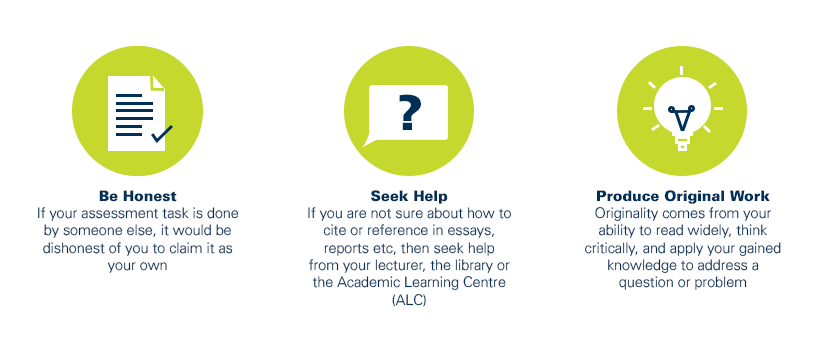
As a CQUniversity student you are expected to act honestly in all aspects of your academic work.
Any assessable work undertaken or submitted for review or assessment must be your own work. Assessable work is any type of work you do to meet the assessment requirements in the unit, including draft work submitted for review and feedback and final work to be assessed.
When you use the ideas, words or data of others in your assessment, you must thoroughly and clearly acknowledge the source of this information by using the correct referencing style for your unit. Using others’ work without proper acknowledgement may be considered a form of intellectual dishonesty.
Participating honestly, respectfully, responsibly, and fairly in your university study ensures the CQUniversity qualification you earn will be valued as a true indication of your individual academic achievement and will continue to receive the respect and recognition it deserves.
As a student, you are responsible for reading and following CQUniversity’s policies, including the Student Academic Integrity Policy and Procedure. This policy sets out CQUniversity’s expectations of you to act with integrity, examples of academic integrity breaches to avoid, the processes used to address alleged breaches of academic integrity, and potential penalties.
What is a breach of academic integrity?
A breach of academic integrity includes but is not limited to plagiarism, self-plagiarism, collusion, cheating, contract cheating, and academic misconduct. The Student Academic Integrity Policy and Procedure defines what these terms mean and gives examples.
Why is academic integrity important?
A breach of academic integrity may result in one or more penalties, including suspension or even expulsion from the University. It can also have negative implications for student visas and future enrolment at CQUniversity or elsewhere. Students who engage in contract cheating also risk being blackmailed by contract cheating services.
Where can I get assistance?
For academic advice and guidance, the Academic Learning Centre (ALC) can support you in becoming confident in completing assessments with integrity and of high standard.
What can you do to act with integrity?