Overview
This unit will first pave the foundation to understand how contracting parties engage in enforceable contracts, both in respect of building owners and contractors, as well as contractors and subcontractors. Then, you gradually obtain knowledge of how the dynamics of the contract change during the course of the building project, in respect of variations and extensions of time. This will further ensure you become familiar with the circumstances of how contracts can be breached, the methods of providing remedy for the breaches, and of dispute resolution. The unit will then consider the legal framework of government legislation in terms of the Acts of Parliament that relate to Builders Licensing, the Building Code of Australia, The Development Act and Occupational Health and Safety. All previous knowledge areas make you become competent in the reading and understanding of building contracts, and the application of government regulations that apply to building projects.
Details
Pre-requisites or Co-requisites
There are no requisites for this unit.
Important note: Students enrolled in a subsequent unit who failed their pre-requisite unit, should drop the subsequent unit before the census date or within 10 working days of Fail grade notification. Students who do not drop the unit in this timeframe cannot later drop the unit without academic and financial liability. See details in the Assessment Policy and Procedure (Higher Education Coursework).
Offerings For Term 3 - 2026
Attendance Requirements
All on-campus students are expected to attend scheduled classes - in some units, these classes are identified as a mandatory (pass/fail) component and attendance is compulsory. International students, on a student visa, must maintain a full time study load and meet both attendance and academic progress requirements in each study period (satisfactory attendance for International students is defined as maintaining at least an 80% attendance record).
Recommended Student Time Commitment
Each 6-credit Undergraduate unit at CQUniversity requires an overall time commitment of an average of 12.5 hours of study per week, making a total of 150 hours for the unit.
Class Timetable
Assessment Overview
| Assessment Task | Part Weighting (% of assessment) |
Assessment Security Level | Gen AI Guidance Levels |
|---|---|---|---|
| 1. Assessment 1 (20% of unit ) | |||
| CASE STUDY (Case Study) | 100% of 20% | Low | AI-Assisted (Guided Collaboration) |
| 2. Assessment 2 (30% of unit ) | |||
| CASE STUDY (Case Study) | 100% of 30% | Low | AI-Assisted (Guided Collaboration) |
| 3. Assessment 3 (50% of unit ) | |||
| ORAL EXAMINATION (Oral Examination) | 100% of 50% | High | No Gen AI Use |
Assessment Grading
This is a graded unit: your overall grade will be calculated from the marks or grades for each assessment task, based on the relative weightings shown in the table above. You must obtain an overall mark for the unit of at least 50%, or an overall grade of 'pass' in order to pass the unit. If any 'pass/fail' tasks are shown in the table above they must also be completed successfully ('pass' grade). You must also meet any minimum mark requirements specified for a particular assessment task, as detailed in the 'assessment task' section (note that in some instances, the minimum mark for a task may be greater than 50%). Consult the University's Grades and Results Policy for more details of interim results and final grades.
All University policies are available on the CQUniversity Policy site.
You may wish to view these policies:
- Grades and Results Policy
- Assessment Policy and Procedure (Higher Education Coursework)
- Review of Grade Procedure
- Student Academic Integrity Policy and Procedure
- Academic Progression Policy and Procedure
- Student Refund and Credit Balance Policy and Procedure
- Complaints Policy and Procedure
- Information and Communications Technology Acceptable Use Policy and Procedure
This list is not an exhaustive list of all University policies. The full list of University policies are available on the CQUniversity Policy site.
Feedback, Recommendations and Responses
Every unit is reviewed for enhancement each year. At the most recent review, the following staff and student feedback items were identified and recommendations were made.
Feedback from Staff Feedback
The unit content requires periodic review to ensure alignment with current construction industry regulations and standards, reflecting recent changes in practice.
It is recommended that the unit materials be systematically reviewed and updated to incorporate the latest relevant regulations and industry standards. This will help ensure content remains current, accurate, and aligned with professional practice expectations.
Feedback from Staff Feedback
While the unit already includes practical examples, the coverage of applied case material could be strengthened, particularly regarding construction health and safety regulations.
It is recommended to expand the range of practical examples used in lectures and learning materials, placing greater emphasis on construction health and safety scenarios. This will further support students in connecting regulatory content to real-world industry practice and improve their applied understanding.
Feedback from Staff Feedback
Students would benefit from additional supporting explanations being made more explicit and accessible within the Moodle learning environment, particularly regarding the regulatory system.
It is recommended to enhance the Moodle site by adding more structured explanatory notes and supporting content alongside existing materials. This will improve clarity of key concepts, strengthen students’ understanding of the regulatory framework, and provide a more consistent reference point for independent study and revision.
- Contrast and compare how contracting parties engage in enforceable contracts, both in respect of building owners and contractors, as well as contractors and subcontractors.
- Investigate the dynamics of the contract change during the course of the building project, in respect of variations and extensions of time.
- Discuss the circumstances of how contracts can be breached, the methods of providing remedy for the breaches, and of dispute resolution.
- Explain the legal framework of government legislation in terms of the Acts of Parliament that relate to Builders Licensing, the Building Code of Australia, The Development Act and Occupational Health and Safety.
- Describe building contracts, and the application of government regulations that apply to building projects.
N/A
Alignment of Assessment Tasks to Learning Outcomes
| Assessment Tasks | Learning Outcomes | ||||
|---|---|---|---|---|---|
| 1 | 2 | 3 | 4 | 5 | |
|
1.
Assessment 1
(20% of unit )
Case Study
|
|||||
|
2.
Assessment 2
(30% of unit )
Case Study
|
|||||
|
3.
Assessment 3
(50% of unit )
Oral Examination
|
|||||
Alignment of Graduate Attributes to Learning Outcomes
| Graduate Attributes | Learning Outcomes | ||||
|---|---|---|---|---|---|
| 1 | 2 | 3 | 4 | 5 | |
| 1 - Communication | |||||
| 2 - Problem Solving | |||||
| 3 - Critical Thinking | |||||
| 4 - Information Literacy | |||||
| 5 - Team Work | |||||
| 6 - Information Technology Competence | |||||
| 7 - Cross Cultural Competence | |||||
| 8 - Ethical practice | |||||
| 9 - Social Innovation | |||||
| 10 - First Nations Knowledges | |||||
| 11 - Aboriginal and Torres Strait Islander Cultures | |||||
Textbooks
Construction law in Australia
- Edition: 4th (2018)
- Authors: Bailey, Ian
- Thomson Reuters Australia, Limited
- Pyrmont Pyrmont , NSW , Australia
- ISBN: 9780455500515
- Binding: Hardcover
IT Resources
- CQUniversity Student Email
- Internet
- Unit Website (Moodle)
- Zoom app on your smart phone or access to Zoom on your laptop
- Microphone and headset (and prefereably a camera) to participate in Zoom sessions
- Micorsoft Word or PDF software for preparation of assessment items in the appropriate format
All submissions for this unit must use the referencing style: Harvard (author-date)
For further information, see the Assessment Tasks.
k.mirzaei@cqu.edu.au
Week 1
Begin Date: 09 Nov 2026Module/Topic
Sources and application of law, torts and contracts
Chapter
1
Events and Submissions/Topic
Week 2
Begin Date: 16 Nov 2026Module/Topic
Types of building contracts
Chapter
2
Events and Submissions/Topic
Week 3
Begin Date: 23 Nov 2026Module/Topic
The role of contract documents
Chapter
3
Events and Submissions/Topic
Week 4
Begin Date: 30 Nov 2026Module/Topic
Consequences of breach of contract
Chapter
4
Events and Submissions/Topic
Week 5
Begin Date: 07 Dec 2026Module/Topic
Tendering procedures for building projects
Chapter
5
Events and Submissions/Topic
Assessment 1 is due on Thursday of Week 5.
CASE STUDY Due: Week 5 Thursday (10 Dec 2026) 11:59 pm AEST
Week 6
Begin Date: 14 Dec 2026Module/Topic
Subcontracting arrangements
Chapter
6
Events and Submissions/Topic
Mid-Term Break
Begin Date: 21 Dec 2026Module/Topic
Chapter
Events and Submissions/Topic
Week 7
Begin Date: 04 Jan 2027Module/Topic
Arbitration systems and options
Chapter
7
Events and Submissions/Topic
Week 8
Begin Date: 11 Jan 2027Module/Topic
Negligence and the law of torts
Chapter
8
Events and Submissions/Topic
Week 9
Begin Date: 18 Jan 2027Module/Topic
Regulation of construction
Chapter
9
Events and Submissions/Topic
Assessment 2 is due on Thursday of Week 9.
CASE STUDY Due: Week 9 Thursday (21 Jan 2027) 11:59 pm AEST
Week 10
Begin Date: 25 Jan 2027Module/Topic
Application of Occupational Health and Safety (OH&S) Law in Relation to Construction Sites
Chapter
10
Events and Submissions/Topic
Week 11
Begin Date: 01 Feb 2027Module/Topic
Professional standards, liability and licensing for building professionals
Chapter
11
Events and Submissions/Topic
Week 12
Begin Date: 08 Feb 2027Module/Topic
Planning regulations and application requirements
Chapter
12
Events and Submissions/Topic
Assessment 3 is due on Thursday of Week 12.
ORAL EXAMINATION Due: Week 12 Thursday (11 Feb 2027) 11:59 pm AEST
Exam Week
Begin Date: 15 Feb 2027Module/Topic
Chapter
Events and Submissions/Topic
1. Assessment 1 ( 20% of unit )
Case Study
Assessment 1 is a Case Study-based assessment requiring students to read a Hypothetical case study and answer the questions related to comparing how contracting parties engage in enforceable contracts and investigating the dynamics of the contract change during the course of the building project, in respect of variations and extensions of time. Assessment 1 is aligned with Unit Learning Outcomes 1, 2, and 3 which are as below:
- Unit Learning Outcomes 1: Contrast and compare how contracting parties engage in enforceable contracts, both in respect of building owners and contractors, as well as contractors and subcontractors.
- Unit Learning Outcomes 2: Investigate the dynamics of the contract change during the course of the building project, in respect of variations and extensions of time.
- Unit Learning Outcomes 3: Describe building contracts, and the application of government regulations that apply to building projects.
Gen AI Guidance Levels: AI-Assisted (Guided Collaboration), students may use appropriate Gen AI tools to help develop your work, such as planning, brainstorming and drafting, but they stay responsible for the final product and must be able to explain, verify and reference it as their own.
It is essential that your submission is entirely your own. If you use any sources, they must be appropriately cited in accordance with the CQU Harvard referencing style, as outlined in the CQU Harvard referencing guide.
Additional guidance and information about the assessment requirements can be found on the unit's Moodle site.
Week 5 Thursday (10 Dec 2026) 11:59 pm AEST
Week 7 Thursday (7 Jan 2027)
Student performance in this assessment will be evaluated based on their ability to:
- Demonstrate understanding of key legal principles relevant to building and construction contracts.
- Apply these principles accurately and logically to complex factual scenarios.
- Analyse and interpret contractual provisions, legal duties, and procedural requirements.
- Critically evaluate alternative legal outcomes and provide well-reasoned conclusions.
- Communicate findings clearly, coherently, and in a professionally structured format.
For further information, please refer to the marking rubric provided in the assessment brief.
- Contrast and compare how contracting parties engage in enforceable contracts, both in respect of building owners and contractors, as well as contractors and subcontractors.
- Investigate the dynamics of the contract change during the course of the building project, in respect of variations and extensions of time.
- Describe building contracts, and the application of government regulations that apply to building projects.
2. Assessment 2 ( 30% of unit )
Case Study
Assessment 2 is a Case Study-based assessment requiring students to read a Hypothetical case study and answer the questions related to investigating the dynamics of the contract change during the course of the building project, in respect of variations and extensions of time, and discussing the circumstances of how contracts can be breached, the methods of providing remedy for the breaches, and of dispute resolution. Assessment 2 is aligned with Unit Learning Outcomes 1, 2, 3, 4, and 5 which are as below:
- Unit Learning Outcomes 1: Contrast and compare how contracting parties engage in enforceable contracts, both in respect of building owners and contractors, as well as contractors and subcontractors.
- Unit Learning Outcomes 2: Investigate the dynamics of the contract change during the course of the building project, in respect of variations and extensions of time.
- Unit Learning Outcomes 3: Discuss the circumstances of how contracts can be breached, the methods of providing remedy for the breaches, and of dispute resolution.
- Unit Learning Outcomes 4: Explain the legal framework of government legislation in terms of the Acts of Parliament that relate to Builders Licensing, the Building Code of Australia, The Development Act and Occupational Health and Safety.
- Unit Learning Outcomes 5: Describe building contracts, and the application of government regulations that apply to building projects.
Gen AI Guidance Levels: AI-Assisted (Guided Collaboration), students may use appropriate Gen AI tools to help develop your work, such as planning, brainstorming and drafting, but they stay responsible for the final product and must be able to explain, verify and reference it as their own.
It is essential that your submission is entirely your own. If you use any sources, they must be appropriately cited in accordance with the CQU Harvard referencing style, as outlined in the CQU Harvard referencing guide.
Additional guidance and information about the assessment requirements can be found on the unit's Moodle site.
Week 9 Thursday (21 Jan 2027) 11:59 pm AEST
Week 11 Thursday (4 Feb 2027)
Students will be assessed on their ability to:
- Demonstrate understanding of key legal principles governing tendering, contracting, and dispute resolution in construction projects.
- Apply relevant legal doctrines and ethical considerations to complex, real-world case scenarios.
- Analyse relationships between contracting parties and evaluate liability, risk, and procedural fairness.
- Interpret and apply principles of negligence and economic loss to construction-related disputes.
- Present clear, logical, and well-supported legal reasoning consistent with professional standards.
For further information, please refer to the marking rubric provided in the assessment brief.
- Contrast and compare how contracting parties engage in enforceable contracts, both in respect of building owners and contractors, as well as contractors and subcontractors.
- Investigate the dynamics of the contract change during the course of the building project, in respect of variations and extensions of time.
- Discuss the circumstances of how contracts can be breached, the methods of providing remedy for the breaches, and of dispute resolution.
- Explain the legal framework of government legislation in terms of the Acts of Parliament that relate to Builders Licensing, the Building Code of Australia, The Development Act and Occupational Health and Safety.
- Describe building contracts, and the application of government regulations that apply to building projects.
3. Assessment 3 ( 50% of unit )
Oral Examination
Assessment 3 is an oral examination (viva voce) in which students respond verbally to a hypothetical case study and to questions from the examiner. Students explain the legal framework of government legislation, including the Acts of Parliament that relate to Builders Licensing, the Building Code of Australia, the Development Act and Occupational Health and Safety. They also describe building contracts and explain how government regulations apply to building projects. Students receive a hypothetical case study before the viva so they can prepare. During the viva, they present their understanding and answer follow-up questions without notes beyond any permitted material. The examiner may ask students to justify, clarify or apply their answers to the case study.
Assessment 3 is aligned with Unit Learning Outcomes 3, 4 and 5, which are as below:
- Unit Learning Outcome 3: Discuss the circumstances of how contracts can be breached, the methods of providing remedy for the breaches, and of dispute resolution.
- Unit Learning Outcome 4: Explain the legal framework of government legislation in terms of the Acts of Parliament that relate to Builders Licensing, the Building Code of Australia, The Development Act and Occupational Health and Safety.
- Unit Learning Outcome 5: Describe building contracts, and the application of government regulations that apply to building projects.
Gen AI Guidance Levels: No Gen AI Use.
This assessment is exempt from the 72-hour submission grace period.
It is essential that your responses are entirely your own. If you use any sources while preparing, you should be able to name them and explain how you used them. Any sources referred to during the viva must be identified clearly.
Additional guidance and information about the assessment requirements, including viva format, timing, scheduling and marking criteria, can be found on the unit's Moodle site.
Week 12 Thursday (11 Feb 2027) 11:59 pm AEST
Viva voce held in Week 12, booked through Moodle.
Exam Week Friday (19 Feb 2027)
The mark will be returned before the certification of grades.
Students will be assessed on their ability to:
- Correctly determine and justify NCC building classifications and explain regulatory consequences.
- Interpret performance-based solutions and demonstrate how compliance is achieved under the NCC.
- Identify Work Health & Safety duties and evaluate breaches and regulatory outcomes.
- Analyse the roles, professional duties and liabilities of certifiers, including ethical considerations.
- Explain planning hierarchy issues and justify any higher-level interventions or call-ins.
For further information, please refer to the marking rubric provided in the assessment brief.
- Discuss the circumstances of how contracts can be breached, the methods of providing remedy for the breaches, and of dispute resolution.
- Explain the legal framework of government legislation in terms of the Acts of Parliament that relate to Builders Licensing, the Building Code of Australia, The Development Act and Occupational Health and Safety.
- Describe building contracts, and the application of government regulations that apply to building projects.
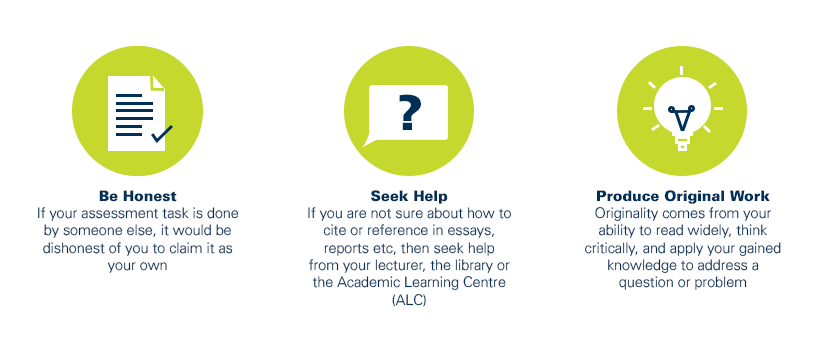
As a CQUniversity student you are expected to act honestly in all aspects of your academic work.
Any assessable work undertaken or submitted for review or assessment must be your own work. Assessable work is any type of work you do to meet the assessment requirements in the unit, including draft work submitted for review and feedback and final work to be assessed.
When you use the ideas, words or data of others in your assessment, you must thoroughly and clearly acknowledge the source of this information by using the correct referencing style for your unit. Using others’ work without proper acknowledgement may be considered a form of intellectual dishonesty.
Participating honestly, respectfully, responsibly, and fairly in your university study ensures the CQUniversity qualification you earn will be valued as a true indication of your individual academic achievement and will continue to receive the respect and recognition it deserves.
As a student, you are responsible for reading and following CQUniversity’s policies, including the Student Academic Integrity Policy and Procedure. This policy sets out CQUniversity’s expectations of you to act with integrity, examples of academic integrity breaches to avoid, the processes used to address alleged breaches of academic integrity, and potential penalties.
What is a breach of academic integrity?
A breach of academic integrity includes but is not limited to plagiarism, self-plagiarism, collusion, cheating, contract cheating, and academic misconduct. The Student Academic Integrity Policy and Procedure defines what these terms mean and gives examples.
Why is academic integrity important?
A breach of academic integrity may result in one or more penalties, including suspension or even expulsion from the University. It can also have negative implications for student visas and future enrolment at CQUniversity or elsewhere. Students who engage in contract cheating also risk being blackmailed by contract cheating services.
Where can I get assistance?
For academic advice and guidance, the Academic Learning Centre (ALC) can support you in becoming confident in completing assessments with integrity and of high standard.
What can you do to act with integrity?