Overview
This unit will develop your knowledge on the physical and chemical properties, usage, durability, innovation, and disposal of building materials. You will explore and understand environmental impacts of building materials, their roles in contributing to sustainable design and a circular economy, and innovative building materials and systems through examining real-world practical examples i.e. case study buildings. You will also learn about: relevant Australian Standards; quality control procedures for the manufacture, testing, and handling of materials; and life cycle assessments and conditions through recycling, re-use, by-products synergy, and resource efficiency. International standards will be introduced selectively where relevant to support comparison and professional awareness, while maintaining Australian Standards as the primary reference point
Details
Pre-requisites or Co-requisites
There are no requisites for this unit.
Important note: Students enrolled in a subsequent unit who failed their pre-requisite unit, should drop the subsequent unit before the census date or within 10 working days of Fail grade notification. Students who do not drop the unit in this timeframe cannot later drop the unit without academic and financial liability. See details in the Assessment Policy and Procedure (Higher Education Coursework).
Offerings For Term 1 - 2026
Attendance Requirements
All on-campus students are expected to attend scheduled classes - in some units, these classes are identified as a mandatory (pass/fail) component and attendance is compulsory. International students, on a student visa, must maintain a full time study load and meet both attendance and academic progress requirements in each study period (satisfactory attendance for International students is defined as maintaining at least an 80% attendance record).
Recommended Student Time Commitment
Each 6-credit Undergraduate unit at CQUniversity requires an overall time commitment of an average of 12.5 hours of study per week, making a total of 150 hours for the unit.
Class Timetable
Assessment Overview
Assessment Grading
This is a graded unit: your overall grade will be calculated from the marks or grades for each assessment task, based on the relative weightings shown in the table above. You must obtain an overall mark for the unit of at least 50%, or an overall grade of 'pass' in order to pass the unit. If any 'pass/fail' tasks are shown in the table above they must also be completed successfully ('pass' grade). You must also meet any minimum mark requirements specified for a particular assessment task, as detailed in the 'assessment task' section (note that in some instances, the minimum mark for a task may be greater than 50%). Consult the University's Grades and Results Policy for more details of interim results and final grades.
All University policies are available on the CQUniversity Policy site.
You may wish to view these policies:
- Grades and Results Policy
- Assessment Policy and Procedure (Higher Education Coursework)
- Review of Grade Procedure
- Student Academic Integrity Policy and Procedure
- Academic Progression Policy and Procedure
- Student Refund and Credit Balance Policy and Procedure
- Complaints Policy and Procedure
- Information and Communications Technology Acceptable Use Policy and Procedure
This list is not an exhaustive list of all University policies. The full list of University policies are available on the CQUniversity Policy site.
Feedback, Recommendations and Responses
Every unit is reviewed for enhancement each year. At the most recent review, the following staff and student feedback items were identified and recommendations were made.
Feedback from Student Feedback
Students noted that some of the reading material is UK-based, which creates challenges given the differences in terminology, and practices compared to the Australian context.
Future offerings should prioritise the inclusion of Australian-based reading materials to ensure alignment with local standards, terminology, and industry practices.
Feedback from Student Feedback
Students indicated that the criteria for the research assessments were not clear, making it difficult to determine exactly what content was required to meet the expectations and successfully pass.
Assessment criteria should be reviewed and refined to provide clearer guidance on expectations. Additional examples and explanatory notes should be considered to help students better understand the required content and standards for successful completion.
Feedback from Student Feedback
The unit is well-structured, and the content is clearly organised on Moodle. Learning resources are easy to access, logically sequenced, and support students in navigating the unit effectively, which enhances the overall learning experience.
The organisation of unit content on Moodle and the clarity of learning resources should be maintained. Future offerings should continue to ensure that materials are structured to support easy access and effective engagement with the content.
- Understand and describe building materials including types, manufacturing process, properties, and usage in design and construction
- Identify and apply relevant Australian codes and standards as well as selected international standards where applicable to building materials
- Explain the application of building materials in terms of their environmental impact and life cycle assessment
- Demonstrate skills in communication and analysis of building materials concepts in real-world practical examples
Alignment of Assessment Tasks to Learning Outcomes
| Assessment Tasks | Learning Outcomes | |||
|---|---|---|---|---|
| 1 | 2 | 3 | 4 | |
| 1 - Online Quiz(zes) - 20% | ||||
| 2 - Case Study - 40% | ||||
| 3 - Group Work - 40% | ||||
Alignment of Graduate Attributes to Learning Outcomes
| Graduate Attributes | Learning Outcomes | |||
|---|---|---|---|---|
| 1 | 2 | 3 | 4 | |
| 1 - Communication | ||||
| 2 - Problem Solving | ||||
| 3 - Critical Thinking | ||||
| 4 - Information Literacy | ||||
| 5 - Team Work | ||||
| 6 - Information Technology Competence | ||||
| 7 - Cross Cultural Competence | ||||
| 8 - Ethical practice | ||||
| 9 - Social Innovation | ||||
| 10 - First Nations Knowledges | ||||
| 11 - Aboriginal and Torres Strait Islander Cultures | ||||
Textbooks
Materials for Architects and Builders
- Edition: 6th (2020)
- Authors: Arthur lyons
- Routledge
- ISBN: 9780815363385
- Binding: Paperback
Additional Textbook Information
CQUniversity library holds an ebook of this book, and students are not required to purchase hardcopies unless they prefer to do so.
IT Resources
- CQUniversity Student Email
- Internet
- Unit Website (Moodle)
- Endnote (available through Library - see Moodle link)
- Microphone and camera for use with Zoom
- Zoom access for weekly meetings
All submissions for this unit must use the referencing style: Harvard (author-date)
For further information, see the Assessment Tasks.
n.abbasi@cqu.edu.au
Week 1
Begin Date: 09 Mar 2026Module/Topic
Topic 1. Introduction to Building Materials
Chapter
Events and Submissions/Topic
Week 2
Begin Date: 16 Mar 2026Module/Topic
Topic 2. Brick and Block
Chapter
Events and Submissions/Topic
Week 3
Begin Date: 23 Mar 2026Module/Topic
Topic 3. Timber and Timber Products
Chapter
Events and Submissions/Topic
Week 4
Begin Date: 30 Mar 2026Module/Topic
Topic 4. Concrete
Chapter
Events and Submissions/Topic
Week 5
Begin Date: 06 Apr 2026Module/Topic
Topic 5. Glass and Plastic
Chapter
Events and Submissions/Topic
Assignment one due the 4th
Assessment 1. Online Quiz Due: Week 5 Monday (6 Apr 2026) 11:59 pm AEST
Week 6
Begin Date: 13 Apr 2026Module/Topic
Topic 6. Metallic Materials
Chapter
Events and Submissions/Topic
Vacation Week
Begin Date: 20 Apr 2026Module/Topic
Chapter
Events and Submissions/Topic
Week 7
Begin Date: 27 Apr 2026Module/Topic
Topic 7. Stone and Ceramic
Chapter
Events and Submissions/Topic
Week 8
Begin Date: 04 May 2026Module/Topic
Topic 8. Green Building Materials
Chapter
Events and Submissions/Topic
Assignment two due 2nd
Week 9
Begin Date: 11 May 2026Module/Topic
Groupwork preparation
Chapter
Events and Submissions/Topic
Week 10
Begin Date: 18 May 2026Module/Topic
Groupwork preparation
Chapter
Events and Submissions/Topic
Week 11
Begin Date: 25 May 2026Module/Topic
Presentation session for A3
Chapter
Events and Submissions/Topic
Week 12
Begin Date: 01 Jun 2026Module/Topic
Presentation session for A3
Chapter
Events and Submissions/Topic
Exam Week
Begin Date: 08 Jun 2026Module/Topic
Chapter
Events and Submissions/Topic
Vacation/Exam Week
Begin Date: 15 Jun 2026Module/Topic
Chapter
Events and Submissions/Topic
1 Online Quiz(zes)
Assessment 1: Online Quiz addresses Learning Outcomes 1 and 2. The quiz will be made available on the first day of Week 4 and will be closed on the due date. The multiple-choice questions of the quiz are taken from the content introduced in Topics 1, 2, and 3. Two attempts are allowed for the quiz and the system will automatically record the highest score of these attempts. A time limit of 60 minutes applies to this assessment.
AI Assessment Scale = No AI (You must not use Al at any point during the assessment. You must demonstrate your core skills and knowledge).
Week 5 Monday (6 Apr 2026) 11:59 pm AEST
The system automatically records the highest score of the two attempts.
- Understand and describe building materials including types, manufacturing process, properties, and usage in design and construction
- Identify and apply relevant Australian codes and standards as well as selected international standards where applicable to building materials
2 Case Study
Assessment 2 addresses Learning Outcomes 1, 2, 3, and 4. The assessment tasks will focus on the content introduced in Topics 4, 5, and 6. You may as well search and identify additional publications and other resources which provide information on your selected case study buildings. Further details are provided in assessment description and rubrics in the Moodle page of the unit.
AI Assessment Scale: AI Planning (You may use Al for planning, idea development, and research. Your final submission should show how you have developed and refined these ideas).
Please ensure that you upload your completed work by the nominated due date. Follow the step-by-step instructions provided on-screen during the submission process. Once uploaded, your work will be automatically checked using Turnitin, a tool that detects text similarity to identify possible instances of plagiarism. You are encouraged to review your Turnitin report and, if necessary, revise your work to address any issues before the deadline.
It is essential that your submission is entirely your own. If you use any sources, they must be appropriately cited in accordance with the CQU Harvard referencing style, as outlined in the CQU Harvard referencing guide.
Additional guidance and information about the assessment requirements can be found on the unit's Moodle site.
Week 7 Monday (27 Apr 2026) 10:59 pm AEST
Electronic submission via the assessment block of the Moodle page of the unit with giving enough time for a Turnitin report to be generated
Week 9 Monday (11 May 2026)
Return via Moodle page of the unit
The assignment will be assessed on quality of work submitted, relevance and coherence to the specific question and tasks. This includes clear argumentation and use of quality references (in-text and bibliography). The content prepared is to expand beyond the learning material provided and demonstrates the student's development of the unit learning outcomes and graduate attributes. Students will work with a marking rubric for self-review and receive formative and summative feedback.
- Understand and describe building materials including types, manufacturing process, properties, and usage in design and construction
- Identify and apply relevant Australian codes and standards as well as selected international standards where applicable to building materials
- Explain the application of building materials in terms of their environmental impact and life cycle assessment
- Demonstrate skills in communication and analysis of building materials concepts in real-world practical examples
3 Group Work
Assessment 3 addresses Learning Outcomes 3 and 4. The tasks will focus on the content introduced in Topics 6 and 7 i.e. sustainability and environmental impacts of building materials. Students are required to form teams of 4 and carry out research on selected case study buildings. The submissions include: 1) a written report by each student (marked individually to ensure fairness and accountability for each individual student contribution); 2) a 15min verbal team presentation (marked as a teamwork product); and 3) a Self and Peer Assessment survey input.
AI Assessment Scale: AI Planning (You may use Al for planning, idea development, and research. Your final submission should show how you have developed and refined these ideas).
Please ensure that you upload your completed work by the nominated due date. Follow the step-by-step instructions provided on-screen during the submission process. Once uploaded, your work will be automatically checked using Turnitin, a tool that detects text similarity to identify possible instances of plagiarism. You are encouraged to review your Turnitin report and, if necessary, revise your work to address any issues before the deadline.
It is essential that your submission is entirely your own. If you use any sources, they must be appropriately cited in accordance with the CQU Harvard referencing style, as outlined in the CQU Harvard referencing guide.
Additional guidance and information about the assessment requirements can be found on the unit's Moodle site.
Exam Week Monday (8 June 2026) 11:59 pm AEST
Electronic submission via the assessment block of the Moodle page of the unit with giving enough time for a Turnitin report to be generated
Marks and feedback will be issued prior to the University's Grade Certification meeting.
The assignment will be assessed on quality of work submitted, relevance and coherence to the specific question and tasks. This includes clear argumentation and use of quality references (in-text and bibliography). The content prepared is to expand beyond the learning material provided and demonstrates the student's development of the unit learning outcomes and graduate attributes. Students will work with a marking rubric for self-review and receive formative and summative feedback.
- Explain the application of building materials in terms of their environmental impact and life cycle assessment
- Demonstrate skills in communication and analysis of building materials concepts in real-world practical examples
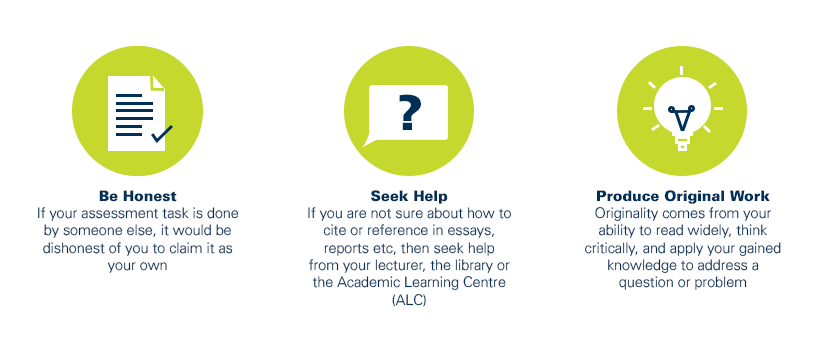
As a CQUniversity student you are expected to act honestly in all aspects of your academic work.
Any assessable work undertaken or submitted for review or assessment must be your own work. Assessable work is any type of work you do to meet the assessment requirements in the unit, including draft work submitted for review and feedback and final work to be assessed.
When you use the ideas, words or data of others in your assessment, you must thoroughly and clearly acknowledge the source of this information by using the correct referencing style for your unit. Using others’ work without proper acknowledgement may be considered a form of intellectual dishonesty.
Participating honestly, respectfully, responsibly, and fairly in your university study ensures the CQUniversity qualification you earn will be valued as a true indication of your individual academic achievement and will continue to receive the respect and recognition it deserves.
As a student, you are responsible for reading and following CQUniversity’s policies, including the Student Academic Integrity Policy and Procedure. This policy sets out CQUniversity’s expectations of you to act with integrity, examples of academic integrity breaches to avoid, the processes used to address alleged breaches of academic integrity, and potential penalties.
What is a breach of academic integrity?
A breach of academic integrity includes but is not limited to plagiarism, self-plagiarism, collusion, cheating, contract cheating, and academic misconduct. The Student Academic Integrity Policy and Procedure defines what these terms mean and gives examples.
Why is academic integrity important?
A breach of academic integrity may result in one or more penalties, including suspension or even expulsion from the University. It can also have negative implications for student visas and future enrolment at CQUniversity or elsewhere. Students who engage in contract cheating also risk being blackmailed by contract cheating services.
Where can I get assistance?
For academic advice and guidance, the Academic Learning Centre (ALC) can support you in becoming confident in completing assessments with integrity and of high standard.
What can you do to act with integrity?