Overview
This unit prepares students for university study in the environmental, biomedical or life sciences. Students will gain an introductory understanding of the main concepts in modern biology, particularly as they relate to humans. This unit covers a range of topics including cell theory, organ systems, genetics, taxonomy, ecology and environmental science.
Details
Pre-requisites or Co-requisites
There are no requisites for this unit.
Important note: Students enrolled in a subsequent unit who failed their pre-requisite unit, should drop the subsequent unit before the census date or within 10 working days of Fail grade notification. Students who do not drop the unit in this timeframe cannot later drop the unit without academic and financial liability. See details in the Assessment Policy and Procedure (Higher Education Coursework).
Offerings For Term 1 - 2026
Attendance Requirements
All on-campus students are expected to attend scheduled classes - in some units, these classes are identified as a mandatory (pass/fail) component and attendance is compulsory. International students, on a student visa, must maintain a full time study load and meet both attendance and academic progress requirements in each study period (satisfactory attendance for International students is defined as maintaining at least an 80% attendance record).
Recommended Student Time Commitment
Each 6-credit Non-award unit at CQUniversity requires an overall time commitment of an average of 12.5 hours of study per week, making a total of 150 hours for the unit.
Class Timetable
Assessment Overview
Assessment Grading
This is a graded unit: your overall grade will be calculated from the marks or grades for each assessment task, based on the relative weightings shown in the table above. You must obtain an overall mark for the unit of at least 50%, or an overall grade of 'pass' in order to pass the unit. If any 'pass/fail' tasks are shown in the table above they must also be completed successfully ('pass' grade). You must also meet any minimum mark requirements specified for a particular assessment task, as detailed in the 'assessment task' section (note that in some instances, the minimum mark for a task may be greater than 50%). Consult the University's Grades and Results Policy for more details of interim results and final grades.
All University policies are available on the CQUniversity Policy site.
You may wish to view these policies:
- Grades and Results Policy
- Assessment Policy and Procedure (Higher Education Coursework)
- Review of Grade Procedure
- Student Academic Integrity Policy and Procedure
- Academic Progression Policy and Procedure
- Student Refund and Credit Balance Policy and Procedure
- Complaints Policy and Procedure
- Information and Communications Technology Acceptable Use Policy and Procedure
This list is not an exhaustive list of all University policies. The full list of University policies are available on the CQUniversity Policy site.
Feedback, Recommendations and Responses
Every unit is reviewed for enhancement each year. At the most recent review, the following staff and student feedback items were identified and recommendations were made.
Feedback from staff
New assessment design to be reviewed regularly to optimise student understanding, learning and staff workability.
Continue to review marking criteria, task wording and workload, and continue to evaluate GenAI vulnerability.
Feedback from unit evaluations
Positive feedback about engagement and interest in the unit in response to lecturer knowledge, enthusiasm and timely support.
Continue with high levels of student support as well as the provision of engaging lectures and learning resources.
- Identify the fundamental principles of cell biology and their relevance to broader concepts related to human biology
- Describe how biological systems interact with their environments
- Apply foundational scientific process skills to explore and interpret biological concepts.
Alignment of Assessment Tasks to Learning Outcomes
| Assessment Tasks | Learning Outcomes | ||
|---|---|---|---|
| 1 | 2 | 3 | |
| 1 - Online Quiz(zes) - 20% | |||
| 2 - Portfolio - 40% | |||
| 3 - Portfolio - 40% | |||
Alignment of Graduate Attributes to Learning Outcomes
| Graduate Attributes | Learning Outcomes | ||
|---|---|---|---|
| 1 | 2 | 3 | |
| 1 - Self Management | |||
| 2 - Communication | |||
| 3 - Information Literacy | |||
| 4 - Information Technology Competence | |||
| 5 - Problem Solving | |||
| 6 - Critical Thinking | |||
| 7 - Cross-Cultural Competence | |||
| 8 - Ethical Practice | |||
| 9 - Aboriginal and Torres Strait Islander Cultures | |||
| 10 - First Nations Knowledges | |||
Textbooks
Introductory Biology
- 9th edition (2025)
- Authors: School of Access Education
- CQUniversity Publishing Unit
- Rockhampton Rockhampton , Qld , Australia
- ISBN: Not applicable
IT Resources
- CQUniversity Student Email
- Internet
- Unit Website (Moodle)
- Access to a computer is recommended
All submissions for this unit must use the referencing style: Harvard (author-date)
For further information, see the Assessment Tasks.
l.webster2@cqu.edu.au
d.b.vaughan@cqu.edu.au
Week 1
Begin Date: 09 Mar 2026Module/Topic
Module 1
Living organisms & levels of organisation
Chapter
1
Events and Submissions/Topic
Week 2
Begin Date: 16 Mar 2026Module/Topic
Module 2
Biological molecules
Chapter
2
Events and Submissions/Topic
Week 3
Begin Date: 23 Mar 2026Module/Topic
Module 3
The cell: the building block of life
Chapter
3
Events and Submissions/Topic
Week 4
Begin Date: 30 Mar 2026Module/Topic
Module 4
Homeostasis
Chapter
4
Events and Submissions/Topic
Quiz 1: (5%) Due: Week 4 Monday (30 March 2026) 11:00 PM AEST
Week 5
Begin Date: 06 Apr 2026Module/Topic
Module 5
Cell membranes
Chapter
5
Events and Submissions/Topic
Week 6
Begin Date: 13 Apr 2026Module/Topic
Module 6
Genetics: DNA structure & function
Chapter
6
Events and Submissions/Topic
Portfolio A: (40%) Due: Week 6 Monday (13 April 2026) 11:00 PM AEST
Vacation Week
Begin Date: 20 Apr 2026Module/Topic
Chapter
Events and Submissions/Topic
Week 7
Begin Date: 27 Apr 2026Module/Topic
Module 7
The cell cycle; cell division; heredity
Chapter
7
Events and Submissions/Topic
Quiz 2: (5%) Due: Week 7 Monday (27 April 2026) 11:00 PM AEST
Week 8
Begin Date: 04 May 2026Module/Topic
Module 8
Cell differentiation & tissues
Chapter
8
Events and Submissions/Topic
Week 9
Begin Date: 11 May 2026Module/Topic
Module 9
Organ systems & the skeletal system
Chapter
9
Events and Submissions/Topic
Week 10
Begin Date: 18 May 2026Module/Topic
Module 10
Taxonomy, evolution & diversity
Chapter
10
Events and Submissions/Topic
Quiz 3: (5%) Due: Week 10 Monday (18 May 2026) 11:00 PM AEST
Week 11
Begin Date: 25 May 2026Module/Topic
Module 11
Ecology
Chapter
11
Events and Submissions/Topic
Portfolio B: (40%) Due: Week 11 Monday (25 May 2026) 11:00 PM AEST
Week 12
Begin Date: 01 Jun 2026Module/Topic
Module 12
Environmental science & sustainability
Chapter
12
Events and Submissions/Topic
Exam Week
Begin Date: 08 Jun 2026Module/Topic
Chapter
Events and Submissions/Topic
Quiz 4: (5%) Due: Week Review/Exams Monday (8 June 2026) 11:00 PM AEST
Vacation/Exam Week
Begin Date: 15 Jun 2026Module/Topic
Chapter
Events and Submissions/Topic
Unit Coordinator: Larry Webster
Telephone: (07) 4726 5372.
Email: l.webster2@cqu.edu.au
Location: Townsville Campus. Building: 2, Room G.04.
If you have Apple iBooks, I recommend downloading the free eBook "E. O. Wilson's Life on Earth."
1 Online Quiz(zes)
Assessment 1 consists of four quizzes designed to evaluate your understanding of the content from the weekly modules in the Study Guide and the Learning Journals. Each quiz is worth 5% and is time-limited to 30 minutes.
Each quiz features various question types, such as multiple-choice, short-answer, and drag-and-drop questions. You should refer to your notes, the lectures and the study guide while completing each quiz. You should avoid searching the internet for answers. Quizzes become unavailable after the due date unless an extension has been granted.
Use of Artificial Intelligence (AI): Level 1. "No AI" - You must not use AI at any point during this assessment. You must demonstrate your core skills and knowledge.
Source: Perkins, M., Roe, J. and Furze, L. 2024, “The AI Assessment Scale Revisited: A framework for educational assessment".
Further information about this requirement will be provided by the teaching staff in the unit.
Quiz 1 by 11:00 PM AEST Monday 30 March 2026 (Week 4); Quiz 2 by 11:00 PM AEST Monday 27 April 2026 (Week 7); Quiz 3 by 11:00 PM AEST Monday 18 May 2026 (Week 10); Quiz 4 by 11:00 PMAEST Monday 8 June 2026 (Review/Exam Week).
Interim results of quizzes are provided immediately after submission and checked manually within 2 weeks of the due date.
You are required to identify the fundamental principles of cell biology and their relevance to broader concepts related to human biology. You will be assessed on your ability to:
- accurately identify biological concepts and terms, and
- accurately apply biological knowledge to relevant contexts.
- Identify the fundamental principles of cell biology and their relevance to broader concepts related to human biology
2 Portfolio
Portfolio A is designed to support your learning of the material in each of the modules, to cultivate your scientific inquiry skills, and to provide you with an opportunity to apply your developing biological knowledge and skills to real-world
contexts. There are two parts to Portfolio A: Learning Journal A - questions on modules 1 to 4, and a reading and reflection task.
Questions on modules 1-4
This task follows our learning journey from Week 1 to Week 4. It includes a structured set of questions designed to help you apply and deepen your understanding of the biological concepts introduced in these modules. The questions encourage you to think critically about the unit content, including the study guide and the ideas we explore together in lectures. The lectures expand on the study guide with explanations, examples and information that is essential for you to be able to complete the assessment. Whether you attend live or watch the recordings, make sure you engage closely with each week’s lecture, as they provide essential context and guidance for approaching the assessment
Reading and reflection task
This part of the portfolio requires you to read the prescribed journal article for this task and then answer the associated questions. The journal article will be in the eReading list in Moodle, which you can find in the tab at the top of the Introductory Biology Moodle page. Consider the questions carefully. You will be asked to reflect on aspects of the journal article, so give it a thorough read.
Use of Artificial Intelligence (AI): Level 1. "No AI" - You must not use AI at any point during this assessment. You must demonstrate your core skills and knowledge.
Source: Perkins, M., Roe, J. and Furze, L. 2024, “The AI Assessment Scale Revisited: A framework for educational assessment".
Further information about this requirement will be provided by the teaching staff in the unit.
Week 6 Monday (13 April 2026) 11:00 PM AEST. You are required to upload your files directly in Moodle.
This assessment is returned two weeks after the due date or two weeks after the submission date, whichever is later.
You will be assessed on:
- the quality of learning evidenced in the learning journal
- reflective skills for analysis, evaluation, and critical thinking.
- Identify the fundamental principles of cell biology and their relevance to broader concepts related to human biology
- Describe how biological systems interact with their environments
- Apply foundational scientific process skills to explore and interpret biological concepts.
3 Portfolio
Portfolio B is designed to further support your learning of the material in each of the modules, to cultivate your scientific inquiry skills, and to provide you with an opportunity to apply your developing biological knowledge and skills to real-world contexts. There are two parts to Portfolio B: Learning Journal B - questions on modules 5 to 9, and the Digital poster/infographic task.
Questions on module 5-9
This task follows our learning journey from Week 5 to Week 9. The task comprises a structured set of questions to test your understanding of the biological concepts covered up to the end of Week 9. The questions aim to encourage critical thinking about the unit content, how it relates across modules, what is included in the study guide, and what we specifically discuss in each lecture.
Digital poster / Infographic
You are required to create a digital poster/infographic on one of the following choices:
1. How cell membranes regulate transport and maintain cellular function
2. How DNA is translated into proteins
3. The relationship between heterotrophs and autotrophs
Your poster or infographic should provide detailed facts about your chosen topic to adequately address the question of "how". For example, if you choose "How DNA translates to proteins", explain the “how” processes involved, and ensure that your information logically connects to one of the major themes of biology introduced in Week 1. Use images and graphics to enhance your subject matter. You are encouraged to use AI applications such as Canva, Adobe Firefly, etc., to generate your own images. Alternatively, you can create the poster or infographic using PowerPoint or Word. Keep the text to a minimum and use clear headings. At the bottom of your poster or infographic, include a reference list for all resources utilised that are not your own (for example, cite journal articles where you obtain facts). Do not use images or graphics that are owned by others.
Use of Artificial Intelligence (AI): Level 2. AI Planning - You may use AI for planning, idea development, and research. Your final submission should show how you have developed and refined these ideas.
Source: Perkins, M., Roe, J. and Furze, L. 2024, “The AI Assessment Scale Revisited: A framework for educational assessment".
Further information about this requirement will be provided by the teaching staff in the unit.
Week 11 Monday (25 May 2026) 11:00 PM AEST. You are required to upload your files directly in Moodle.
This assessment is returned two weeks after the due date or two weeks after the submission date, whichever is later.
You will be assessed on:
- The quality of learning that is evidenced in the learning journal
- Your level of interrogation of knowledge
- The integration of knowledge into a visually logical representation according to instructions
- Identify the fundamental principles of cell biology and their relevance to broader concepts related to human biology
- Describe how biological systems interact with their environments
- Apply foundational scientific process skills to explore and interpret biological concepts.
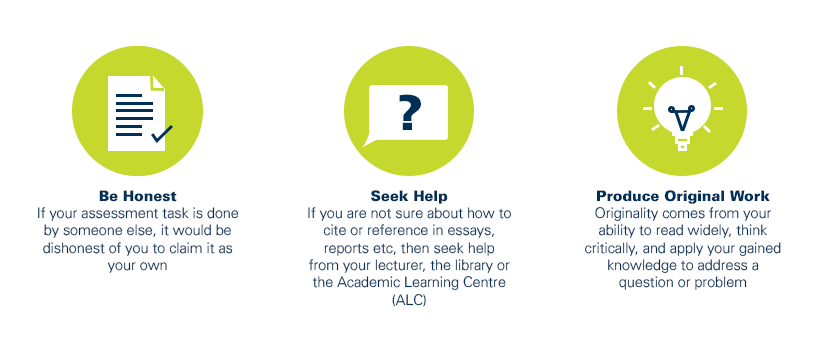
As a CQUniversity student you are expected to act honestly in all aspects of your academic work.
Any assessable work undertaken or submitted for review or assessment must be your own work. Assessable work is any type of work you do to meet the assessment requirements in the unit, including draft work submitted for review and feedback and final work to be assessed.
When you use the ideas, words or data of others in your assessment, you must thoroughly and clearly acknowledge the source of this information by using the correct referencing style for your unit. Using others’ work without proper acknowledgement may be considered a form of intellectual dishonesty.
Participating honestly, respectfully, responsibly, and fairly in your university study ensures the CQUniversity qualification you earn will be valued as a true indication of your individual academic achievement and will continue to receive the respect and recognition it deserves.
As a student, you are responsible for reading and following CQUniversity’s policies, including the Student Academic Integrity Policy and Procedure. This policy sets out CQUniversity’s expectations of you to act with integrity, examples of academic integrity breaches to avoid, the processes used to address alleged breaches of academic integrity, and potential penalties.
What is a breach of academic integrity?
A breach of academic integrity includes but is not limited to plagiarism, self-plagiarism, collusion, cheating, contract cheating, and academic misconduct. The Student Academic Integrity Policy and Procedure defines what these terms mean and gives examples.
Why is academic integrity important?
A breach of academic integrity may result in one or more penalties, including suspension or even expulsion from the University. It can also have negative implications for student visas and future enrolment at CQUniversity or elsewhere. Students who engage in contract cheating also risk being blackmailed by contract cheating services.
Where can I get assistance?
For academic advice and guidance, the Academic Learning Centre (ALC) can support you in becoming confident in completing assessments with integrity and of high standard.
What can you do to act with integrity?