Overview
In this unit, you will build on your knowledge of the science of the musculoskeletal, renal, immune and lymphatic systems, gastrointestinal, integumentary and reproductive systems to explore fundamental anatomy, physiology and pathophysiology (alteration in function as seen in disease) of these body systems and the pharmacology of drugs used in the treatment and management of health alterations. Throughout this unit, you will develop your knowledge of body systems in both healthy and health alteration states, and how these changes in health status may be managed therapeutically. The unit concentrates on common major health alterations of these body systems which facilitates a comprehensive study of the pathophysiology encountered in these health alterations, as well as gaining an understanding of normal physiology. This is complemented by the study of the treatment and management of these health alterations. The unit is scheduled to align with the content of Nursing Practice in Context 2.
Details
Pre-requisites or Co-requisites
Pre-requisite: Enrolment into the Master of Nursing (Graduate Entry).
Important note: Students enrolled in a subsequent unit who failed their pre-requisite unit, should drop the subsequent unit before the census date or within 10 working days of Fail grade notification. Students who do not drop the unit in this timeframe cannot later drop the unit without academic and financial liability. See details in the Assessment Policy and Procedure (Higher Education Coursework).
Offerings For Term 1 - 2026
Attendance Requirements
All on-campus students are expected to attend scheduled classes - in some units, these classes are identified as a mandatory (pass/fail) component and attendance is compulsory. International students, on a student visa, must maintain a full time study load and meet both attendance and academic progress requirements in each study period (satisfactory attendance for International students is defined as maintaining at least an 80% attendance record).
Recommended Student Time Commitment
Each 6-credit Postgraduate unit at CQUniversity requires an overall time commitment of an average of 12.5 hours of study per week, making a total of 150 hours for the unit.
Class Timetable
Assessment Overview
Assessment Grading
This is a graded unit: your overall grade will be calculated from the marks or grades for each assessment task, based on the relative weightings shown in the table above. You must obtain an overall mark for the unit of at least 50%, or an overall grade of 'pass' in order to pass the unit. If any 'pass/fail' tasks are shown in the table above they must also be completed successfully ('pass' grade). You must also meet any minimum mark requirements specified for a particular assessment task, as detailed in the 'assessment task' section (note that in some instances, the minimum mark for a task may be greater than 50%). Consult the University's Grades and Results Policy for more details of interim results and final grades.
All University policies are available on the CQUniversity Policy site.
You may wish to view these policies:
- Grades and Results Policy
- Assessment Policy and Procedure (Higher Education Coursework)
- Review of Grade Procedure
- Student Academic Integrity Policy and Procedure
- Academic Progression Policy and Procedure
- Student Refund and Credit Balance Policy and Procedure
- Complaints Policy and Procedure
- Information and Communications Technology Acceptable Use Policy and Procedure
This list is not an exhaustive list of all University policies. The full list of University policies are available on the CQUniversity Policy site.
- Synthesise knowledge of the musculoskeletal, renal, immune and lymphatic systems, gastrointestinal, integumentary and reproductive systems to discuss pathophysiological processes, signs and symptoms of various relevant health alterations.
- Evaluate appropriate pharmacological interventions in disease processes of the musculoskeletal, renal, immune and lymphatic systems, gastrointestinal, integumentary and reproductive systems.
- Interpret and apply pharmacological principles (pharmacokinetics, pharmacodynamics and pharmacotherapeutics) to appropriate pathophysiological conditions.
This unit is part of the Master of Nursing (graduate entry) course which will be accredited by the Australian Nursing and Midwifery Accreditation Council.
Alignment of Assessment Tasks to Learning Outcomes
| Assessment Tasks | Learning Outcomes | ||
|---|---|---|---|
| 1 | 2 | 3 | |
| 1 - Online Quiz(zes) - 20% | |||
| 2 - Case Study - 30% | |||
| 3 - Online Test - 50% | |||
Alignment of Graduate Attributes to Learning Outcomes
| Graduate Attributes | Learning Outcomes | ||
|---|---|---|---|
| 1 | 2 | 3 | |
| 1 - Knowledge | |||
| 2 - Communication | |||
| 3 - Cognitive, technical and creative skills | |||
| 4 - Research | |||
| 5 - Self-management | |||
| 6 - Ethical and Professional Responsibility | |||
| 7 - Leadership | |||
| 8 - First Nations Knowledges | |||
| 9 - Aboriginal and Torres Strait Islander Cultures | |||
Textbooks
Pathophysiology and Pharmacology for Nurses 2
- Edition: 2nd (2025)
- Authors: Debra Carlson and Roslyn Clapperton (from Shane Bullock, Elizabeth Manias, Majella Hales, Elaine Marieb, Katja Hoehn, Suzanne Keller, Michael Adams and Matthew Sorenson)
- Pearson
- Richmond Richmond , Victoria , Australia
- ISBN: 978-0-655-71846-8
It is preferred that students purchase the 2nd edition of the textbook; however, they can use the first edition if they already have it.
Additional Textbook Information
The library does have a very limited number of digital eBooks available.
Paper and eBook copies can be purchased at the University Shop here: https://shop.cqu.edu.au/
IT Resources
- CQUniversity Student Email
- Internet
- Unit Website (Moodle)
- Zoom access: microphone and webcam required
All submissions for this unit must use the referencing style: American Psychological Association 7th Edition (APA 7th edition)
For further information, see the Assessment Tasks.
i.wise@cqu.edu.au
Week 1
Begin Date: 09 Mar 2026Module/Topic
Neoplasia, Stress and Immune Disorders
Chapter
Chapter
Module 1: Neoplasia and immune system pathophysiology
Chapters 1 to 3.
Events and Submissions/Topic
Week 2
Begin Date: 16 Mar 2026Module/Topic
Antimicrobial Pharmacology, Antibacterial Agents and Neuropharmacology
Chapter
Module 2: Antimicrobial pharmacology and neuropharmacology
Chapters 4 to 9
Events and Submissions/Topic
Week 3
Begin Date: 23 Mar 2026Module/Topic
Urinary System Physiology and Pathophysiology
Chapter
Modules, 3, 4 and 5: Urinary system anatomy and physiology, pathophysiology and associated pharmacology
Chapters 10 to 13
Events and Submissions/Topic
Assessment 1 - Online Quiz
Due: Week 3 Tuesday (24 March 2026) 1:00 pm AEST
Online Quiz Due: Week 3 Tuesday (24 Mar 2026) 1:00 pm AEST
Week 4
Begin Date: 30 Mar 2026Module/Topic
Urinary System Pathophysiology and Pharmacology
Chapter
Modules 3, 4 and 5: Urinary system anatomy and physiology, pathophysiology and associated pharmacology
Chapters 14 to 16
Events and Submissions/Topic
Week 5
Begin Date: 06 Apr 2026Module/Topic
Urinary System Pathophysiology and Pharmacology
Chapter
Modules 3, 4 and 5: Urinary system anatomy and physiology, pathophysiology and associated pharmacology
Chapters 17 to 20
Events and Submissions/Topic
Week 6
Begin Date: 13 Apr 2026Module/Topic
Integumentary Pathophysiology and Pharmacology
Chapter
Module 6: Integumentary pathophysiology and associated pharmacology
Chapters 21 to 26
Events and Submissions/Topic
Assessment 2 - Case study
Due: Week 6 Tuesday (14 April 2026) 1:00 pm AEST
Case Study Due: Week 6 Tuesday (14 Apr 2026) 1:00 pm AEST
Vacation Week
Begin Date: 20 Apr 2026Module/Topic
Vacation week
Chapter
Events and Submissions/Topic
Week 7
Begin Date: 27 Apr 2026Module/Topic
Musculoskeletal Pathophysiology and Pharmacology Part 1
Chapter
Modules 7 and 8: Musculoskeletal pathophysiology and associated pharmacology
Chapters 27 to 34
Events and Submissions/Topic
Week 8
Begin Date: 04 May 2026Module/Topic
Musculoskeletal Pathophysiology and Pharmacology Part 2
Chapter
Modules 7 and 8: Musculoskeletal pathophysiology and associated pharmacology
Chapters 35 to 41
Events and Submissions/Topic
Week 9
Begin Date: 11 May 2026Module/Topic
Gastrointestinal Pathophysiology and Pharmacology Part 1
Chapter
Modules 9 and 10: Gastrointestinal pathophysiology and associated pharmacology
Chapters 42 to 46
Events and Submissions/Topic
Week 10
Begin Date: 18 May 2026Module/Topic
Gastrointestinal Pathophysiology and Pharmacology Part 2
Chapter
Modules 9 and 10: Gastrointestinal pathophysiology and associated pharmacology
Chapters 47 to 51
Events and Submissions/Topic
Week 11
Begin Date: 25 May 2026Module/Topic
Female Reproductive Anatomy & Physiology, Pathophysiology and Pharmacology
Chapter
Modules 11 and 12: Reproductive pathophysiology and associated pharmacology
Chapters 52 to 55 and 59
Events and Submissions/Topic
Week 12
Begin Date: 01 Jun 2026Module/Topic
Male Reproductive Pathophysiology and Pharmacology, and Sexually Transmitted Infections
Chapter
Modules 11 and 12: Reproductive pathophysiology and associated pharmacology
Chapters 56 to 59
Events and Submissions/Topic
Exam Week
Begin Date: 08 Jun 2026Module/Topic
Chapter
Events and Submissions/Topic
Assessment 3 - Online Test
Due: Review/Exam Week Tuesday (9 June 2026) 1:00 pm AEST
Online Test Due: Exam Week Tuesday (9 June 2026) 1:00 pm AEST
Vacation/Exam Week
Begin Date: 15 Jun 2026Module/Topic
Chapter
Events and Submissions/Topic
The unit coordinator this term is Dr Ingrid Wise. The best way to contact the unit coordinator is
Email: bioh28002@cqu.edu.au
Telephone: 07 4037 5931
Via the Q&A forum on the Moodle site.
- Any non-personal communication should be conducted via the relevant forums on the Moodle site e.g., questions relating to the lectures, tutorials, assessments etc.
- Any personal communication should be conducted with the unit coordinator via email or telephone e.g., personal illness, life events etc.
- Please ensure that all emails contain your name, contact details and unit code, as the unit coordinator is coordinating more than one unit during the term.
- All assessment extension requests must be made via the link on the Moodle site and meet the policy requirements, please see the policy details in the Assessment tile on Moodle. Although we do not like to deny extension requests, if an extension request does not meet the policy requirements or appropriate documentation is not provided it will likely not be approved.
Unit Content:
The unit content has been developed so that the first week contains underpinning concepts that are relative to numerous diseases being covered during the term. Week two focuses on pharmacology, including neuropharmacology,
and the remaining weeks contain anatomy and physiology, pathophysiology and pharmacology of the renal, integumentary, musculoskeletal, gastrointestinal, and reproductive systems. The following information and links will be
provided each week:
- Selected weekly readings from the unit textbook, learning objectives and associated terminology.
- Lecture slides and pre-recorded lectures.
- Tutorial slides and a recording of the live tutorial (typically available within 24 hours of the tutorial).
- A weekly practice quiz.
- Additional resources to support learning.
- The pre-recorded lectures are being updated during the term and will be released progressively throughout the term on the Moodle site.
It is expected that students will review the weekly content, including the assigned readings and pre-recorded lectures prior to attending the weekly tutorial.
Tutorials:
There is a weekly tutorial which provide students with additional opportunities to ask questions. The information in these tutorials is designed to supplement the information in the pre-recorded lectures and incorporate
content to aid in enhancing your knowledge and understanding of the diseases and disorders included in the assessments throughout the term.
- Tutorials are conducted by a registered nurse and will use real life case scenarios, concept deep-dives, and questions to help you apply your knowledge to nursing problems and scenarios.
- All students are strongly encouraged to attend and participate in the weekly tutorial; however, they will be recorded to enable students who are unable to attend to view the content afterward.
- As per Australian educational standards, you are expected to commit 150 hours of engagement to your study of this unit. A recommended breakdown of study hours is given below:
- 2-3 hours per week watching lectures and revising content through study notes.
- 2-3 hours per week attending the weekly tutorials and reflecting on your answers to the weekly study questions.
- 4-6 hours per week revising content from the current week and previous weeks and preparing for your assessments.
No assessment reattempts are allowed in this unit. In order to be eligible for a supplementary assessment, all assessment tasks must be reasonably attempted in this unit. Supplementary assessments will be provided in alignment with the CQU Assessment Policy and Procedure (HED)
1 Online Quiz(zes)
The 72-hour grace period does not apply to this assessment.
Aim
The aim of the online test is to assess your knowledge and understanding of pharmacological principles (pharmacokinetics, pharmacodynamics, and pharmacotherapeutics) and your ability to interpret and apply these principles to various pathophysiological conditions.
Online test 1 details:
- Opens: Week 3, Monday at 1:00 pm AEST
- Closes: Week 3, Tuesday at 1:00 pm AEST
- Topics assessed: Weeks 1 & 2
- Attempts allowed: one (1)
- The online quiz will contribute 20% to your final grade.
- There is a minimum requirement for the assessment task: 50% of the available marks.
- In the absence of an approved extension, there will be no opportunity to complete the task after the assigned date.
- Note: this is an online quiz and as such there will be no option to complete the assessment prior to the opening date and time listed in the unit profile and on the Moodle site.
Level of GenAI use allowed:
Level 1: You must not use AI at any point during the assessment. You must demonstrate your core skills and knowledge.
Week 3 Tuesday (24 Mar 2026) 1:00 pm AEST
The online test will be open for a 24-hour period on Monday 23 March 2026 at 1:00 pm AEST and will close on Tuesday 24 March 2026 at 1:00 pm AEST.
Week 5 Friday (10 Apr 2026)
Marks will be made available and students will be able to review the test after all students have completed the online test and all manual marking has been completed.
- The online quiz will be a combination of automatically and manually marked questions.
- A variety of question styles similar to those in the weekly practice quizzes, as well as written application short answer and case study questions, will be used in the online test to assess the content in a variety of contexts.
- The online test assessment equals 20% of the total unit marks, and you are required to achieve a minimum of 50% of the marks available for this assessment task to pass the unit.
- All extension requests must be made through the extension request system on Moodle with appropriate documentation that complies with the Assessment Policy and Procedure.
- Once the online test has closed, you will not be able to access it unless you have an approved extension or have arranged with the Unit Coordinator to reopen it, and any late submissions will incur a penalty of 5% per calendar day.
- Interpret and apply pharmacological principles (pharmacokinetics, pharmacodynamics and pharmacotherapeutics) to appropriate pathophysiological conditions.
2 Case Study
The 72-hour grace period does not apply to this assessment.
Aim
The aim of this assessment is to demonstrate your understanding of the pathophysiology of disease and the application of pharmacological principles to patient care. To achieve this, you are required to apply the theory you have been taught to a case study, demonstrating your ability to synthesise knowledge to discuss pathophysiological processes and the signs and symptoms of health alterations. You will also evaluate appropriate pharmacological interventions and justify your decisions in managing or educating the patient within your scope of practice. This assessment is designed to develop the level of understanding required to provide evidence-based advice, manage patient care effectively, and improve health outcomes.
Completion of the case study
The case study will be presented in an online format with various question styles used to assess the understanding of the disorder. The case study topics will be related to diseases or conditions covered in weeks 1 to 5 of this unit, including any relevant underlying condition covered in week 1, and relevant pharmacological treatments for each disease or condition, including those covered in week 2.
The following information will be made available to you throughout the online case study: clinical presentation, patient history, physical examination, diagnosis and treatment. As you progress through the online case study you will be required to answer questions relating to the information provided about the patient in the case study. These are designed to assess your ability to apply what you have learnt during the term to the patient in your case study.
Question style
- The case study will have a combination of question styles including multiple choice, multiple selection, short answer and long answer questions.
- A maximum word count limit will be indicated at the written answer questions:
- Short written answer questions will often only require a few words to answer them effectively.
- Long written answer questions will have an indication at them of the approximate word count required to answer the question effectively.
- Each question will have information about the patient at it; however, some questions may incorporate information from previous information pages, so it is recommended that you take notes about your patient as you progress through the case study.
Referencing
- Some written answer questions may require you to provide a reference at them.
- If a reference is required for your written answer it will be indicated at the question and you are required to identify where you have sourced your information.
- Your reference should be written on a new line after the end of your answer to the question and be written in proper APA 7th edition format as it would be placed into a reference list.
- You do not need to provide in-text citations within your answer.
- Only the resources listed below and provided on Moodle are to be used.
Approved resources
- The following resources are the only ones approved for use in this assessment:
- The prescribed textbooks for BIOH28001 and BIOH28002.
- The BIOH28002 lecture and tutorial slides which are relevant to your topic.
- Any of the resources in the BIOH28002 E-reading list which are relevant to your topic i.e. textbooks, journal articles, MIMS.
Level of GenAI use allowed:
Level 1: You must not use AI at any point during the assessment. You must demonstrate your core skills and knowledge.
Week 6 Tuesday (14 Apr 2026) 1:00 pm AEST
The online test will be open for a 24-hour period on Monday 13 April 2026 at 1:00 pm AEST and will close on Tuesday 14 April 2026 at 1:00 pm AEST.
Week 8 Friday (8 May 2026)
Marks will be made available and students will be able to review the test after all students have completed the online test and all manual marking has been completed.
- The online case study will be a combination of automatically and manually marked questions.
- The online case study assessment equals 30% of the total unit marks, and you are required to achieve a minimum of 50% of the marks available for this assessment task to pass the unit.
- All extension requests must be made through the extension request system on Moodle with appropriate documentation that complies with the Assessment Policy and Procedure.
- Once the online case study has closed, you will not be able to access it unless you have an approved extension or have arranged with the Unit Coordinator to reopen it, and any late submissions will incur a penalty of 5% per calendar day.
- Synthesise knowledge of the musculoskeletal, renal, immune and lymphatic systems, gastrointestinal, integumentary and reproductive systems to discuss pathophysiological processes, signs and symptoms of various relevant health alterations.
- Evaluate appropriate pharmacological interventions in disease processes of the musculoskeletal, renal, immune and lymphatic systems, gastrointestinal, integumentary and reproductive systems.
3 Online Test
The 72-hour grace period does not apply to this assessment.
Aim
The aim of the online test is to assess your knowledge and understanding of the integumentary, musculoskeletal, gastrointestinal and reproductive anatomy, physiology, pathophysiology and pharmacology, and the application of these to various diseases.
Online test details:
- Opens: Review/Exam Week, Monday at 1:00 pm AEST
- Closes: Review/Exam Week, Tuesday at 1:00 pm AEST
- Attempts allowed: one (1)
- Topics assessed: Weeks 6 to 12, alongside foundational underpinning concepts introduced in weeks 1–2
- The online test will contribute 50% to your final grade.
- There is a minimum requirement for the assessment task: 50% of the available marks.
- In the absence of an approved extension, there will be no opportunity to complete the task after the assigned date.
- Note: This is a test and as such there will be no option to complete the assessment prior to the opening date and time listed in the unit profile and on the Moodle site.
Level of GenAI use allowed:
Level 1: You must not use AI at any point during the assessment. You must demonstrate your core skills and knowledge.
Exam Week Tuesday (9 June 2026) 1:00 pm AEST
The online test will be open for a 24-hour period on Monday 8 June 2026 at 1:00 pm AEST and will close on Tuesday 9 June 2026 at 1:00 pm AEST.
Marks will be made available and students will be able to review the test after all students have completed the online test and all manual marking has been completed.
- The online test will be a combination of automatically and manually marked questions.
- A variety of question styles similar to those in the weekly practice quizzes, as well as written application short answer and case study questions, will be used in the online test to assess the content in a variety of contexts.
- The online test equals 50% of the total unit marks, and you are required to achieve a minimum of 50% of the marks available for this assessment task to pass the unit.
- All extension requests must be made through the extension request system on Moodle with appropriate documentation that complies with the Assessment Policy and Procedure.
- Once the online test has closed, you will not be able to access it unless you have an approved extension or have arranged with the Unit Coordinator to reopen it, and any late submissions will incur a penalty of 5% per calendar day.
- Synthesise knowledge of the musculoskeletal, renal, immune and lymphatic systems, gastrointestinal, integumentary and reproductive systems to discuss pathophysiological processes, signs and symptoms of various relevant health alterations.
- Evaluate appropriate pharmacological interventions in disease processes of the musculoskeletal, renal, immune and lymphatic systems, gastrointestinal, integumentary and reproductive systems.
- Interpret and apply pharmacological principles (pharmacokinetics, pharmacodynamics and pharmacotherapeutics) to appropriate pathophysiological conditions.
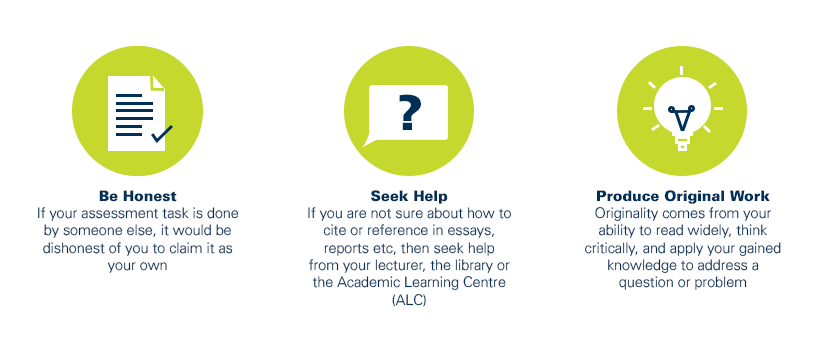
As a CQUniversity student you are expected to act honestly in all aspects of your academic work.
Any assessable work undertaken or submitted for review or assessment must be your own work. Assessable work is any type of work you do to meet the assessment requirements in the unit, including draft work submitted for review and feedback and final work to be assessed.
When you use the ideas, words or data of others in your assessment, you must thoroughly and clearly acknowledge the source of this information by using the correct referencing style for your unit. Using others’ work without proper acknowledgement may be considered a form of intellectual dishonesty.
Participating honestly, respectfully, responsibly, and fairly in your university study ensures the CQUniversity qualification you earn will be valued as a true indication of your individual academic achievement and will continue to receive the respect and recognition it deserves.
As a student, you are responsible for reading and following CQUniversity’s policies, including the Student Academic Integrity Policy and Procedure. This policy sets out CQUniversity’s expectations of you to act with integrity, examples of academic integrity breaches to avoid, the processes used to address alleged breaches of academic integrity, and potential penalties.
What is a breach of academic integrity?
A breach of academic integrity includes but is not limited to plagiarism, self-plagiarism, collusion, cheating, contract cheating, and academic misconduct. The Student Academic Integrity Policy and Procedure defines what these terms mean and gives examples.
Why is academic integrity important?
A breach of academic integrity may result in one or more penalties, including suspension or even expulsion from the University. It can also have negative implications for student visas and future enrolment at CQUniversity or elsewhere. Students who engage in contract cheating also risk being blackmailed by contract cheating services.
Where can I get assistance?
For academic advice and guidance, the Academic Learning Centre (ALC) can support you in becoming confident in completing assessments with integrity and of high standard.
What can you do to act with integrity?