Overview
In this unit you will explore fundamental pathophysiology (alteration in function as seen in disease) of the cardiovascular, respiratory, endocrine, nervous, haematological systems, and the pharmacology of drugs used in the treatment and management of disease. Throughout the unit, there is an integrated focus on body systems contrasting normal and abnormal, and how disease states may be managed therapeutically. The unit concentrates on common major diseases of these body systems which facilitates a comprehensive study of the pathophysiology encountered in these disease states, as well as gaining an understanding of normal physiology. This is complemented by the study of the treatment and management of these diseases, whilst also focusing on the professional and legal responsibilities that underpin the use of medicines in the treatment of human disease.
Details
Pre-requisites or Co-requisites
Pre-requisites: BIOH11005 Introductory Anatomy Physiology or BMSC11010 Human Anatomy and Physiology 1 AND NURS11166 Health and Assessment in Nursing AND admission into CL91 Bachelor of Nursing OR admission into CM77 Bachelor of Nursing (Enrolled Nurse Pathway).
Important note: Students enrolled in a subsequent unit who failed their pre-requisite unit, should drop the subsequent unit before the census date or within 10 working days of Fail grade notification. Students who do not drop the unit in this timeframe cannot later drop the unit without academic and financial liability. See details in the Assessment Policy and Procedure (Higher Education Coursework).
Offerings For Term 1 - 2026
Attendance Requirements
All on-campus students are expected to attend scheduled classes - in some units, these classes are identified as a mandatory (pass/fail) component and attendance is compulsory. International students, on a student visa, must maintain a full time study load and meet both attendance and academic progress requirements in each study period (satisfactory attendance for International students is defined as maintaining at least an 80% attendance record).
Recommended Student Time Commitment
Each 6-credit Undergraduate unit at CQUniversity requires an overall time commitment of an average of 12.5 hours of study per week, making a total of 150 hours for the unit.
Class Timetable
Assessment Overview
Assessment Grading
This is a graded unit: your overall grade will be calculated from the marks or grades for each assessment task, based on the relative weightings shown in the table above. You must obtain an overall mark for the unit of at least 50%, or an overall grade of 'pass' in order to pass the unit. If any 'pass/fail' tasks are shown in the table above they must also be completed successfully ('pass' grade). You must also meet any minimum mark requirements specified for a particular assessment task, as detailed in the 'assessment task' section (note that in some instances, the minimum mark for a task may be greater than 50%). Consult the University's Grades and Results Policy for more details of interim results and final grades.
All University policies are available on the CQUniversity Policy site.
You may wish to view these policies:
- Grades and Results Policy
- Assessment Policy and Procedure (Higher Education Coursework)
- Review of Grade Procedure
- Student Academic Integrity Policy and Procedure
- Academic Progression Policy and Procedure
- Student Refund and Credit Balance Policy and Procedure
- Complaints Policy and Procedure
- Information and Communications Technology Acceptable Use Policy and Procedure
This list is not an exhaustive list of all University policies. The full list of University policies are available on the CQUniversity Policy site.
Feedback, Recommendations and Responses
Every unit is reviewed for enhancement each year. At the most recent review, the following staff and student feedback items were identified and recommendations were made.
Feedback from SUTE feedback Staff reflection
The inclusion of extra resources throughout the unit to clarify anatomy concepts for students would assist in linking anatomy to the current content.
Develop or source additional resources to provide extra support for understanding the anatomy concepts and how they link to the pathophysiology and pharmacology content.
Feedback from SUTE feedback Staff reflection
The Q&A tutorials did not always have enough time to go through the answers to the prepared questions during the tutorial.
Review and update the current content being delivered to identify and focus on key aspects of that week's material so that all questions can be addressed during the allocated tutorial time.
- Apply knowledge of the cardiovascular, respiratory, endocrine, nervous and haematological systems to discuss pathophysiological processes, signs and symptoms of various relevant diseases
- Evaluate appropriate pharmacological interventions in disease processes of the cardiovascular, respiratory, endocrine, nervous and haematological systems
- Explain basic pharmacological principles; pharmacokinetics, pharmacodynamics and pharmacotherapeutics
- Outline the nurse’s professional and legal responsibilities in the quality use of medicines.
Alignment of Assessment Tasks to Learning Outcomes
| Assessment Tasks | Learning Outcomes | |||
|---|---|---|---|---|
| 1 | 2 | 3 | 4 | |
| 1 - Online Quiz(zes) - 20% | ||||
| 2 - Case Study - 30% | ||||
| 3 - Online Test - 50% | ||||
Alignment of Graduate Attributes to Learning Outcomes
| Graduate Attributes | Learning Outcomes | |||
|---|---|---|---|---|
| 1 | 2 | 3 | 4 | |
| 1 - Communication | ||||
| 2 - Problem Solving | ||||
| 3 - Critical Thinking | ||||
| 4 - Information Literacy | ||||
| 5 - Team Work | ||||
| 6 - Information Technology Competence | ||||
| 7 - Cross Cultural Competence | ||||
| 8 - Ethical practice | ||||
| 9 - Social Innovation | ||||
| 10 - First Nations Knowledges | ||||
| 11 - Aboriginal and Torres Strait Islander Cultures | ||||
Textbooks
Pathophysiology and Pharmacology for Nurses 1 (Custom Edition eBook)
- Edition: 1st (2021)
- Authors: Debra Carlson and Roslyn Clapperton (from Shane Bullock, Elizabeth Manias, Majella Hales, Elaine Marieb, Katja Hoehn, Suzanne Keller, Michael Adams and Matthew Sorenson)
- Pearson
- Melbourne Melbourne , VIC , Australia
- ISBN: 9780655704294
- Binding: eBook
Additional Textbook Information
Paper copies can still be purchased at the University Shop here: https://shop.cqu.edu.au/
IT Resources
- CQUniversity Student Email
- Internet
- Unit Website (Moodle)
- Zoom
All submissions for this unit must use the referencing style: American Psychological Association 7th Edition (APA 7th edition)
For further information, see the Assessment Tasks.
m.s.gregory@cqu.edu.au
Week 1
Begin Date: 09 Mar 2026Module/Topic
Introduction to pathophysiology and pharmacology
Chapter
Module 1: Introduction to pathophysiology and pharmacology.
Chapters 1 to 8.
Events and Submissions/Topic
Week 2
Begin Date: 16 Mar 2026Module/Topic
Nursing pharmacology principles
Chapter
Module 2: Pharmacology Principles.
Chapters 9 to 14.
Events and Submissions/Topic
Week 3
Begin Date: 23 Mar 2026Module/Topic
Inflammation, anti-inflammatories and analgesics
Chapter
Module 3: Analgesics and Anti-Inflammatory Medications.
Chapters 15 to 18.
Events and Submissions/Topic
Week 4
Begin Date: 30 Mar 2026Module/Topic
Haematology
Chapter
Module 4: Haematology Pathophysiology and Pharmacology.
Chapters 19 to 21.
Events and Submissions/Topic
Week 5
Begin Date: 06 Apr 2026Module/Topic
Cardiovascular - Part 1
Chapter
Modules 5 and 6: Cardiovascular Pathophysiology and Pharmacology.
Chapters 22 to 27.
Events and Submissions/Topic
Assessment 1: Online Quiz
Opens Tuesday 10:00am AEST (QLD Time)
Closes Wednesday 10:00am AEST (QLD Time)
Topics examined: Weeks 1-4 inclusive.
Week 6
Begin Date: 13 Apr 2026Module/Topic
Cardiovascular - Part 2
Chapter
Modules 5 and 6: Cardiovascular Pathophysiology and Pharmacology.
Chapters 22, 24 to 26 and 28 to 30.
Events and Submissions/Topic
Vacation Week
Begin Date: 20 Apr 2026Module/Topic
No classes this week
Chapter
Events and Submissions/Topic
Self-directed revision
Week 7
Begin Date: 27 Apr 2026Module/Topic
Respiratory - Part 1
Chapter
Modules 7 and 8: Respiratory Pathophysiology and Associated Pharmacology.
Chapters 31, 32, 34 and 35.
Events and Submissions/Topic
Week 8
Begin Date: 04 May 2026Module/Topic
Respiratory - Part 2
Chapter
Modules 7 and 8: Respiratory Pathophysiology and Associated Pharmacology.
Chapters 33, 34 and 36.
Events and Submissions/Topic
Week 9
Begin Date: 11 May 2026Module/Topic
Endocrinology - Part 1
Chapter
Modules 9 and 10: Endocrine Pathophysiology and Associated Pharmacology.
Chapters 37 to 40, 42 and 43.
Events and Submissions/Topic
Assessment 2: Case Study
Opens Monday 10:00am AEST (QLD Time)
Closes Tuesday 10:00am AEST (QLD Time)
Topics examined: Related to diseases or conditions covered in Weeks 4-11, including any relevant content from Weeks 1-3 relating to foundational concepts and nursing practice.
Week 10
Begin Date: 18 May 2026Module/Topic
Endocrinology - Part 2
Chapter
Modules 9 and 10: Endocrine Pathophysiology and Associated Pharmacology.
Chapters 38, 41 and 44.
Events and Submissions/Topic
Week 11
Begin Date: 25 May 2026Module/Topic
Neurology - Part 1
Chapter
Modules 11 and 12: Neurological Pathophysiology and Associated Pharmacology.
Chapters 45 to 50 and 55.
Events and Submissions/Topic
Week 12
Begin Date: 01 Jun 2026Module/Topic
Neurology - Part 2
Chapter
Modules 11 and 12: Neurological Pathophysiology and Associated Pharmacology.
Chapters 51 to 54, 56, 61 and 62.
Events and Submissions/Topic
Exam Week
Begin Date: 08 Jun 2026Module/Topic
Chapter
Events and Submissions/Topic
Assessment 3: Online Test
Opens Wednesday 10:00am AEST (QLD Time)
Closes Thursday 10:00am AEST (QLD Time)
Topics examined: Weeks 5-12 inclusive
Vacation/Exam Week
Begin Date: 15 Jun 2026Module/Topic
Chapter
Events and Submissions/Topic
The unit coordinator this term is Dr Sarah-Jane Gregory. You can contact me using the forums on the Moodle site; through email: bioh12011@cqu.edu.au or via the telephone on (07) 4150 7750.
Unit Content:
The unit content has been developed so that the first three (3) weeks cover the underlying principles of pathophysiology
and pharmacology, nursing pharmacology principles, inflammation and medications used in treating inflammation and
pain. The next nine (9) weeks cover the main pathophysiological conditions of the blood, cardiovascular, respiratory,
endocrine and nervous systems, and the associated pharmacology used in treating these conditions. The learning
materials for each week are located within the weekly tiles. The following information and links will be provided each
week:
- Selected weekly readings from the unit textbook, learning objectives and associated terminology
- Lecture slides and pre-recorded lectures
- Tutorial slides and recordings of the live tutorials (typically available within 24 hours of the tutorial)
- A weekly practice quiz
- Additional resources to support learning
The pre-recorded lectures are delivered by Roslyn Clapperton, Natasha Shepley, Roxina Sharma and Debra Carlson, and
will be released progressively throughout the term on the Moodle site.
It is expected that students will review the weekly content, including the assigned readings and pre-recorded lectures
prior to attending the tutorials.
Tutorials:
There are two different tutorials held each week, and both will provide students with an opportunity to ask questions.
The first tutorial is a concept tutorial which reviews key concepts from the weekly lectures. The second tutorial is a
question and answer session that is conducted by a registered nurse, and will use case scenarios and associated
questions to help you apply what you are learning to the nursing profession. All tutorials will be delivered live on the
Rockhampton campus, with the option for all students to join the tutorial online using the Zoom link provided in the
Virtual Classes tile on the Moodle site. All students are strongly encouraged to attend and participate in the weekly
tutorials. All tutorials will be recorded to enable all students to view the content if they are unable to attend the live
tutorial. If you have never used Zoom before, please review the Zoom information provided in the Virtual Classes tile on
the Moodle site.
Student Communication:
- Open discussions of pathophysiology and pharmacology is important when learning this content and for being
able to communicate this information. It is expected that you will use reputable sources for your information,
respect your fellow students, maintain a polite, respectful dialogue, and at all times communicate in the
professional manner expected in the nursing profession. - Any NON-PERSONAL communications (e.g., questions relating to the lectures, tutorials, assessments, etc.) should
be conducted via the relevant forums on the Moodle site. - Any PERSONAL communications (e.g., personal illness, life events, etc.) should be held with the unit coordinator
via email or telephone. Please ensure that all emails contain your name, student number, contact details and unit code, as sometimes we are coordinating more than one unit at a time. - All assessment extension requests must meet the requirements of the assessment policy and procedure and be
made via the Assessment Extension Request link found at the top of the BIOH12011 Moodle site as part of the
Support tab. Please ensure that you provide the appropriate documentation with your extension request (e.g.,
medical certificate, statutory declaration). If you have any questions about this process, please contact the unit
coordinator for further advice.
As per Australian educational standards, you are expected to commit 150 hours of engagement to your study of this
unit. A recommended breakdown of study hours is given below:
- 2-3 hours per week watching recorded lectures and revising the content through study notes.
- 2-3 hours per week attending the weekly tutorials and reflecting on your answers to the weekly study questions.
- 2-3 hours per week revising content from this week and previous weeks.
- 2-3 hours per week preparing for your assessments or studying for the online quiz and online test.
1 Online Quiz(zes)
The purpose of this online quiz is to challenge your knowledge and understanding of the concepts that underpin pathophysiology and pharmacology, the pharmacology principles of nursing, the use of analgesics and anti-inflammatory medications, and blood disorders and their associated medications such as anticoagulant and anti-platelet therapies.
Online quiz details:
- Opens: Week 5, Tuesday at 10:00 am AEST (QLD time).
- Closes: Week 5, Wednesday at 10.00 am AEST (QLD time).
- Topics examined: Weeks 1 to 4 inclusive.
- Attempts allowed: One (1).
- In the absence of an approved extension request for more time, there will be no opportunity to complete the task after the assigned date.
Level of GenAI use allowed:
AIAS Level 2 - permits students to use GenAI only for pre-task cognitive support, not for producing assessable content.
- AI may be used for brainstorming, planning, outlining, and initial research.
- Final question responses must represent independent student work with no AI-generated text or content included verbatim.
Students should be aware that the use of AI to support this task will significantly impact the ability to successfully complete all questions correctly and students are discouraged from using this as an assessment resource.
The 72- hour grace period does not apply to this assessment.
Submissions via Unit Moodle Page
Week 7 Wednesday (29 Apr 2026)
Students will be able to review the quiz once all students have completed the online quiz.
- A variety of question styles similar to those used in the weekly practice quizzes, as well as application questions, will be used to assess the unit content in a variety of contexts.
- All late submissions will be penalised 5% per calendar day unless an extension request for more time has been approved.
- Apply knowledge of the cardiovascular, respiratory, endocrine, nervous and haematological systems to discuss pathophysiological processes, signs and symptoms of various relevant diseases
- Evaluate appropriate pharmacological interventions in disease processes of the cardiovascular, respiratory, endocrine, nervous and haematological systems
- Explain basic pharmacological principles; pharmacokinetics, pharmacodynamics and pharmacotherapeutics
- Outline the nurse’s professional and legal responsibilities in the quality use of medicines.
2 Case Study
Aim
The aim of this assessment is to consolidate your learning, and demonstrate your understanding of, the effects a
disease or condition have on a patient. To achieve this you are required to apply the theory that you have been taught, to the patient in a case study. This includes demonstrating your understanding of the aetiology, risk factors and pathophysiology of the disease or condition that your patient has, the clinical manifestations exhibited by your patient, the diagnostic tests conducted on your patient and the medication provided to your patient to treat their disease or manage their clinical manifestations, as well as demonstrating an understanding of the nursing approaches surrounding patient care. This assessment requires you to develop the level of understanding required to give evidence-based advice within your scope of practice, to manage/educate your patients and close the gaps in healthcare.
Topic selection
You will be provided two (2) topic areas to focus your studies on, and will then have one topic randomly assigned to you. You will only be able to access the case study for the topic area that you have been assigned. You will not be provided with the specific disease prior to conducting the assessment, as this will be incorporated into the online case study.
Completion of the case study
- The case study will be presented in an online format with various question styles used to assess the understanding of the disorder.
- The case study topics will be related to diseases or conditions covered in weeks 4 to 11 of this unit, including
any relevant content from weeks 1-3 relating to foundational concepts and nursing practice. - The following information will be made available to you throughout the online case study: clinical presentation, patient history, and details of their physical examination and initial treatment plan. As you progress through the online case study you will be required to answer questions relating to the information provided about the patient in the case study. These are designed to assess your ability to apply the knowledge that you have developed over the term to the patient in your case study.
Question style
- The case study will have a combination of question styles including multiple choice, multiple selection, short
answer and long answer questions. - A maximum word count limit will be indicated for written answer questions:
- Short written answer questions will often only require a few words to answer them effectively.
- Long written answer questions will have an indication at them of the approximate word count required to
answer the question effectively.
- Each question will have information about the patient in it; however, some questions may incorporate/require
information from previous information pages. Therefore it is recommended that you take notes about your patient as you progress through the case study.
Referencing
- Some written answer questions may require you to provide a reference with your response. It is essential as a nurse to provide patient care that is evidence-based.
- If a reference is required for your written answer it will be indicated at the question and you are required to identify where you have sourced your information.
- Only the resources listed below and provided on Moodle are to be used:
- Approved resources:
- The prescribed textbook for BIOH12011.
- The BIOH12011 lecture and tutorial slides which are relevant to your case study.
- Any of the resources in the BIOH12011 E-reading list which are relevant to your topic i.e. textbooks, journal articles, MIMS, etc.
- Your reference should be written on a new line after the end of your question and needs to cite where you are drawing your evidence from within the approved resources. As this is a timed assessment, you are just required to identify the approved resource, e.g., week 5 lecture OR Pathophysiology and Pharmacology for nurses 1 OR MIMS, etc.
- In-text referencing is not required.
- Approved resources:
- Online Case Study details:
- Opens: Week 9, Monday at 10:00 am AEST (QLD time).
- Closes: Week 9, Tuesday at 10.00 am AEST (QLD time).
- Topics examined: Related to diseases or conditions covered in Weeks 4-11 of this unit, including any relevant content from weeks 1-3 relating to foundational concepts and nursing practice.
- Attempts allowed: One (1).
In the absence of an approved extension request for more time, there will be no opportunity to complete the task after the assigned date.
Level of GenAI use allowed:
AIAS Level 2 - permits students to use GenAI only for pre-task cognitive support, not for producing assessable content.
- AI may be used for brainstorming, planning, outlining, and initial research.
- Final question responses must represent independent student work with no AI-generated text or content included verbatim.
Students should be aware that the use of AI to support this task will significantly impact the ability to successfully complete all questions correctly and students are discouraged from using this as an assessment resource.
The 72-hour grace period does not apply to this assessment.
Online submission via the Moodle
Week 11 Tuesday (26 May 2026)
Marks will be available once all students have completed the online case study and all manual marking has been completed.
- The online clinical case study will be a combination of automatically and manually marked questions.
- All late submissions will be penalised 5% per calendar day unless an extension request for more time has been approved.
- Apply knowledge of the cardiovascular, respiratory, endocrine, nervous and haematological systems to discuss pathophysiological processes, signs and symptoms of various relevant diseases
- Evaluate appropriate pharmacological interventions in disease processes of the cardiovascular, respiratory, endocrine, nervous and haematological systems
- Outline the nurse’s professional and legal responsibilities in the quality use of medicines.
3 Online Test
The purpose of this online test is to assess your knowledge and understanding of the cardiovascular, respiratory, endocrine and neurological pathophysiology and pharmacology covered in this unit.
- Online test details:
- Opens: Exam week, Wednesday 10th June at 10:00 am AEST.
- Closes: Exam week, Thursday 11th June at 10:00 am AEST.
- Topics examined: Weeks 5 to 12.
- Attempts allowed: One (1).
- In the absence of an approved extension request for more time, there will be no opportunity to complete the task after the assigned date.
Level of GenAI use allowed:
AIAS Level 2 - permits students to use GenAI only for pre-task cognitive support, not for producing assessable content.
- AI may be used for brainstorming, planning, outlining, and initial research.
- Final question responses must represent independent student work with no AI-generated text or content included verbatim.
Students should be aware that the use of AI to support this task will significantly impact the ability to successfully complete all questions correctly and students are discouraged from using this as an assessment resource.
The 72-hour grace period does not apply to this assessment
Submission online via Moodle
Marks will be available once all students have completed the online test and all manual marking has been completed.
- The online test will be a combination of automatically and manually marked questions.
- A variety of question styles similar to those used in the weekly practice quizzes, as well as case study questions will be used to assess the unit content in a variety of contexts.
- All late submissions will be penalised 5% per calendar day unless an extension request for more time has been approved.
- Apply knowledge of the cardiovascular, respiratory, endocrine, nervous and haematological systems to discuss pathophysiological processes, signs and symptoms of various relevant diseases
- Evaluate appropriate pharmacological interventions in disease processes of the cardiovascular, respiratory, endocrine, nervous and haematological systems
- Explain basic pharmacological principles; pharmacokinetics, pharmacodynamics and pharmacotherapeutics
- Outline the nurse’s professional and legal responsibilities in the quality use of medicines.
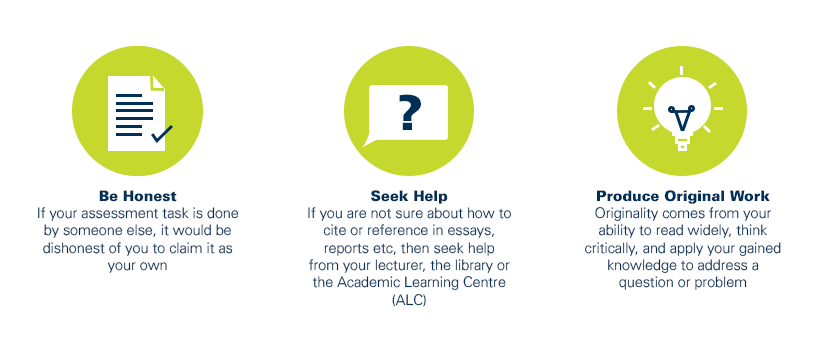
As a CQUniversity student you are expected to act honestly in all aspects of your academic work.
Any assessable work undertaken or submitted for review or assessment must be your own work. Assessable work is any type of work you do to meet the assessment requirements in the unit, including draft work submitted for review and feedback and final work to be assessed.
When you use the ideas, words or data of others in your assessment, you must thoroughly and clearly acknowledge the source of this information by using the correct referencing style for your unit. Using others’ work without proper acknowledgement may be considered a form of intellectual dishonesty.
Participating honestly, respectfully, responsibly, and fairly in your university study ensures the CQUniversity qualification you earn will be valued as a true indication of your individual academic achievement and will continue to receive the respect and recognition it deserves.
As a student, you are responsible for reading and following CQUniversity’s policies, including the Student Academic Integrity Policy and Procedure. This policy sets out CQUniversity’s expectations of you to act with integrity, examples of academic integrity breaches to avoid, the processes used to address alleged breaches of academic integrity, and potential penalties.
What is a breach of academic integrity?
A breach of academic integrity includes but is not limited to plagiarism, self-plagiarism, collusion, cheating, contract cheating, and academic misconduct. The Student Academic Integrity Policy and Procedure defines what these terms mean and gives examples.
Why is academic integrity important?
A breach of academic integrity may result in one or more penalties, including suspension or even expulsion from the University. It can also have negative implications for student visas and future enrolment at CQUniversity or elsewhere. Students who engage in contract cheating also risk being blackmailed by contract cheating services.
Where can I get assistance?
For academic advice and guidance, the Academic Learning Centre (ALC) can support you in becoming confident in completing assessments with integrity and of high standard.
What can you do to act with integrity?