Overview
The aviation industry is a worldwide operation that requires companies around the globe to operate using the same standards to safely transport people and goods. Introduction to Aviation will provide you with an overarching view of the aviation industry. This will include the history of aviation, airlines, airports, air space management, supply chain systems, emergency medical providers, sustainable aviation, future technologies and space.
Details
Pre-requisites or Co-requisites
There are no requisites for this unit.
Important note: Students enrolled in a subsequent unit who failed their pre-requisite unit, should drop the subsequent unit before the census date or within 10 working days of Fail grade notification. Students who do not drop the unit in this timeframe cannot later drop the unit without academic and financial liability. See details in the Assessment Policy and Procedure (Higher Education Coursework).
Offerings For Term 1 - 2026
Attendance Requirements
All on-campus students are expected to attend scheduled classes - in some units, these classes are identified as a mandatory (pass/fail) component and attendance is compulsory. International students, on a student visa, must maintain a full time study load and meet both attendance and academic progress requirements in each study period (satisfactory attendance for International students is defined as maintaining at least an 80% attendance record).
Recommended Student Time Commitment
Each 6-credit Undergraduate unit at CQUniversity requires an overall time commitment of an average of 12.5 hours of study per week, making a total of 150 hours for the unit.
Class Timetable
Assessment Overview
Assessment Grading
This is a graded unit: your overall grade will be calculated from the marks or grades for each assessment task, based on the relative weightings shown in the table above. You must obtain an overall mark for the unit of at least 50%, or an overall grade of 'pass' in order to pass the unit. If any 'pass/fail' tasks are shown in the table above they must also be completed successfully ('pass' grade). You must also meet any minimum mark requirements specified for a particular assessment task, as detailed in the 'assessment task' section (note that in some instances, the minimum mark for a task may be greater than 50%). Consult the University's Grades and Results Policy for more details of interim results and final grades.
All University policies are available on the CQUniversity Policy site.
You may wish to view these policies:
- Grades and Results Policy
- Assessment Policy and Procedure (Higher Education Coursework)
- Review of Grade Procedure
- Student Academic Integrity Policy and Procedure
- Academic Progression Policy and Procedure
- Student Refund and Credit Balance Policy and Procedure
- Complaints Policy and Procedure
- Information and Communications Technology Acceptable Use Policy and Procedure
This list is not an exhaustive list of all University policies. The full list of University policies are available on the CQUniversity Policy site.
Feedback, Recommendations and Responses
Every unit is reviewed for enhancement each year. At the most recent review, the following staff and student feedback items were identified and recommendations were made.
Feedback from UC Reflections
Adding more practical activities to the unit content.
To provide students with more useful knowledge and skills, it should be recommended to incorporate more interactive activities and integrate real case studies into both the lecture and tutorial content.
Feedback from UC Reflections
Regularly checking with students to see if they have any questions.
To provide more useful feedback that supports students’ learning, it should be recommended to regularly check whether they have any questions regarding their studies.
- Discuss the global context of the aviation industry
- Communicate in oral and written formats using terminology specific to the aviation industry
- Describe challenges that impact the aviation industry
- Work productively and be professionally accountable as part of a team.
Alignment of Assessment Tasks to Learning Outcomes
| Assessment Tasks | Learning Outcomes | |||
|---|---|---|---|---|
| 1 | 2 | 3 | 4 | |
| 1 - Online Quiz(zes) - 25% | ||||
| 2 - Written Assessment - 35% | ||||
| 3 - Presentation - 40% | ||||
Alignment of Graduate Attributes to Learning Outcomes
| Graduate Attributes | Learning Outcomes | |||
|---|---|---|---|---|
| 1 | 2 | 3 | 4 | |
| 1 - Communication | ||||
| 2 - Problem Solving | ||||
| 3 - Critical Thinking | ||||
| 4 - Information Literacy | ||||
| 5 - Team Work | ||||
| 6 - Information Technology Competence | ||||
| 7 - Cross Cultural Competence | ||||
| 8 - Ethical practice | ||||
| 9 - Social Innovation | ||||
| 10 - First Nations Knowledges | ||||
| 11 - Aboriginal and Torres Strait Islander Cultures | ||||
Textbooks
There are no required textbooks.
IT Resources
- CQUniversity Student Email
- Internet
- Unit Website (Moodle)
All submissions for this unit must use the referencing style: American Psychological Association 7th Edition (APA 7th edition)
For further information, see the Assessment Tasks.
j.la@cqu.edu.au
Week 1
Begin Date: 09 Mar 2026Module/Topic
Module 1 - Introduction
Chapter
N/A
Events and Submissions/Topic
Introduction to the Aviation Industry
Tutorial - Article 1 case based study. Articles will be presented prior to the tutorial and the students will be asked to comment on the topic.
Week 2
Begin Date: 16 Mar 2026Module/Topic
Module 2 - History Part 1
Chapter
N/A
Events and Submissions/Topic
History of the aviation industry from the beginning
Tutorial - Article 2 case based study. Articles will be presented prior to the tutorial and the students will be asked to comment on the topic.
Quiz 1 - Lecture material and articles reviewed in class
Week 3
Begin Date: 23 Mar 2026Module/Topic
Module 3 - History Part 2
Chapter
N/A
Events and Submissions/Topic
History of the aviation industry and how we arrived at todays modern systems
Tutorial - Article 3 case based study. Articles will be presented prior to the tutorial and the students will be asked to comment on the topic.
Week 4
Begin Date: 30 Mar 2026Module/Topic
Module 4 - RPT
Chapter
N/A
Events and Submissions/Topic
Regular Public Transport (Airlines)
Tutorial - Article 4 case based study. Articles will be presented prior to the tutorial and the students will be asked to comment on the topic.
Quiz 2 - Lecture material and articles reviewed in class
Week 5
Begin Date: 06 Apr 2026Module/Topic
Module 5 - Fleet Types and Freight
Chapter
N/A
Events and Submissions/Topic
Fleet Types and Freight - A look at the types of aircraft used by the industry and how the freight industry operates
Tutorial - Article 5 case based study, student article discussion for week 6. Articles will be presented prior to the tutorial and the students will be asked to comment on the topic.
Week 6
Begin Date: 13 Apr 2026Module/Topic
Module 6 - Airports
Chapter
N/A
Events and Submissions/Topic
Airport systems and global rankings
Tutorial - Article 6 case based study. Articles will be presented prior to the tutorial and the students will be asked to comment on the topic.
Quiz 3 - Lecture material and articles reviewed in class
Vacation Week
Begin Date: 20 Apr 2026Module/Topic
Chapter
Events and Submissions/Topic
Week 7
Begin Date: 27 Apr 2026Module/Topic
Module 7 - EMS and ATC
Chapter
N/A
Events and Submissions/Topic
Emergency Medical Systems aviation and Air Traffic Control
Tutorial - Article 7 case based study. Articles will be presented prior to the tutorial and the students will be asked to comment on the topic.
Written Assessment Due: Week 7 Friday (1 May 2026) 11:59 pm AEST
Week 8
Begin Date: 04 May 2026Module/Topic
Module 8 - Military and GA
Chapter
Events and Submissions/Topic
The most common types of Military and General Aviation (GA) aircraft flown today in the aviation industry.
Tutorial - Article 8 case based study. Articles will be presented prior to the tutorial and the students will be asked to comment on the topic.
Quiz 4 - Lecture material and articles reviewed in class
Week 9
Begin Date: 11 May 2026Module/Topic
Module 9 - ATSB & CASA
Chapter
N/A
Events and Submissions/Topic
ATSB & CASA - who they are and what they do to assist the aviation industry?
Tutorial - Article 9 case based study. Articles will be presented prior to the tutorial and the students will be asked to comment on the topic.
Week 10
Begin Date: 18 May 2026Module/Topic
Module 10 - Sustainable Aviation
Chapter
N/A
Events and Submissions/Topic
Sustainable Aviation is the future so what is it and how will it affect the future
Tutorial - Article 10 case based study. Articles will be presented prior to the tutorial and the students will be asked to comment on the topic.
Quiz 5 - Lecture material and articles reviewed in class
Group Presentation Due: Week 10 Monday (18 May 2026) 11:59 pm AEST
Week 11
Begin Date: 25 May 2026Module/Topic
Module 11 - Future Transport
Chapter
N/A
Events and Submissions/Topic
Future Transport - will aviation change to fit future needs and what other means of travel will be available
Tutorial - Article 11 case based study. Articles will be presented prior to the tutorial and the students will be asked to comment on the topic.
Week 12
Begin Date: 01 Jun 2026Module/Topic
Module 12 - Space
Chapter
N/A
Events and Submissions/Topic
Space - The final frontier
Tutorial - Article 12 case based study. Articles will be presented prior to the tutorial and the students will be asked to comment on the topic.
Quiz 6 - Lecture material and articles reviewed in class
Module/Topic
Chapter
Events and Submissions/Topic
Vacation/Exam Week
Begin Date: 15 Jun 2026Module/Topic
Chapter
Events and Submissions/Topic
1 Online Quiz(zes)
Quiz based on the lecture material from the previous two lectures
NOTE: This assessment is exempted from the 72-hour submission grace period and must be completed by the stated submission date/time.
NOTE: AI ASSESSMENT SCALE - NO AI You must not use Al at any point during the assessment. You must demonstrate your core skills and knowledge.
Quiz Completed
Quiz grade will be given upon completion of the quiz by the Moodle site
You will be required to answer material regarding the previous weeks lectures
NO AI You must not use Al at any point during the assessment. You must demonstrate your core skills and knowledge.
- Discuss the global context of the aviation industry
- Describe challenges that impact the aviation industry
2 Written Assessment
Part A - Group written assessment - 30%
This written assessment requires each group member to complete a 500-word Executive Summary, totaling 2000 words for the entire group, following APA writing standards. The summary should cover a topic of interest to you and your group from the aviation industry. One group one topic with one submission per group only. All group members are expected to contribute equally, and the following aspects of your chosen topic should be addressed in the summary: 1) Introduction and History, 2) Success, 3) Failures, 4) Future and Conclusion. For example, Boeing 737.
This executive summary will be presented as a group presentation for Assessment 3.
Part B - Group Work Peer Evaluation - 5%
Peer evaluation where every member in a team will evaluate his/ her peers in the same team. The Individual Teammate Evaluation should use the below templet and be submitted individually through Moodle.
Criteria: The assessment must be clearly written and well-structured, ensuring that all four aspects are included. References and in-text citations must be used. Do not use one sentence paragraphs or bullet points as you will lose points. All tables and/or figures used in the assessment must be appropriately labeled. Points will be deducted for not following APA guidelines, for high Turnitin similarity scores that indicate improper paraphrasing (such as copied sentences or sentences with just one word changed), and for the inappropriate use of AI tools. Additionally, providing incorrect information/data and insufficient analysis/comparison will also result in point reduction. Checking the rubric carefully before staring your assessment.
If you use any AI tools (incl. Grammarly to polish your content), please ensure you submit a copy of your original draft prior to using these tools along with your final version of assessment.
You may use Al for planning, idea development, and research. Your final submission should show how you have developed and refined these ideas.
Week 7 Friday (1 May 2026) 11:59 pm AEST
The assessment will be graded on the detail provided on the topic. Clarity of writing and the connection of ideas to form the section of the report. Sources cited as per APA style. Grammar will not be graded but misspelt words not corrected will be. Paraphrasing of the researched material will be checked for accuracy. Write in complete paragraphs and not not one sentence bullet points to formulate your ideas.
- Discuss the global context of the aviation industry
- Communicate in oral and written formats using terminology specific to the aviation industry
- Describe challenges that impact the aviation industry
- Work productively and be professionally accountable as part of a team.
3 Presentation
The group presentation will be a recording of the aviation topic chosen in Assessment 2. This recorded presentation must be uploaded to Moodle. Each group member should contribute equally to the presentation.
The presentation should be around but no longer than 15 minutes and must include the use of a minimum of 4 PowerPoint slides (excluding the cover page and reference list) to support the presentation. Points will be deducted for directly reading from your executive summary or slides. Individual points will also be lost if a group member does not participate in the presentation. One group one recording file.
You may use Al for planning, idea development, and research. Your final submission should show how you have developed and refined these ideas.
This assessment is exempted from the 72-hour submission grace period and must be completed by the stated submission date/time.
Week 10 Monday (18 May 2026) 11:59 pm AEST
The recording file of the group presentations will be uploaded to the Moodle site
Group presentation - each student will complete one section of the presentation based on their portion of the written assessment. The presentation will completed as a group.
- Communicate in oral and written formats using terminology specific to the aviation industry
- Work productively and be professionally accountable as part of a team.
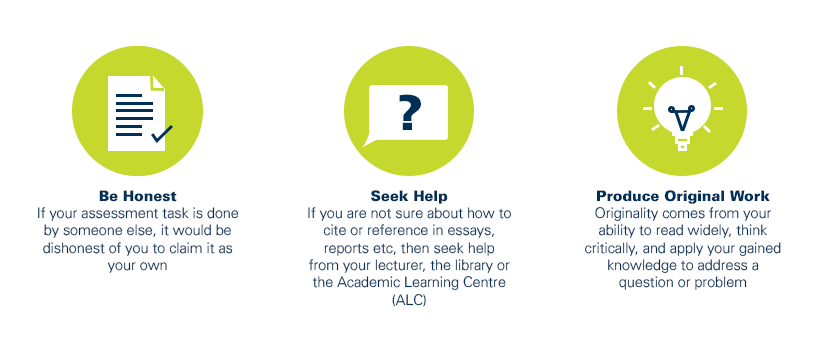
As a CQUniversity student you are expected to act honestly in all aspects of your academic work.
Any assessable work undertaken or submitted for review or assessment must be your own work. Assessable work is any type of work you do to meet the assessment requirements in the unit, including draft work submitted for review and feedback and final work to be assessed.
When you use the ideas, words or data of others in your assessment, you must thoroughly and clearly acknowledge the source of this information by using the correct referencing style for your unit. Using others’ work without proper acknowledgement may be considered a form of intellectual dishonesty.
Participating honestly, respectfully, responsibly, and fairly in your university study ensures the CQUniversity qualification you earn will be valued as a true indication of your individual academic achievement and will continue to receive the respect and recognition it deserves.
As a student, you are responsible for reading and following CQUniversity’s policies, including the Student Academic Integrity Policy and Procedure. This policy sets out CQUniversity’s expectations of you to act with integrity, examples of academic integrity breaches to avoid, the processes used to address alleged breaches of academic integrity, and potential penalties.
What is a breach of academic integrity?
A breach of academic integrity includes but is not limited to plagiarism, self-plagiarism, collusion, cheating, contract cheating, and academic misconduct. The Student Academic Integrity Policy and Procedure defines what these terms mean and gives examples.
Why is academic integrity important?
A breach of academic integrity may result in one or more penalties, including suspension or even expulsion from the University. It can also have negative implications for student visas and future enrolment at CQUniversity or elsewhere. Students who engage in contract cheating also risk being blackmailed by contract cheating services.
Where can I get assistance?
For academic advice and guidance, the Academic Learning Centre (ALC) can support you in becoming confident in completing assessments with integrity and of high standard.
What can you do to act with integrity?