Overview
Research forms the foundation of high quality, evidence-based clinical practice. As a health professional, it is important that you understand how to develop, analyse and use research to facilitate improvement in health outcomes. In this unit, you will develop the knowledge and skills necessary to ethically design a health research project. You will extend your critical thinking and analytical skills through exploration and evaluation of the current health literature to identify a clinically relevant research question. This unit requires you to demonstrate responsibility and accountability for your own learning and work collaboratively with others to develop your research methodology and begin data collection. You will also be required to apply academic conventions to oral and written communication of your research plan. You will finalise your research project in a subsequent term in your capstone research unit - Research Project for Health Professionals 2.
Details
Pre-requisites or Co-requisites
Students must have successfully completed 96 credit points of study within CB66, CB84 or CB87 courses. As part of those 96 credit points, students need to have successfully completed ALLH12006 Evidence Based Practice for Health Professionals. Students enrolled in the Bachelor of Speech Pathology (Honours) need to have successfully completed SPCH13011. Alternatively, students admitted into CC71 are also eligible to enrol in this unit.
Important note: Students enrolled in a subsequent unit who failed their pre-requisite unit, should drop the subsequent unit before the census date or within 10 working days of Fail grade notification. Students who do not drop the unit in this timeframe cannot later drop the unit without academic and financial liability. See details in the Assessment Policy and Procedure (Higher Education Coursework).
Offerings For Term 1 - 2026
Attendance Requirements
All on-campus students are expected to attend scheduled classes - in some units, these classes are identified as a mandatory (pass/fail) component and attendance is compulsory. International students, on a student visa, must maintain a full time study load and meet both attendance and academic progress requirements in each study period (satisfactory attendance for International students is defined as maintaining at least an 80% attendance record).
Recommended Student Time Commitment
Each 6-credit Undergraduate unit at CQUniversity requires an overall time commitment of an average of 12.5 hours of study per week, making a total of 150 hours for the unit.
Class Timetable
Assessment Overview
Assessment Grading
This is a graded unit: your overall grade will be calculated from the marks or grades for each assessment task, based on the relative weightings shown in the table above. You must obtain an overall mark for the unit of at least 50%, or an overall grade of 'pass' in order to pass the unit. If any 'pass/fail' tasks are shown in the table above they must also be completed successfully ('pass' grade). You must also meet any minimum mark requirements specified for a particular assessment task, as detailed in the 'assessment task' section (note that in some instances, the minimum mark for a task may be greater than 50%). Consult the University's Grades and Results Policy for more details of interim results and final grades.
All University policies are available on the CQUniversity Policy site.
You may wish to view these policies:
- Grades and Results Policy
- Assessment Policy and Procedure (Higher Education Coursework)
- Review of Grade Procedure
- Student Academic Integrity Policy and Procedure
- Academic Progression Policy and Procedure
- Student Refund and Credit Balance Policy and Procedure
- Complaints Policy and Procedure
- Information and Communications Technology Acceptable Use Policy and Procedure
This list is not an exhaustive list of all University policies. The full list of University policies are available on the CQUniversity Policy site.
Feedback, Recommendations and Responses
Every unit is reviewed for enhancement each year. At the most recent review, the following staff and student feedback items were identified and recommendations were made.
Feedback from SUTE comments
Students reported that they were well supported in completing their research projects.
It is recommended that the unit coordinator continues to provide support to students via weekly tutorial discussions and encourages supervisors to meet with their students fortnightly for discipline specific support.
Feedback from Student email correspondence and SUTE comments
The students found it very challenging to fit their research protocol into a 10-minute presentation.
It is recommended that the unit coordinator updates the research protocol presentation to a written protocol. This will allow students to provide a more detailed description of their research protocol.
- Appraise and synthesise relevant theory, knowledge and evidence to develop and support a research question relevant to health
- Design and conduct a research project applying ethical principles relevant to your health discipline and the Australian context
- Adapt communication to describe and justify your research design in different formats
- Critically reflect on the relationships between theory, research, and clinical practice
Alignment of Assessment Tasks to Learning Outcomes
| Assessment Tasks | Learning Outcomes | |||
|---|---|---|---|---|
| 1 | 2 | 3 | 4 | |
| 1 - Research Proposal - 40% | ||||
| 2 - Research Assignment - 60% | ||||
Alignment of Graduate Attributes to Learning Outcomes
| Graduate Attributes | Learning Outcomes | |||
|---|---|---|---|---|
| 1 | 2 | 3 | 4 | |
| 1 - Communication | ||||
| 2 - Problem Solving | ||||
| 3 - Critical Thinking | ||||
| 4 - Information Literacy | ||||
| 5 - Team Work | ||||
| 6 - Information Technology Competence | ||||
| 7 - Cross Cultural Competence | ||||
| 8 - Ethical practice | ||||
| 9 - Social Innovation | ||||
| 10 - First Nations Knowledges | ||||
| 11 - Aboriginal and Torres Strait Islander Cultures | ||||
Textbooks
There are no required textbooks.
IT Resources
- CQUniversity Student Email
- Internet
- Unit Website (Moodle)
- Zoom (for online tutorials)
- CQUniveristy Library Resources
- CQUniversity Student OneDrive is recommended. OneDrive is available free of charge from CQUniversity via Student Portal IT Services.
- EndNote or similar bibliographic software is recommended. EndNote is available free of charge from CQUniversity via the Library or IT services.
- Access to data collection/analysis software may be required.
All submissions for this unit must use the referencing style: American Psychological Association 7th Edition (APA 7th edition)
For further information, see the Assessment Tasks.
k.alfrey@cqu.edu.au
Week 1 | Introduction to research
Begin Date: 09 Mar 2026Module/Topic
RECORDED LECTORIAL AND ONLINE INTERACTIVE ACTIVITIES
- What is research?
- Evidence-based practice
- The research-practice relationship
- Generating research questions
- Background literature search
TUTORIAL
- Unit welcome & overview
- Getting to know your research topic
- Building your research question
- Round-table project support
Chapter
Events and Submissions/Topic
Week 2 | Types of research questions & literature searches
Begin Date: 16 Mar 2026Module/Topic
RECORDED LECTORIAL AND ONLINE INTERACTIVE ACTIVITIES
- Types of research questions
- Frameworks for quantitative vs. qualitative research questions
- Systematic database searches
- Tracking your searches
LIVE TUTORIAL
- Searching the background literature on your topic
- Aligning your research question with an appropriate research method
- Round-table project support
Chapter
Events and Submissions/Topic
Week 3 | Planning systematic review methods
Begin Date: 23 Mar 2026Module/Topic
RECORDED LECTORIAL AND ONLINE INTERACTIVE ACTIVITIES
- Types of literature reviews
- Constructing your search strategy
- Screening your articles
- Reviewing full texts
- Assessing article quality
- Data extraction
LIVE TUTORIAL
- Creating a strong search strategy
- How to import search results into Covidence
- Using Covidence to screen articles, assess quality and extract your data
- Round-table project support
Chapter
Events and Submissions/Topic
Week 4 | Planning original research methods
Begin Date: 30 Mar 2026Module/Topic
RECORDED LECTORIAL AND ONLINE INTERACTIVE ACTIVITIES
- Quantitative research designs, data sources, and sampling methods
- Qualitative research designs, data sources, and sampling methods
LIVE TUTORIAL
- Data collection to suit your research design
- Using the Qualtrics Survey Platform
- Conducting qualitative interviews
- Round-table project support
Chapter
Events and Submissions/Topic
Week 5 | Ethics and registration
Begin Date: 06 Apr 2026Module/Topic
RECORDED LECTORIAL AND ONLINE INTERACTIVE ACTIVITIES
- The importance of ethical conduct in research
- Guidelines for ethical conduct
- Ethics applications at CQUniversity
LIVE TUTORIAL
- Ethical considerations for data collection and management
- Identifying and mitigating risks in research
- Understanding ethics applications for original research
- Understanding review registrations for review research
- Round-table project support
Chapter
Events and Submissions/Topic
Week 6 | Time to delve into your research
Begin Date: 13 Apr 2026Module/Topic
RECORDED LECTORIAL AND ONLINE INTERACTIVE ACTIVITIES
- There’s no new content this week, so it’s a great chance to progress your research tasks and your Mock Ethics Application OR your Mock Review Registration.
LIVE TUTORIAL
- This tutorial will be conducted as a drop-in session to discuss any questions regarding your research project and/or assessments.
Chapter
Events and Submissions/Topic
Vacation/Break week
Begin Date: 20 Apr 2026Module/Topic
Chapter
Events and Submissions/Topic
Week 7 | Submitting your ethics or review registration
Begin Date: 27 Apr 2026Module/Topic
RECORDED LECTORIAL AND ONLINE INTERACTIVE ACTIVITIES
- There’s no new content this week, so it’s a great chance to progress your research tasks and finalise your Mock Ethics Application OR your Mock Review Registration for submission.
LIVE TUTORIAL
- This tutorial will be conducted as a drop-in session to discuss any questions regarding your research project and/or assessments.
Chapter
Events and Submissions/Topic
Week 8 | Writing your introduction
Begin Date: 04 May 2026Module/Topic
RECORDED LECTORIAL AND ONLINE INTERACTIVE ACTIVITIES
- Critical reading & notetaking
- Writing your introduction
- Tips for academic writing
LIVE TUTORIAL
- Defining what is needed in an introduction section
- Structuring a comprehensive introduction section
- Round-table project support
Chapter
Events and Submissions/Topic
Week 9 | Writing your methods
Begin Date: 11 May 2026Module/Topic
RECORDED LECTORIAL AND ONLINE INTERACTIVE ACTIVITIES
- Writing systematic review methods
- Writing quantitative study methods
- Writing qualitative study methods
LIVE TUTORIAL
- The importance of a logical and sequential methods sections
- Structuring your methods section with precision
- Round-table project support
Chapter
Events and Submissions/Topic
Week 10 | APA formatting and referencing
Begin Date: 18 May 2026Module/Topic
RECORDED LECTORIAL AND ONLINE INTERACTIVE ACTIVITIES
- There’s no new content this week, so it’s a great chance to progress your research tasks and your Research Paper Introduction and Methods.
LIVE TUTORIAL
- Reviewing APA7th referencing and formatting conventions
- Round-table project support
Chapter
Events and Submissions/Topic
Week 11 | Drop-in session
Begin Date: 25 May 2026Module/Topic
RECORDED LECTORIAL AND ONLINE INTERACTIVE ACTIVITIES
- There’s no new content this week, so it’s a great chance to progress your research tasks and finalise your Research Paper Introduction and Methods for submission.
LIVE TUTORIAL
- This tutorial will be conducted as a drop-in session to discuss any questions regarding your research project and/or assessments.
Chapter
Events and Submissions/Topic
Week 12 | Submitting your research paper introduction and methods
Begin Date: 01 Jun 2026Module/Topic
RECORDED LECTORIAL AND ONLINE INTERACTIVE ACTIVITIES
- There’s no new content this week, so it’s a great chance to progress your research tasks and finalise your Research Paper Introduction and Methods for submission. It is also a great time to plan if and how your group will manage your project between now and ALLH14001.
LIVE TUTORIAL
- This tutorial will be conducted as a drop-in session to discuss any questions regarding how your research project might progress in ALLH14001.
Chapter
Events and Submissions/Topic
Exam Week
Begin Date: 08 Jun 2026Module/Topic
Chapter
Events and Submissions/Topic
Vacation/Exam Week
Begin Date: 15 Jun 2026Module/Topic
Chapter
Events and Submissions/Topic
This unit consists of weekly pre-recorded lectorials, online activities, and live (online) tutorials. The weekly pre-recorded lectorials provide fundamental research knowledge, that is then reinforced and put into practice via engagement in the online activities. The weekly live (online) tutorials are designed to expand on the weekly content and allow students an opportunity to discuss ideas relevant to the progression of their own research project. It is expected that students work through the week's pre-recorded lectorials and online activities prior to attending the live (online) tutorial.
1 Research Proposal
For this assessment task, students will work together in their research group to propose their research project by way of a Mock Ethics Application (if conducting an original study) or a Mock Review Registration (if conducting a review study). In addition, students will independently prepare a 3-minute pre-recorded video reflection overviewing the development of their research approach, expected outcomes for the research, and the completion of their mock ethics application or review registration.
The Mock Ethics Application or Mock Review Registration must be completed as a group, using the templates provided via Moodle. The pre-recorded video reflection must be completed independently - no slides or visual elements are required, but the video must show camera view (the student's face).
Students should refer to the ALLH14002 Research Project for Health Professionals 1 Moodle page for detailed instructions regarding this assessment.
Level of GenAI use allowed: Level 3: Students may use AI to assist with specific tasks such as drafting text, refining and evaluating their work. Students must critically evaluate and modify any AI-generated content they use.
Week 7 Tuesday (28 Apr 2026) 9:00 am AEST
Week 9 Tuesday (12 May 2026)
Students will receive written feedback within 2 weeks of submitting their Research Proposal.
This is a must-pass assessment task. In order to pass, students must obtain a minimum grade of 50% on this task. Students will be assessed on:
- their group's ability to demonstrate understanding of their research topic and project, including understanding of ethical considerations (as appropriate) and application of the research;
- their individual ability to critically reflect on the purpose of the research and the importance of research ethics and integrity;
- their individual oral presentation skills and adherence to APA7th referencing
Students should refer to the ALLH14002 Research Project for Health Professionals 1 Moodle page to view the detailed marking rubric used in grading this assessment.
- Appraise and synthesise relevant theory, knowledge and evidence to develop and support a research question relevant to health
- Design and conduct a research project applying ethical principles relevant to your health discipline and the Australian context
- Adapt communication to describe and justify your research design in different formats
2 Research Assignment
For this assessment task, students will write an introduction and methods section for their research paper. The introduction section will describe background on the research topic before presenting a review of current knowledge and literature pertaining to the research topic, along with identified gaps in knowledge that lead into the research question. The methods section will describe the design of the student's research, their data collection methods, and a basic overview of their analysis, in a logical and highly structured manner.
The introduction section must be written independently. The methods section must be written collaboratively by the research group. Combined, the introduction and methods should not exceed 2000 words. The document should adhere to APA7th referencing and formatting standards.
Students should refer to the ALLH14002 Research Project for Health Professionals 1 Moodle page for detailed instructions regarding this assessment.
Level of GenAI use allowed: Level 3: Students may use AI to assist with specific tasks such as drafting text, refining and evaluating their work. Students must critically evaluate and modify any AI-generated content they use.
Week 12 Tuesday (2 June 2026) 9:00 am AEST
Vacation/Exam Week Tuesday (16 June 2026)
Students will receive written feedback within 2 weeks of submitting their Research Paper Introduction and Methods.
This is a must-pass assessment task. In order to pass, students must obtain a minimum grade of 50% on this task. Students will be assessed on:
- their individual ability to integrate evidence to justify their research questions throughout their introduction;
- their group's ability to describe their research design and all relevant aspects of their research methods;
- their individual academic writing style and use of APA7th referencing and formatting
NOTE: While there are no marks specifically allocated to word limit in the rubric. The assessor will only review and grade the portion of your document that meets this guideline. That is, the assessor will not review or grade any content beyond the first 2,000 words. Students are required to paraphrase information from sources rather than include direct quotations. Paraphrasing ensures the content is well integrated into the context of the text and provides students better opportunity to explain the significance of the information to their paper. If direct quotes are used, that information will not be considered in the grading of the work.
Students should refer to the ALLH14002 Research Project for Health Professionals 1 Moodle page to view the detailed marking rubric used in grading this assessment.
- Appraise and synthesise relevant theory, knowledge and evidence to develop and support a research question relevant to health
- Design and conduct a research project applying ethical principles relevant to your health discipline and the Australian context
- Adapt communication to describe and justify your research design in different formats
- Critically reflect on the relationships between theory, research, and clinical practice
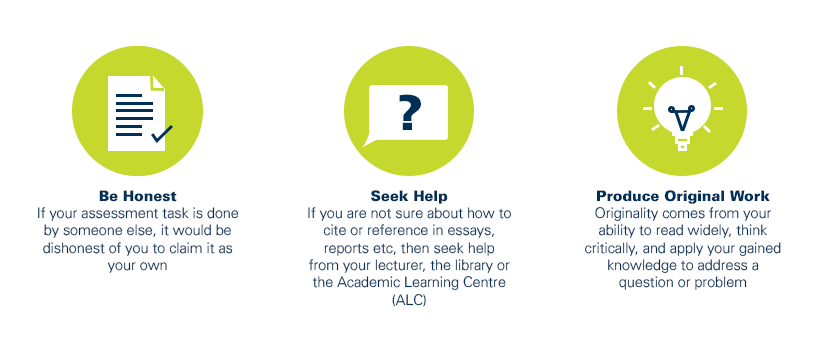
As a CQUniversity student you are expected to act honestly in all aspects of your academic work.
Any assessable work undertaken or submitted for review or assessment must be your own work. Assessable work is any type of work you do to meet the assessment requirements in the unit, including draft work submitted for review and feedback and final work to be assessed.
When you use the ideas, words or data of others in your assessment, you must thoroughly and clearly acknowledge the source of this information by using the correct referencing style for your unit. Using others’ work without proper acknowledgement may be considered a form of intellectual dishonesty.
Participating honestly, respectfully, responsibly, and fairly in your university study ensures the CQUniversity qualification you earn will be valued as a true indication of your individual academic achievement and will continue to receive the respect and recognition it deserves.
As a student, you are responsible for reading and following CQUniversity’s policies, including the Student Academic Integrity Policy and Procedure. This policy sets out CQUniversity’s expectations of you to act with integrity, examples of academic integrity breaches to avoid, the processes used to address alleged breaches of academic integrity, and potential penalties.
What is a breach of academic integrity?
A breach of academic integrity includes but is not limited to plagiarism, self-plagiarism, collusion, cheating, contract cheating, and academic misconduct. The Student Academic Integrity Policy and Procedure defines what these terms mean and gives examples.
Why is academic integrity important?
A breach of academic integrity may result in one or more penalties, including suspension or even expulsion from the University. It can also have negative implications for student visas and future enrolment at CQUniversity or elsewhere. Students who engage in contract cheating also risk being blackmailed by contract cheating services.
Where can I get assistance?
For academic advice and guidance, the Academic Learning Centre (ALC) can support you in becoming confident in completing assessments with integrity and of high standard.
What can you do to act with integrity?