Overview
In this unit you will develop a broad understanding of rural and remote health and the role that health professionals play within this context. You will identify and evaluate current issues and priorities for rural and remote health from a range of stakeholder perspectives. Finally, you will develop an applied project that requires you to exercise your critical thinking and problem-solving skills to generate new and innovative solutions to current rural and remote inequities.
Details
Pre-requisites or Co-requisites
Students must have successfully completed 48 credit points of study
Important note: Students enrolled in a subsequent unit who failed their pre-requisite unit, should drop the subsequent unit before the census date or within 10 working days of Fail grade notification. Students who do not drop the unit in this timeframe cannot later drop the unit without academic and financial liability. See details in the Assessment Policy and Procedure (Higher Education Coursework).
Offerings For Term 1 - 2026
Attendance Requirements
All on-campus students are expected to attend scheduled classes - in some units, these classes are identified as a mandatory (pass/fail) component and attendance is compulsory. International students, on a student visa, must maintain a full time study load and meet both attendance and academic progress requirements in each study period (satisfactory attendance for International students is defined as maintaining at least an 80% attendance record).
Recommended Student Time Commitment
Each 6-credit Undergraduate unit at CQUniversity requires an overall time commitment of an average of 12.5 hours of study per week, making a total of 150 hours for the unit.
Class Timetable
Assessment Overview
Assessment Grading
This is a graded unit: your overall grade will be calculated from the marks or grades for each assessment task, based on the relative weightings shown in the table above. You must obtain an overall mark for the unit of at least 50%, or an overall grade of 'pass' in order to pass the unit. If any 'pass/fail' tasks are shown in the table above they must also be completed successfully ('pass' grade). You must also meet any minimum mark requirements specified for a particular assessment task, as detailed in the 'assessment task' section (note that in some instances, the minimum mark for a task may be greater than 50%). Consult the University's Grades and Results Policy for more details of interim results and final grades.
All University policies are available on the CQUniversity Policy site.
You may wish to view these policies:
- Grades and Results Policy
- Assessment Policy and Procedure (Higher Education Coursework)
- Review of Grade Procedure
- Student Academic Integrity Policy and Procedure
- Academic Progression Policy and Procedure
- Student Refund and Credit Balance Policy and Procedure
- Complaints Policy and Procedure
- Information and Communications Technology Acceptable Use Policy and Procedure
This list is not an exhaustive list of all University policies. The full list of University policies are available on the CQUniversity Policy site.
Feedback, Recommendations and Responses
Every unit is reviewed for enhancement each year. At the most recent review, the following staff and student feedback items were identified and recommendations were made.
Feedback from Unit Evaluation
Some students questioned the relevance of the unit content if they do not intend to work in those settings
Include examples of rural patients using metro health services to show relevance; emphasising that all professionals may work with rural clients/patients, highlighting the importance of understanding diverse healthcare needs.
- Outline and explain the challenges associated with health in rural and remote communities
- Identify and evaluate current issues and priorities for rural and remote health
- Generate solutions for inequities within rural and remote healthcare exercising critical thinking and problem-solving skills
- Identify and evaluate the health challenges and appropriate health resources for Aboriginal and Torres Strait Islander peoples in rural and remote communities
Alignment of Assessment Tasks to Learning Outcomes
| Assessment Tasks | Learning Outcomes | |||
|---|---|---|---|---|
| 1 | 2 | 3 | 4 | |
| 1 - Written Assessment - 40% | ||||
| 2 - Project (applied) - 40% | ||||
| 3 - Poster Sessions - 20% | ||||
Alignment of Graduate Attributes to Learning Outcomes
| Graduate Attributes | Learning Outcomes | |||
|---|---|---|---|---|
| 1 | 2 | 3 | 4 | |
| 1 - Communication | ||||
| 2 - Problem Solving | ||||
| 3 - Critical Thinking | ||||
| 4 - Information Literacy | ||||
| 5 - Team Work | ||||
| 6 - Information Technology Competence | ||||
| 7 - Cross Cultural Competence | ||||
| 8 - Ethical practice | ||||
| 9 - Social Innovation | ||||
| 10 - First Nations Knowledges | ||||
| 11 - Aboriginal and Torres Strait Islander Cultures | ||||
Textbooks
There are no required textbooks.
IT Resources
- CQUniversity Student Email
- Internet
- Unit Website (Moodle)
- Zoom (both microphone and webcam capability)
All submissions for this unit must use the referencing style: American Psychological Association 7th Edition (APA 7th edition)
For further information, see the Assessment Tasks.
d.taylor@cqu.edu.au
Week 1
Begin Date: 09 Mar 2026Module/Topic
What is rural and remote health?
Chapter
Complete online learning activities
Attend tutorial or view recording
Events and Submissions/Topic
Week 2
Begin Date: 16 Mar 2026Module/Topic
An overview of rural health
Chapter
Complete online learning activities
Attend tutorial or view recording
Events and Submissions/Topic
Week 3
Begin Date: 23 Mar 2026Module/Topic
Who lives in rural and remote Australia?
Chapter
Complete online learning activities
Attend tutorial or view recording
Events and Submissions/Topic
Week 4
Begin Date: 30 Mar 2026Module/Topic
Challenges for rural health
Chapter
Complete online learning activities
Attend tutorial or view recording
Events and Submissions/Topic
Week 5
Begin Date: 06 Apr 2026Module/Topic
Chronic condition management and care in rural Australia
Chapter
Complete online learning activities
Attend tutorial or view recording
Events and Submissions/Topic
Week 6
Begin Date: 13 Apr 2026Module/Topic
Childhood in rural Australia
Chapter
Complete online learning activities
Attend tutorial or view recording
Events and Submissions/Topic
Break Week
Begin Date: 20 Apr 2026Module/Topic
Chapter
Events and Submissions/Topic
Week 7
Begin Date: 27 Apr 2026Module/Topic
Aged care in rural Australia
Chapter
Complete online learning activities
Attend tutorial or view recording
Events and Submissions/Topic
Week 8
Begin Date: 04 May 2026Module/Topic
Aboriginal and Torres Strait Islander Peoples, Health and Closing the Gap
Chapter
Complete online learning activities
Attend tutorial or view recording
Events and Submissions/Topic
Week 9
Begin Date: 11 May 2026Module/Topic
Mental health care in rural Australia
Chapter
Complete online learning activities
Attend tutorial or view recording
Events and Submissions/Topic
Week 10
Begin Date: 18 May 2026Module/Topic
Integration and consolidation of learning
Chapter
Attend tutorial or view recording
Events and Submissions/Topic
Week 11
Begin Date: 25 May 2026Module/Topic
Integration and consolidation of learning
Chapter
Attend tutorial or view recording
Events and Submissions/Topic
Week 12
Begin Date: 01 Jun 2026Module/Topic
Integration and consolidation of learning
Chapter
Attend tutorial or view recording
Events and Submissions/Topic
This unit consists of interactive learning material and tutorials. Interactive learning materials provide fundamental knowledge and various types of activities designed to help reinforce your theoretical knowledge and understanding. Tutorials are designed to enable you to apply your theoretical understanding in a practical manner. It is expected that you work through all learning material before attending your weekly tutorial.
IMPORTANT:
Tutorials run in Weeks 1–9 to discuss weekly content. Weeks 10–12 tutorials will be delivered as drop-in sessions for content revision and assessment support.
You can attend the weekly tutorials live either in-person (via the Rockhampton or Bundaberg campus), or online (via Zoom) or if you are unable to attend the live tutorials, you can engage with the tutorial recording, which is uploaded to the ALLH13011 Moodle page within 2 working days. It is NOT a requirement of this unit that you attend the live weekly tutorials. However, it is strongly encouraged.
1 Written Assessment
For this assessment task, you are required to identify and critically evaluate a current health-related challenge being experienced in rural and/or remote Australian communities. You will complete a written essay and outline with appropriate literature and statistics:
- What is the specific health-related challenge currently affecting rural and remote communities in Australia?
- Why is this challenge unique or disproportionately prevalent in rural and remote communities, compared to urban or metropolitan areas in Australia?
- What are the impacts of this challenge on the health of individuals and communities?
The word count for this assessment is 1000 words (+/-10%). This includes the main body of the text and in-text references, but excludes the title page and reference list.
Please ensure your response is informed by relevant academic literature and refer to the ALLH13011 Rural and Remote Practice for Health Professionals Moodle page for additional resources and a detailed task description.
Week 5 Tuesday (7 Apr 2026) 5:00 pm AEST
The assessment is due on Tuesday, as Monday is a public holiday
Your assessment will be returned 3 weeks after your submission.
For this task, you will be graded against the following criteria:
- Discussion and analysis of relevant health statistics and/or research data to demonstrate greater prevalence in rural and remote Australia
- Discussion and analysis of why this challenge is unique or disproportionately prevalent in rural and remote communities, compared to urban or metropolitan areas in Australia
- Analysis of the impacts of this challenge on the health of individuals and communities
- Academic integrity
- Academic writing
- Referencing
Use of Generative Artificial Intelligence agents (Gen AI): Within this assessment the use of Microsoft Copilot, Chat GPT or other Gen AI agents can be used to generate ideas and general structures as well as content editing, critique and review. Please reference its use as appropriate. Using AI beyond idea generation, content editing and review (i.e., to write the assessment for you) is not permitted.
This assessment task has a minimum pass mark of 50%. Thus, you must pass this assessment task to be eligible to pass the unit overall.
Please refer to the ALLH13011 Rural and Remote Practice for Health Professionals Moodle page for additional information, including a detailed criteria sheet.
- Outline and explain the challenges associated with health in rural and remote communities
- Identify and evaluate current issues and priorities for rural and remote health
2 Project (applied)
In Assessment Task 1, you identified and evaluated a current health-related challenge affecting rural and/or remote communities in Australia. In this task, you will step into the role of a health professional preparing a grant funding application for a new socially innovative project that responds to this challenge.
You are required to prepare an 8-minute funding pitch, supported by PowerPoint slides and a narrated audio/visual presentation. Your pitch will form the basis of a funding application for a project valued at up to $500,000.
Please refer to the ALLH13011 Rural and Remote Practice for Health Professionals Moodle page for additional resources and information.
Week 8 Tuesday (5 May 2026) 5:00 pm AEST
The assessment is due on Tuesday, as Monday is a public holiday
Your assessment will be returned 3 weeks after your submission.
For this task, you will be graded against the following criteria:
- Background statistical and research data to effectively demonstrate the health-related challenge in a specific rural or remote location in Australia
- Utilises available systems to classify remoteness and rurality specific to the chosen location
- Critically analyses health-related problems and programs
- Creates socially innovative solutions to health-related problems that are relevant to the chosen location
- Academic integrity
- Referencing
- Presentation
Use of Generative Artificial Intelligence agents (Gen AI): Within this assessment the use of Microsoft Copilot, Chat GPT or other Gen AI agents can be used to generate ideas and general structures as well as content editing, critique and review. Please reference its use as appropriate. Using AI beyond idea generation, content editing and review (i.e., to write the assessment for you) is not permitted.
This assessment task has a minimum pass mark of 50%. Thus, you must pass this assessment task to be eligible to pass the unit overall.
Please refer to the ALLH13011 Rural and Remote Practice for Health Professionals Moodle page for additional information, including a detailed criteria sheet.
- Identify and evaluate current issues and priorities for rural and remote health
- Generate solutions for inequities within rural and remote healthcare exercising critical thinking and problem-solving skills
3 Poster Sessions
For this assessment task, you are required to create a poster/infographic resource specifically aimed at health professionals, with the goal of increasing understanding and awareness of Aboriginal and Torres Strait Islander health and healthcare challenges in a specific rural community that you identify. You will draw on appropriate literature and statistics to create your poster/infographic.
Please refer to the ALLH13011 Rural and Remote Practice for Health Professionals Moodle page for additional resources, including a detailed task description and examples of effective posters/infographics.
Week 12 Monday (1 June 2026) 5:00 pm AEST
Your assessment will be returned 3 weeks after your submission.
For this task, you will be graded against the following criteria:
- Succinctly detail health-related concerns using appropriate literature and statistics.
- Classify specific Australian locations using appropriate classifications of remoteness.
- Identify and succinctly describe health-related programs.
- Analyse importance and relevance for future practice.
- Use effective presentation skills to engage your audience.
- Appropriate referencing, in accordance with APA referencing requirements.
Use of Generative Artificial Intelligence agents (Gen AI): Within this assessment the use of Microsoft Copilot, Chat GPT or other Gen AI agents can be used to generate ideas and general structures as well as content editing, critique and review. Please reference its use as appropriate. Using AI beyond idea generation, content editing and review (i.e., to write the assessment for you) is not permitted.
This assessment task has a minimum pass mark of 50%. Thus, you must pass this assessment task to be eligible to pass the unit overall.
Please refer to the ALLH13011 Rural and Remote Practice for Health Professionals Moodle page for additional information, including a detailed criteria sheet.
- Identify and evaluate the health challenges and appropriate health resources for Aboriginal and Torres Strait Islander peoples in rural and remote communities
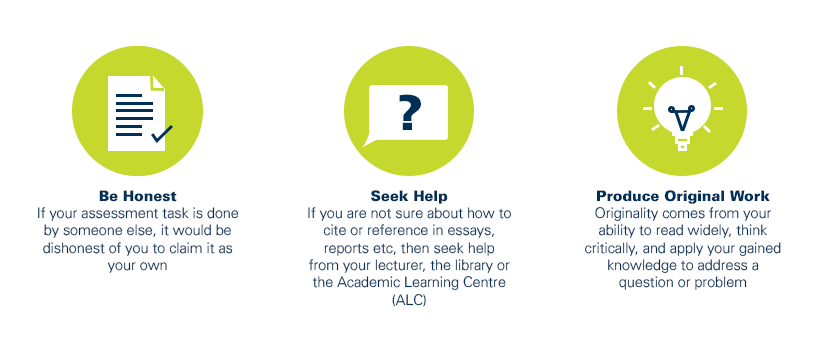
As a CQUniversity student you are expected to act honestly in all aspects of your academic work.
Any assessable work undertaken or submitted for review or assessment must be your own work. Assessable work is any type of work you do to meet the assessment requirements in the unit, including draft work submitted for review and feedback and final work to be assessed.
When you use the ideas, words or data of others in your assessment, you must thoroughly and clearly acknowledge the source of this information by using the correct referencing style for your unit. Using others’ work without proper acknowledgement may be considered a form of intellectual dishonesty.
Participating honestly, respectfully, responsibly, and fairly in your university study ensures the CQUniversity qualification you earn will be valued as a true indication of your individual academic achievement and will continue to receive the respect and recognition it deserves.
As a student, you are responsible for reading and following CQUniversity’s policies, including the Student Academic Integrity Policy and Procedure. This policy sets out CQUniversity’s expectations of you to act with integrity, examples of academic integrity breaches to avoid, the processes used to address alleged breaches of academic integrity, and potential penalties.
What is a breach of academic integrity?
A breach of academic integrity includes but is not limited to plagiarism, self-plagiarism, collusion, cheating, contract cheating, and academic misconduct. The Student Academic Integrity Policy and Procedure defines what these terms mean and gives examples.
Why is academic integrity important?
A breach of academic integrity may result in one or more penalties, including suspension or even expulsion from the University. It can also have negative implications for student visas and future enrolment at CQUniversity or elsewhere. Students who engage in contract cheating also risk being blackmailed by contract cheating services.
Where can I get assistance?
For academic advice and guidance, the Academic Learning Centre (ALC) can support you in becoming confident in completing assessments with integrity and of high standard.
What can you do to act with integrity?