Overview
This unit will introduce you to the principles of evidence-based practice (EBP) and develop your key skills for conducting EBP within clinical settings as an Allied Health Professional. You will be introduced to models of EBP that can be used to guide clinical decision making at an individual patient level and also at a service delivery level, and be required to identify the impacts of EBP on current practice across a variety of fields. During this unit you will gain experience in developing clinically answerable questions, performing information searches, undertaking critical appraisal and synthesising information.
Details
Pre-requisites or Co-requisites
Pre-requisite: ALLH11009 Research Methods for Health Professionals
Important note: Students enrolled in a subsequent unit who failed their pre-requisite unit, should drop the subsequent unit before the census date or within 10 working days of Fail grade notification. Students who do not drop the unit in this timeframe cannot later drop the unit without academic and financial liability. See details in the Assessment Policy and Procedure (Higher Education Coursework).
Offerings For Term 1 - 2026
Attendance Requirements
All on-campus students are expected to attend scheduled classes - in some units, these classes are identified as a mandatory (pass/fail) component and attendance is compulsory. International students, on a student visa, must maintain a full time study load and meet both attendance and academic progress requirements in each study period (satisfactory attendance for International students is defined as maintaining at least an 80% attendance record).
Recommended Student Time Commitment
Each 6-credit Undergraduate unit at CQUniversity requires an overall time commitment of an average of 12.5 hours of study per week, making a total of 150 hours for the unit.
Class Timetable
Assessment Overview
Assessment Grading
This is a graded unit: your overall grade will be calculated from the marks or grades for each assessment task, based on the relative weightings shown in the table above. You must obtain an overall mark for the unit of at least 50%, or an overall grade of 'pass' in order to pass the unit. If any 'pass/fail' tasks are shown in the table above they must also be completed successfully ('pass' grade). You must also meet any minimum mark requirements specified for a particular assessment task, as detailed in the 'assessment task' section (note that in some instances, the minimum mark for a task may be greater than 50%). Consult the University's Grades and Results Policy for more details of interim results and final grades.
All University policies are available on the CQUniversity Policy site.
You may wish to view these policies:
- Grades and Results Policy
- Assessment Policy and Procedure (Higher Education Coursework)
- Review of Grade Procedure
- Student Academic Integrity Policy and Procedure
- Academic Progression Policy and Procedure
- Student Refund and Credit Balance Policy and Procedure
- Complaints Policy and Procedure
- Information and Communications Technology Acceptable Use Policy and Procedure
This list is not an exhaustive list of all University policies. The full list of University policies are available on the CQUniversity Policy site.
Feedback, Recommendations and Responses
Every unit is reviewed for enhancement each year. At the most recent review, the following staff and student feedback items were identified and recommendations were made.
Feedback from SUTE UNIT COMMENTS REPORT
Some students expressed that Week 3 was very content heavy.
It is recommended that the unit coordinator break down content heavy weeks (i.e., Week 3) across additional weeks to make it more manageable for students.
Feedback from SUTE UNIT COMMENTS REPORT
Students greatly appreciated the clear guidance provided for assessments, including the use of templates, detailed examples, and thorough explanations.
It is recommended that this unit continue to provide detailed assessment templates, examples and explanations relevant to each discipline.
- Formulate a clinical research question using the PICO (Population-Intervention-Comparison-Outcome) format
- Plan, carry out and evaluate information searches to address specific clinical questions
- Critically appraise and evaluate the quality of original research within health professions using established critical appraisal tools
- Present a synthesised evaluation of a clinical topic using information acquired from multiple sources
- Demonstrate knowledge of fundamental evidence-based practice concepts.
N/A
Alignment of Assessment Tasks to Learning Outcomes
| Assessment Tasks | Learning Outcomes | ||||
|---|---|---|---|---|---|
| 1 | 2 | 3 | 4 | 5 | |
| 1 - Presentation - 40% | |||||
| 2 - Written Assessment - 40% | |||||
| 3 - Online Quiz(zes) - 20% | |||||
Alignment of Graduate Attributes to Learning Outcomes
| Graduate Attributes | Learning Outcomes | ||||
|---|---|---|---|---|---|
| 1 | 2 | 3 | 4 | 5 | |
| 1 - Communication | |||||
| 2 - Problem Solving | |||||
| 3 - Critical Thinking | |||||
| 4 - Information Literacy | |||||
| 5 - Team Work | |||||
| 6 - Information Technology Competence | |||||
| 7 - Cross Cultural Competence | |||||
| 8 - Ethical practice | |||||
| 9 - Social Innovation | |||||
| 10 - First Nations Knowledges | |||||
| 11 - Aboriginal and Torres Strait Islander Cultures | |||||
Textbooks
Evidence-Based Practice Across the Health Professions Edition
- Edition: 4th (2023)
- Authors: Hoffman, Bennett and Del Mar
- Elsevier Australia
- Sydney Sydney , NSW , Australia
- ISBN: 9780729544436
Additional Textbook Information
Optional textbook for further explanation, elaboration and examples (not a requirement).
IT Resources
- CQUniversity Student Email
- Internet
- Unit Website (Moodle)
- Zoom
- Camera and microphone for attending Zoom tutorials and completing presentation assessment task
All submissions for this unit must use the referencing style: American Psychological Association 7th Edition (APA 7th edition)
For further information, see the Assessment Tasks.
s.alley@cqu.edu.au
Week 1: Evidence-based practice: More than a buzzword
Begin Date: 09 Mar 2026Module/Topic
Chapter
Events and Submissions/Topic
Week 2: Asking a question and finding the best evidence
Begin Date: 16 Mar 2026Module/Topic
Chapter
Events and Submissions/Topic
Week 3: Can we trust this? Introduction to critical appraisal
Begin Date: 23 Mar 2026Module/Topic
Chapter
Events and Submissions/Topic
Week 4: Will this work? Appraising RCTs
Begin Date: 30 Mar 2026Module/Topic
Chapter
Events and Submissions/Topic
Week 5: Looking ahead: Cohort studies for prognosis
Begin Date: 06 Apr 2026Module/Topic
Chapter
Events and Submissions/Topic
Week 6: Diagnosis and beyond the numbers in qualitative research
Begin Date: 13 Apr 2026Module/Topic
Chapter
Events and Submissions/Topic
BREAK WEEK
Begin Date: 20 Apr 2026Module/Topic
Chapter
Events and Submissions/Topic
Week 7: Systematic reviews and guidelines: Shortcut to EBP?
Begin Date: 27 Apr 2026Module/Topic
Chapter
Events and Submissions/Topic
Week 8: Turning evidence into practice
Begin Date: 04 May 2026Module/Topic
Chapter
Events and Submissions/Topic
Week 9: Voices from the field: Part 1
Begin Date: 11 May 2026Module/Topic
Chapter
Events and Submissions/Topic
Week 10: Voices from the field: Part 2
Begin Date: 18 May 2026Module/Topic
Chapter
Events and Submissions/Topic
Week 11: No content: Finalise Assessment 3.
Begin Date: 25 May 2026Module/Topic
Chapter
Events and Submissions/Topic
Week 12: Review week
Begin Date: 01 Jun 2026Module/Topic
Chapter
Events and Submissions/Topic
This unit consists of eight weeks of lectorials (weeks 1-8), and two weeks of interviews with a health professional (weeks 9 & 10). There will also be live online tutorials held on Fridays from 2-4pm AEST.
- The lectorials involve a series of workbooks with a pre-recorded short lecture alongside some practical and applied activities (also referred to as H5P activities). These are designed to further enhance your understanding of important theoretical content and concepts. The lectorials are available at least two weeks in advance and can be completed in your own time. However, it is an expectation that you complete all of the lectorial materials prior to attending the tutorial each week.
- The health professional interviews involve pre-recorded discussions with health professionals about applying evidence-based practice in the real world.
- The weekly tutorials involve a live online session (via Zoom) for all students wishing to participate (links can be found in the 'Virtual Classrooms' Tab on Moodle). The tutorials in weeks 1-8 are designed to provide practical applications of the theoretical content and concepts. In weeks 9 & 10 we will together apply the steps of the evidence-based practice process to answer a clinical research question from scenarios discussed in the health professional interviews. The tutorials provide opportunity to apply the lectorial content, practice the skills that will be assessed, ask questions, and participate in thought-provoking discussion.
1 Written Assessment
For this task, you are required to:
- Develop an answerable clinical research question that is consistent with the PICO format.
- Develop a search strategy and apply it to at least three (3) electronic academic databases.
- Critically appraise one original research article reporting a Randomised Controlled Trial (RCT), using the CASP tool for RCTs.
Please refer to the ALLH12006 Evidence-Based Practice for Health Professionals Moodle page for additional information, including a detailed task description.
Week 7 Monday (27 Apr 2026) 5:00 pm AEST
Week 10 Monday (18 May 2026)
NOTE: If your assessment is submitted after the due date, grades and feedback will be returned three (3) weeks after submission date.
For this task, you will be graded against the following criteria:
- PICO Clinical Research Question
- Develop a Search Strategy
- Section A of the CASP checklist (Is the basic study design valid?).
- Section B of the CASP checklist (Was the study methodologically sound?).
- Section C of the CASP checklist (What are the results?).
- Section D of the CASP checklist (Will the results help locally?).
- Appraisal Summary
Level of GenAI use allowed: Level 3. You may use AI to assist with specific tasks such as drafting text, refining and evaluating your work. You must critically evaluate and modify any AI-generated content you use. This means that you can use it to assist you with idea generation, drafting sentences and revising your work (e.g., spelling, clarity and consistency). You cannot use it to write the assessment for you. Please reference any GenAI use according to the CQUniversity APA referencing guide.
This assessment task has a minimum pass mark of 50%. Thus, you must pass this assessment task to be eligible to pass the unit.
Please refer to the ALLH12006 Evidence-Based Practice for Health Professionals Moodle page for additional information, including a detailed criteria sheet.
- Formulate a clinical research question using the PICO (Population-Intervention-Comparison-Outcome) format
- Plan, carry out and evaluate information searches to address specific clinical questions
- Critically appraise and evaluate the quality of original research within health professions using established critical appraisal tools
- Present a synthesised evaluation of a clinical topic using information acquired from multiple sources
2 Online Quiz(zes)
For this task, you are required to demonstrate knowledge and understanding of important content by completing an online content quiz.
The quiz will assess lectorial content covered during weeks 2 - 7. It will OPEN Friday Week 7 and will CLOSE Friday Week 9 (Friday 15th May 2026) 5:00 pm AEST.
Please note that the 72-hour grace period does not apply to this assessment task. You will fail the assessment task if you do not complete the quiz before it closes, and do not have a formal extension in place.
Week 9 Friday (15 May 2026) 5:00 pm AEST
You will receive an immediate mark upon the competition of each quiz. Further insight (e.g., which specific questions you got correct and incorrect) will be available once the quiz is closed for all students.
Students are required to answer 40 multiple choice or true/false questions, and will be allocated 60 minutes to complete the quiz.
Level of GenAI use allowed: Level 1. The assessment is completed entirely without AI assistance, ensuring that students rely solely on their existing knowledge, understanding, and skills. You must not use AI at any point during the assessment. You must demonstrate your core skills and knowledge.
This assessment task has a minimum pass mark of 50%. Thus, you must pass this assessment task to be eligible to pass the unit.
Please refer to the ALLH12006 Evidence-Based Practice for Health Professionals Moodle page for additional information.
- Demonstrate knowledge of fundamental evidence-based practice concepts.
3 Presentation
For this task, you are required to:
- Describe a scenario within health care where the application of evidence-based practice would be required
- Carry out the steps of the evidence-based practice process (incl., ask, access, appraise, and apply).
- Discuss your application of each step in a 10-minute pre-recorded presentation, using audio, visual and a PowerPoint presentation
Please refer to the ALLH12006 Evidence-Based Practice for Health Professionals Moodle page for additional information, including a detailed task description.
Week 11 Friday (29 May 2026) 5:00 pm AEST
Vacation/Exam Week Friday (19 June 2026)
NOTE: If your assessment is not submitted in accordance with the due date, grades and feedback will be returned three (3) weeks after submission date.
For this task, you will be graded against the following criteria:
- Ask
- Access
- Appraise: What does the evidence tell us?
- Appraise: Key strengths and weaknesses
- Appraise: Gaps in the evidence
- Apply
- Presentation Skills
- PowerPoint slides
- Referencing
Level of GenAI use allowed: Level 3. You may use AI to assist with specific tasks such as drafting text, refining and evaluating your work. You must critically evaluate and modify any AI-generated content you use. This means that you can use it to assist you with idea generation, drafting sentences and revising your work (e.g., spelling, clarity and consistency). You cannot use it to write the assessment for you. Please reference any GenAI use according to the CQUniversity APA referencing guide.
This assessment task has a minimum pass mark of 50%. Thus, you must pass this assessment task to be eligible to pass the unit.
Please refer to the ALLH12006 Evidence-Based Practice for Health Professionals Moodle page for additional information, including a detailed criteria sheet.
- Formulate a clinical research question using the PICO (Population-Intervention-Comparison-Outcome) format
- Plan, carry out and evaluate information searches to address specific clinical questions
- Critically appraise and evaluate the quality of original research within health professions using established critical appraisal tools
- Present a synthesised evaluation of a clinical topic using information acquired from multiple sources
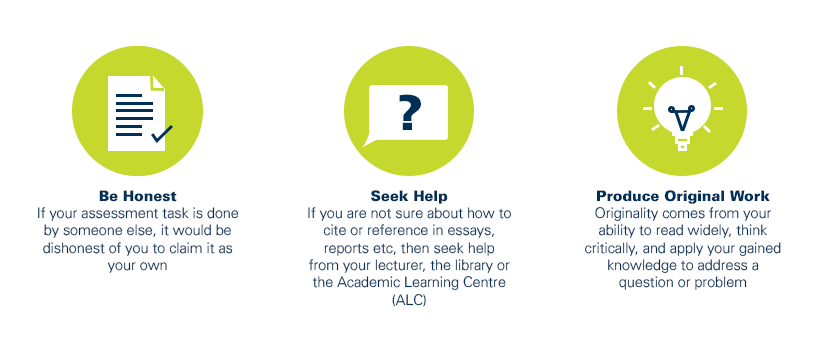
As a CQUniversity student you are expected to act honestly in all aspects of your academic work.
Any assessable work undertaken or submitted for review or assessment must be your own work. Assessable work is any type of work you do to meet the assessment requirements in the unit, including draft work submitted for review and feedback and final work to be assessed.
When you use the ideas, words or data of others in your assessment, you must thoroughly and clearly acknowledge the source of this information by using the correct referencing style for your unit. Using others’ work without proper acknowledgement may be considered a form of intellectual dishonesty.
Participating honestly, respectfully, responsibly, and fairly in your university study ensures the CQUniversity qualification you earn will be valued as a true indication of your individual academic achievement and will continue to receive the respect and recognition it deserves.
As a student, you are responsible for reading and following CQUniversity’s policies, including the Student Academic Integrity Policy and Procedure. This policy sets out CQUniversity’s expectations of you to act with integrity, examples of academic integrity breaches to avoid, the processes used to address alleged breaches of academic integrity, and potential penalties.
What is a breach of academic integrity?
A breach of academic integrity includes but is not limited to plagiarism, self-plagiarism, collusion, cheating, contract cheating, and academic misconduct. The Student Academic Integrity Policy and Procedure defines what these terms mean and gives examples.
Why is academic integrity important?
A breach of academic integrity may result in one or more penalties, including suspension or even expulsion from the University. It can also have negative implications for student visas and future enrolment at CQUniversity or elsewhere. Students who engage in contract cheating also risk being blackmailed by contract cheating services.
Where can I get assistance?
For academic advice and guidance, the Academic Learning Centre (ALC) can support you in becoming confident in completing assessments with integrity and of high standard.
What can you do to act with integrity?