Overview
This unit will provide students with a grounding in basic tenets of key investigation related issues including safety of investigators onsite, planning and preparing for the conduct of investigations, broad understanding of the nature of accident and related scenes of failure, effective photography methods and witness interviewing techniques. There will also be a focus on the law as it applies to the conduct of investigation and related issues such as continuity of evidence.
Details
Pre-requisites or Co-requisites
There are no requisites for this unit.
Important note: Students enrolled in a subsequent unit who failed their pre-requisite unit, should drop the subsequent unit before the census date or within 10 working days of Fail grade notification. Students who do not drop the unit in this timeframe cannot later drop the unit without academic and financial liability. See details in the Assessment Policy and Procedure (Higher Education Coursework).
Offerings For Term 2 - 2026
Attendance Requirements
All on-campus students are expected to attend scheduled classes - in some units, these classes are identified as a mandatory (pass/fail) component and attendance is compulsory. International students, on a student visa, must maintain a full time study load and meet both attendance and academic progress requirements in each study period (satisfactory attendance for International students is defined as maintaining at least an 80% attendance record).
Recommended Student Time Commitment
Each 6-credit Undergraduate unit at CQUniversity requires an overall time commitment of an average of 12.5 hours of study per week, making a total of 150 hours for the unit.
Class Timetable
Assessment Overview
Assessment Grading
This is a graded unit: your overall grade will be calculated from the marks or grades for each assessment task, based on the relative weightings shown in the table above. You must obtain an overall mark for the unit of at least 50%, or an overall grade of 'pass' in order to pass the unit. If any 'pass/fail' tasks are shown in the table above they must also be completed successfully ('pass' grade). You must also meet any minimum mark requirements specified for a particular assessment task, as detailed in the 'assessment task' section (note that in some instances, the minimum mark for a task may be greater than 50%). Consult the University's Grades and Results Policy for more details of interim results and final grades.
All University policies are available on the CQUniversity Policy site.
You may wish to view these policies:
- Grades and Results Policy
- Assessment Policy and Procedure (Higher Education Coursework)
- Review of Grade Procedure
- Student Academic Integrity Policy and Procedure
- Academic Progression Policy and Procedure
- Student Refund and Credit Balance Policy and Procedure
- Complaints Policy and Procedure
- Information and Communications Technology Acceptable Use Policy and Procedure
This list is not an exhaustive list of all University policies. The full list of University policies are available on the CQUniversity Policy site.
Feedback, Recommendations and Responses
Every unit is reviewed for enhancement each year. At the most recent review, the following staff and student feedback items were identified and recommendations were made.
Feedback from SUTE
The use of the 3D software for the assignment was 'exceptional and provided an fascinating, interactive online learning platform.'
Continue to use this system for this unit.
- Explain the application of OHS principles while carrying out onsite investigations.
- Compare and contrast methods of analysing scenes of accidents and other failures.
- Demonstrate forensic photography techniques.
- Explore contemporary witness interview methods
- Interpret the law in relation to the conduct of investigations and describe the rules of evidence
- Employ effective communications strategies appropriate to investigative activities
- Demonstrate reflective skills appropriate to the development of the beginning practitioner
Alignment of Assessment Tasks to Learning Outcomes
| Assessment Tasks | Learning Outcomes | ||||||
|---|---|---|---|---|---|---|---|
| 1 | 2 | 3 | 4 | 5 | 6 | 7 | |
| 1 - Group Discussion - 30% | |||||||
| 2 - Written Assessment - 40% | |||||||
| 3 - Written Assessment - 30% | |||||||
Alignment of Graduate Attributes to Learning Outcomes
| Graduate Attributes | Learning Outcomes | ||||||
|---|---|---|---|---|---|---|---|
| 1 | 2 | 3 | 4 | 5 | 6 | 7 | |
| 1 - Communication | |||||||
| 2 - Problem Solving | |||||||
| 3 - Critical Thinking | |||||||
| 4 - Information Literacy | |||||||
| 5 - Team Work | |||||||
| 6 - Information Technology Competence | |||||||
| 7 - Cross Cultural Competence | |||||||
| 8 - Ethical practice | |||||||
| 9 - Social Innovation | |||||||
| 10 - First Nations Knowledges | |||||||
| 11 - Aboriginal and Torres Strait Islander Cultures | |||||||
Alignment of Assessment Tasks to Graduate Attributes
| Assessment Tasks | Graduate Attributes | ||||||||||
|---|---|---|---|---|---|---|---|---|---|---|---|
| 1 | 2 | 3 | 4 | 5 | 6 | 7 | 8 | 9 | 10 | 11 | |
| 1 - Group Discussion - 30% | |||||||||||
| 2 - Written Assessment - 40% | |||||||||||
| 3 - Written Assessment - 30% | |||||||||||
Textbooks
There are no required textbooks.
IT Resources
- CQUniversity Student Email
- Internet
- Unit Website (Moodle)
All submissions for this unit must use the referencing style: Harvard (author-date)
For further information, see the Assessment Tasks.
p.j.meredith@cqu.edu.au
Week 1 - Introduction
Begin Date: 13 Jul 2026Module/Topic
Live Lecture: Introduction
- Getting to Know You
- Moodle and this unit
Chapter
Unit profile
Australian Institute of Health & Safety, the core body of knowledge for generalist OHS professionals
- Ch 12.6.1 Investigations
- Ch 12.6.2 Guide to effective investigations
Events and Submissions/Topic
Week 2 - Preparing for and managing an investigation
Begin Date: 20 Jul 2026Module/Topic
Live Lecture: - Preparing for Investigation
- Investigation planning
- Logistics
- Risk assessments
- OHS at the scene
- Use of PEEPO as a tool
- Accident Scene Management
Chapter
Rossmo 2011, Criminal Investigative Failures: Avoiding the Pitfalls
MAIIF 2012, The Investigator, The Investigative Team and Teamwork, Marine Accident Investigator International Forum
NTSB 2002, Aviation Investigation Manual, Major Team Investigations, National Transportation Safety Board
Events and Submissions/Topic
Week 3 - Laws pertaining to your investigation
Begin Date: 27 Jul 2026Module/Topic
Live Lecture: Laws pertaining to the investigation
- Investigators' rights, duties, responsibilities and powers
- Timelines
- Harmonised OHS legislation
Chapter
Readings will be assigned in Moodle
Events and Submissions/Topic
Week 4 - Introduction to evidence
Begin Date: 03 Aug 2026Module/Topic
Live Lecture: Introduction to Evidence
- What is evidence?
- Rules of evidence
- Why is getting it right so important
Chapter
Smith, H. Ward. 1957, Physical Evidence in the Investigation of Traffic Accident
Dell, W. 2016, Accident Forensics Evidence Study Guide
Hughes, B 2009, Accident Investigation: Evidence Preservation
Events and Submissions/Topic
Week 5 - Evidence - Collecting, handling & storage
Begin Date: 10 Aug 2026Module/Topic
Live Lecture: Accident Scene
- Collecting, handling and storage of evidence.
- Continuity of evidence
Chapter
Dell, W. 2016, Accident Forensics Evidence Study Guide
Davis, Charles A. 1959, Notes on physical evidence in pedestrian hit and run accidents.
Rail Industry Safety and Standards Board, Code of Practice, Rail Safety Investigations Vol 2.0 2014 pp. 42 - 53
Events and Submissions/Topic
Week 6 - Photography
Begin Date: 17 Aug 2026Module/Topic
Live Lecture: Photography
- History of photography
- Types of photographic methods
- What are the settings on a camera for?
- Taking good photographs with SLR cameras and mobile phones
- Use of photographic evidence
Chapter
Events and Submissions/Topic
Vacation Week
Begin Date: 24 Aug 2026Module/Topic
Chapter
Events and Submissions/Topic
Week 7 - Accident scene mapping - traditional
Begin Date: 31 Aug 2026Module/Topic
Live Lecture: Accident scene
- Various tradition methods for collecting data for mapping
- Sketch the accident scene
- Introduction to scale maps
- Diagrams - Title blocks, legends etc
Chapter
Dell, W. 2016, Accident Forensics Evidence Study Guide
Events and Submissions/Topic
Week 8 - Accident scene mapping and evidence collection - contemporary
Begin Date: 07 Sep 2026Module/Topic
Live lecture: Use of contemporary evidence collection
- Contemporary mapping equipment
- 3D scanning
- Drones
- Photogrammetry
- Practical uses in investigation
Chapter
Events and Submissions/Topic
Week 9 - Witness interviewing
Begin Date: 14 Sep 2026Module/Topic
Live Lecture: Witnesses and Interviews
- Fundamentals of interviewing
- Types of interviewing methods
- Cognitive interviewing
- PEACE
Chapter
Study Guide - Witness Interviewing
Dell, WR 2006, "The Limitations of Traditional Interview Methods", Safety in Action 2006, Safety Institute of Australia, Melbourne
Bennett & Hess 1991, Cognitive Interviewing, United States Federal Bureau of Investigation, Virginia, pp. 1-7
Events and Submissions/Topic
Week 10 - Collecting evidence - post scene visit
Begin Date: 21 Sep 2026Module/Topic
Live lecture: Post-scene visits and evidence collection
- Sources of evidence
- Hurdles that may be faced
Chapter
Readings will be provided in Moodle
Events and Submissions/Topic
Week 11 - Writing an accident report
Begin Date: 28 Sep 2026Module/Topic
Live Lecture: Introduction to Accident Reporting
Chapter
Readings will be provided in Moodle
Events and Submissions/Topic
Week 12 - Q & A time
Begin Date: 05 Oct 2026Module/Topic
Live Lecture: Q&A session
Chapter
Events and Submissions/Topic
Exam Week
Begin Date: 12 Oct 2026Module/Topic
Chapter
Events and Submissions/Topic
Vacation/Exam Week
Begin Date: 19 Oct 2026Module/Topic
Chapter
Events and Submissions/Topic
1 Group Discussion
Task Overview
This assessment develops your foundational skills as an investigator by requiring you to prepare a Scene Readiness Portfolio for an accident scenario provided in Moodle.
The portfolio demonstrates your ability to:
- plan and prepare for an investigation
- apply OHS principles to protect yourself and others
- identify early evidence‑preservation needs
- reflect on your developing investigative practice
This assessment prepares you for Assessment 2, where you will conduct a full accident scene investigation using SCENE2GO.
Task Requirements
Your Scene Readiness Portfolio must contain two components. Part A is the Investigation plan brief, and Part B is the reflection and peer review. Part A will require you to complete the document as outlined below and upload it to the Moodle Assessment 1a area, and Part B, the same file will be uploaded for peer review and your reflection on that review.
Part A – Investigation Planning Brief for your team (approx. 1000–1200 words: 20 Marks)
Using the accident scenario description and details provided so far in Moodle. Prepare a structured planning document that includes:
1. Investigator Safety and OHS Requirements
Identify:
- hazards likely to be present at the scene
- required PPE
- controls you will implement to ensure your safety
- any legislative or organisational OHS obligations
- culturally safe practices
2. Initial Risk Assessment
Provide a brief risk assessment that includes:
- key risks
- likelihood and consequence
- control measures
- justification for your chosen controls
3. Scene Access and Control
Explain how you will:
- secure the scene
- establish safe access routes
- prevent contamination or disturbance of evidence
- manage interactions with workers, bystanders, or emergency services
- ensure ethical and respectful conduct
4. Logistics and Equipment
List the equipment you will bring and justify why each item is required.
Examples: camera, evidence markers, measuring tools, PPE, notebooks, lighting, etc.
5. Application of PEEPO or Similar Method
Explain how you will use the PEEPO method (People, Environment, Equipment, Procedures, Organisation), or a similar method, to orient yourself when you first arrive at the scene.
6. Pre‑Scene Evidence Preservation Strategy Identify:
- evidence that may be at risk of loss, contamination, or alteration
- immediate actions you would take to preserve it
- early continuity‑of‑evidence considerations (e.g., chain of custody, documentation, security)
- ethical considerations (e.g., privacy, respect for injured persons, cultural protocols)
You must demonstrate understanding of Week 4 content:
“What is evidence? · Rules of evidence · Why is getting it right so important?”
Submission Requirements
Submit one document (DOCX) containing:
- Title page
- Parts A
- Reference (Harvard)
Part B – Reflective Practice and Quality Feedback (approx. 200–500 words: 10 Marks)
In this activity, you will give and receive feedback on your, Assessment task 1a. Load the Assessment 1 file (the same file you have/will load into Moodle). You will then review the submissions from one of your peers anonymously. To complete this task, you will need to have Assessment 1a completed by the due date so that feedback and reflections can be completed by the following Wednesday.
Once you have finished giving feedback to one another, it is time to receive the feedback your peers provided on your work. It can be difficult to hear tough or critical feedback; like everything else, receiving feedback is a skill we, as lifelong learners, should continually develop.
Finally, you will read the review from your peers, reflect on them and answer the following questions:
1. What did you learn about your own essay from reading the reviews from peers?
2. Have you identified any additional changes you would make to your essay? If yes, give details.
Submission Requirements
Part B has its own Assessment area in Moodle, and completion of the task will provide full Marks.
Level of GenAI use allowed:
Level 2: You may use Al for planning, idea development, and research. Your final submission should show how you have developed and refined these ideas.
Week 6 Friday (21 Aug 2026) 11:59 pm AEST
Week 7 Friday (4 Sept 2026)
Investigation Planning Brief (Part A) (20%)
Reflective Practice (Part B) (10%)
- Explain the application of OHS principles while carrying out onsite investigations.
- Employ effective communications strategies appropriate to investigative activities
- Demonstrate reflective skills appropriate to the development of the beginning practitioner
- Communication
- Critical Thinking
- Information Literacy
- Team Work
- Ethical practice
2 Written Assessment
Task Overview
This assessment requires you to conduct a structured accident scene investigation using the SCENE2GO 3D laser‑scanned environment.
You will apply the planning and readiness principles developed in Assessment 1 to:
- analyse the scene
- map the scene using traditional methods
- identify and log evidence
- evaluate evidentiary value
- propose safety actions
- demonstrate digital literacy and ethical practice
This assessment prepares you for Assessment 3, where you will interview a witness and complete a final investigation report.
Task Requirements
Your submission must include five components.
Part 1 – Scene Orientation & Initial Observations (approx. 400–600 words)
Answer the specific SCENE2GO scenario questions provided in Moodle.
You must also explain:
how your planning from Assessment 1 informed your approach
what changed once you viewed the actual scene
any new hazards, evidence, or scene features you identified
Part 2 – Traditional Scale Map (hand‑drawn)
Using measurements taken from the SCENE2GO scenario model, produce a hand‑drawn scale map that includes:
- North point
- Title block
- Two datum points
- Distances from datum points to at least two exhibits
- All evidence locations marked with crosses and exhibit numbers
- A clear scale (e.g., 1:100)
You must also include a short written justification (150–250 words) explaining:
- Which traditional mapping method you selected
- why it is appropriate for this scene
- how it supports later interviewing and evidence continuity
- how traditional and digital mapping complement each other
Tips
· Use grid paper and coloured pens/pencils.
· Refer to the Week 7 sketch plan presentation for guidance
Part 3 – Evidence Log
Part 3 A
Prepare a detailed evidence log listing all exhibits you would seize. Do not list photographs as evidence entries. Only include physical or digital exhibits that you would seize because they are useful in developing your investigation.
How to decide what evidence to collect
Think like an investigator: Not all items in the scene are relevant. Your role is to identify which exhibits genuinely help you:
· Establish what happened
· Support or challenge witness accounts
· Identify causal and contributing factors
· Withstand scrutiny in an interview or in court
Before deciding what to collect:
· Read the briefing carefully.
· Understand the sequence of events.
· Consider how each exhibit might help reveal causation factors (e.g. human, equipment, environment, organisational).
For each item, include:
- exhibit number
- description
- location
- condition
- relevance
- whether it requires clarification during witness interviews
- Evaluating evidential value
For each potential exhibit, ask yourself:
· What evidential value does this item provide?
· How could it be used in an interview or in court?
· Does it help prove or disprove a hypothesis about how the accident occurred?
· Is it directly connected to the incident, or just background “noise”?
In this scenario, there are several key primary exhibits that are likely to be important—for example:
· The bicycle
· The work vehicle
· Any relevant parts, components, or equipment
· Items or locations that may require expert examination or testing (e.g. mechanical, medical, or scientific analysis)
Consider whether you may need:
· Expert reports (e.g. mechanical inspection, braking performance, lighting, visibility)
· Medical or scientific analysis (e.g. toxicology, fitness for work, medical conditions)
Also think ahead: If a witness or driver later raises a mechanical fault or medical issue as a defence, will you already have the right evidence to test that claim? If not, you may have lost the opportunity—once the scene changes, you usually cannot recreate the original conditions.
Forensic thinking and proportionality
Remember:
· Forensic evidence alone is not enough. It must be supported by other information such as documents, interviews, and scene observations.
· Not every item at the scene is an exhibit. Some things only need to be photographed, not seized.
· Some items must be collected for further expert examination or potential court presentation.
· Some items are not relevant at all and offer no evidential value.
Avoid the “CSI effect” mindset of collecting everything “just in case.” Instead:
· Think Forensically.
· Decide what you must take and what you can leave.
· Ensure your decisions are viable, proportionate, and justifiable.
If you are genuinely unsure and can articulate a reasonable justification, you may decide to collect an item and later return or release it if it proves to have no evidential value.
Part 3 B
Produce 7 photographs demonstrating basic forensic photography techniques using any safe, staged environment. These must include:
· 4 overall/orientation shots, linked photos of the overall scene that include the exhibit for the next 2 photographs
· 1 x mid‑range shot, including a number marker and a small amount of background detail
· 1 x close‑up shot, one photo with and one photo without the number marker, make sure you fill the camera frame with your subject
· 1 x technical photo, closest you can possibly get with your camera for a photo of damage or mark or an interesting detail on your exhibit, must include a ruler for measurement, camera lens needs to be parallel to object, not slanted, include a smaller exhibit marker here also. This may be a different exhibit.
For 3 photos, you must also provide the metadata. To do this, save each photo to your computer desktop, right‑click the file, select Properties, then Details. We need to see the shutter speed, F‑stop, date, time, and whether flash was used.
Do not include photographs in the log; they are to be added to the end of the log as an appendix, and the metadata is to be included with each photo for which it is saved.
Part 4 – Evidence Analysis (approx. 600–800 words total)
For each evidence item, provide a short paragraph addressing:
- why you collected it
- what it may prove
- how it contributes to investigative leads
- whether expert analysis is required and what it may determine
- how it relates to the rules of evidence
- any ethical or cultural considerations for the collection and storage
Submission Requirements
Upload the following files:
- Activity assessment document (Parts 1, 3, 4, 5)
- Scale map (Part 2)
- Evidence log with photos (Part 3)
Note: Parts 2 and 3 can be included in the same file as parts 1,3-4
Level of GenAI use allowed:
Level 2: You may use Al for planning, idea development, and research. Your final submission should show how you have developed and refined these ideas.
Week 9 Friday (18 Sept 2026) 11:59 pm AEST
Week 11 Friday (2 Oct 2026)
Scene Orientation & Initial Observations (Part 1) (10%)
Traditional Scale Map (Part 2) (10%)
Evidence Log & Photography (Part 3) (10%)
Evidence Analysis (Part 4) (10%)
- Compare and contrast methods of analysing scenes of accidents and other failures.
- Demonstrate forensic photography techniques.
- Explore contemporary witness interview methods
- Employ effective communications strategies appropriate to investigative activities
- Demonstrate reflective skills appropriate to the development of the beginning practitioner
- Communication
- Problem Solving
- Critical Thinking
- Information Literacy
- Team Work
3 Written Assessment
Task Overview
This assessment completes the investigative cycle by requiring you to:
- prepare a PEACE‑based interview plan
- conduct a real witness interview
- produce a structured witness statement
- synthesise scene evidence and testimony into a final investigation report
- demonstrate culturally respectful interviewing practice
This assessment draws heavily on your work in Assessments 1 and 2.
Task Requirements
Your submission must include three components.
Part A – PEACE Interview Plan (approx. 600–800 words)
Prepare a structured interview plan for interviewing the driver (or key witness) from the SCENE2GO accident scenario.
Your plan must include:
1. Planning & Preparation
- room setup
- privacy considerations
- rapport‑building strategies
- legal and ethical considerations
- materials required
- culturally safe interviewing practices
- considerations for interviewing First Nations witnesses
2. Question Set (minimum 25 questions)
Use TEDs and 5WH+H to develop high‑quality questions.
Questions must:
- be open‑ended where appropriate
- probe evidence collected in Assessment 2
- clarify inconsistencies or unknowns
- follow a logical sequence
- demonstrate cultural sensitivity
3. Timeline of Events
Prepare a factual timeline based on the footage and details in SCENE2GO scenario.
Include:
- timestamps
- key movements
- impact point
- actions of the cyclist and driver
Part B – Witness Interview & Statement (approx. 1–2 pages)
Interview a friend or relative who has witnessed or been involved in an accident. Make written notes on the questions asked and attach them to the statement. Although there is no word limit on this assessment, you are unlikely to be successful with a statement less than one page, but a maximum of two pages.
Basic Steps:
1. Identify a suitable witness (friend or relative).
2. Conduct an interview using the provided interview structure to obtain a detailed account.
3. Prepare a written witness statement using the Written Witness Content guidance from the lecture slides.
4. Record the interview with the consent of the witness. Audio of the witness is required; however, it is preferred if there is video of you doing the interview.
You must:
- follow the PEACE structure
- obtain a detailed account
- write a structured witness statement in the first person
- use the witness’s natural language style
- demonstrate cultural respect and ethical practice
- include introduction, scene description, narrative, and observations
Do not fabricate events.
Do not use AI.
Part C – Mini Investigation Report (approx. 1,000–1,500 words)
Integrate your findings from Assessment 2 and your witness interview (based on a possible statement).
Your report must include:
- introduction and scope
- summary of scene evidence
- summary of witness testimony (based on a possible statement)
- analysis of consistencies and inconsistencies
- application of rules of evidence
- culturally informed considerations
- final conclusions
Four (4) Safety Actions (to be included in the report)
You will develop four high‑quality safety actions designed to prevent a similar vehicle–cyclist collision from occurring at this worksite. Your actions must be based on the Hierarchy of Control, and you are required to include at least one Elimination control and at least one Engineering control. These actions should reflect the type of improvements commonly issued by safety regulators (e.g., WorkSafe) as improvement notices, or those developed internally by Safety Advisors following an incident investigation.
Provide four (4) safety actions, each outlining the safety action you would implement to reduce the risk of future vehicle–cyclist interactions. For each action, you must:
· Explain the action clearly
· Describe how it would prevent recurrence of this type of incident
· Identify which level of the Hierarchy of Control it represents (Elimination, Substitution, Engineering, Administrative, or PPE)
Your actions must be relevant to the scene, achievable, and demonstrate sound hazard‑control reasoning. You may draw on your own professional experience, provided your recommendations align with the conditions and contributing factors present in this scenario.
To strengthen the quality and defensibility of your actions, you may apply the S.M.A.R.T. framework:
S – Specific | M – Measurable | A – Achievable | R – Realistic | T – Time‑bound
Submission Requirements
Submit document/s containing:
- Part A
- Part B
- Part C
- Reference list (if used)
Level of GenAI use allowed:
Level 1: You must not use AI at any point during the assessment. You must demonstrate your core skills and knowledge.
Week 12 Friday (9 Oct 2026) 11:59 pm AEST
Exam Week Friday (16 Oct 2026)
PEACE Interview Plan (Part A) (5%)
Witness Interview & Statement (Part B) (10%)
Mini Investigation Report (Part C) (10%)
Safety Actions (5%)
- Interpret the law in relation to the conduct of investigations and describe the rules of evidence
- Employ effective communications strategies appropriate to investigative activities
- Communication
- Critical Thinking
- Information Literacy
- Team Work
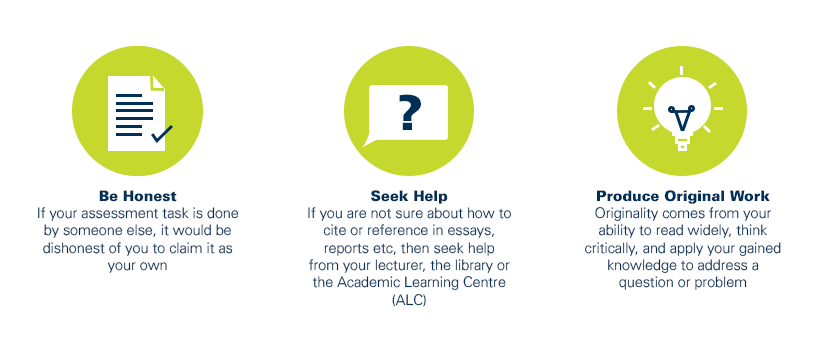
As a CQUniversity student you are expected to act honestly in all aspects of your academic work.
Any assessable work undertaken or submitted for review or assessment must be your own work. Assessable work is any type of work you do to meet the assessment requirements in the unit, including draft work submitted for review and feedback and final work to be assessed.
When you use the ideas, words or data of others in your assessment, you must thoroughly and clearly acknowledge the source of this information by using the correct referencing style for your unit. Using others’ work without proper acknowledgement may be considered a form of intellectual dishonesty.
Participating honestly, respectfully, responsibly, and fairly in your university study ensures the CQUniversity qualification you earn will be valued as a true indication of your individual academic achievement and will continue to receive the respect and recognition it deserves.
As a student, you are responsible for reading and following CQUniversity’s policies, including the Student Academic Integrity Policy and Procedure. This policy sets out CQUniversity’s expectations of you to act with integrity, examples of academic integrity breaches to avoid, the processes used to address alleged breaches of academic integrity, and potential penalties.
What is a breach of academic integrity?
A breach of academic integrity includes but is not limited to plagiarism, self-plagiarism, collusion, cheating, contract cheating, and academic misconduct. The Student Academic Integrity Policy and Procedure defines what these terms mean and gives examples.
Why is academic integrity important?
A breach of academic integrity may result in one or more penalties, including suspension or even expulsion from the University. It can also have negative implications for student visas and future enrolment at CQUniversity or elsewhere. Students who engage in contract cheating also risk being blackmailed by contract cheating services.
Where can I get assistance?
For academic advice and guidance, the Academic Learning Centre (ALC) can support you in becoming confident in completing assessments with integrity and of high standard.
What can you do to act with integrity?