Overview
This unit will provide you with a holistic approach to evaluating and maintaining animal behaviour and welfare in a variety of production animal settings. You will learn about the key concepts of animal welfare and their applications, as well as the principles of animal behaviour for a range of domestic animal species. You will develop practical and technical skills for high standards of animal welfare. You will explore regulations regarding animal welfare and develop strategies for compliance, particularly in the context of livestock production and supply chains. You will learn about the importance of animal welfare to the economic and social outputs of animal-based industries both in Australia and overseas.
Details
Pre-requisites or Co-requisites
Prerequisite: Minimum of 24 credit points.
Important note: Students enrolled in a subsequent unit who failed their pre-requisite unit, should drop the subsequent unit before the census date or within 10 working days of Fail grade notification. Students who do not drop the unit in this timeframe cannot later drop the unit without academic and financial liability. See details in the Assessment Policy and Procedure (Higher Education Coursework).
Offerings For Term 1 - 2026
Attendance Requirements
All on-campus students are expected to attend scheduled classes - in some units, these classes are identified as a mandatory (pass/fail) component and attendance is compulsory. International students, on a student visa, must maintain a full time study load and meet both attendance and academic progress requirements in each study period (satisfactory attendance for International students is defined as maintaining at least an 80% attendance record).
Recommended Student Time Commitment
Each 6-credit Undergraduate unit at CQUniversity requires an overall time commitment of an average of 12.5 hours of study per week, making a total of 150 hours for the unit.
Class Timetable
Assessment Overview
Assessment Grading
This is a graded unit: your overall grade will be calculated from the marks or grades for each assessment task, based on the relative weightings shown in the table above. You must obtain an overall mark for the unit of at least 50%, or an overall grade of 'pass' in order to pass the unit. If any 'pass/fail' tasks are shown in the table above they must also be completed successfully ('pass' grade). You must also meet any minimum mark requirements specified for a particular assessment task, as detailed in the 'assessment task' section (note that in some instances, the minimum mark for a task may be greater than 50%). Consult the University's Grades and Results Policy for more details of interim results and final grades.
All University policies are available on the CQUniversity Policy site.
You may wish to view these policies:
- Grades and Results Policy
- Assessment Policy and Procedure (Higher Education Coursework)
- Review of Grade Procedure
- Student Academic Integrity Policy and Procedure
- Academic Progression Policy and Procedure
- Student Refund and Credit Balance Policy and Procedure
- Complaints Policy and Procedure
- Information and Communications Technology Acceptable Use Policy and Procedure
This list is not an exhaustive list of all University policies. The full list of University policies are available on the CQUniversity Policy site.
Feedback, Recommendations and Responses
Every unit is reviewed for enhancement each year. At the most recent review, the following staff and student feedback items were identified and recommendations were made.
Feedback from Observation and student feedback
Placing a group assessment at the beginning of the term means that students who withdraw from the unit, which occurs more often at the start of term, cause significant disruptions to their assessment group. Group assessments should therefore be held later in the term.
Hold group assessments later in the term, preferably after census date.
Feedback from Class and SUTE feedback
Students continue to enjoy and derive great benefit from the residential school.
The residential school component for this unit should continue to be delivered, with a mix of individual and group tasks. There should continue to be an emphasis on hands-on learning.
Feedback from UC Reflections.
Conduct a major reevaluation of the learning material.
Refreshing this unit for the new iteration of AGRI12001 to have a welfare and behaviour focus will require a major revaluation of the unit's learning material. This process should begin in late 2025.
- Evaluate and explain the behaviour and welfare of animals
- Develop and implement animal welfare and safe animal handling strategies
- Critique animal welfare codes of practice and legislation
- Explain the role of animal behaviour in livestock production and husbandry practices.
Alignment of Assessment Tasks to Learning Outcomes
| Assessment Tasks | Learning Outcomes | |||
|---|---|---|---|---|
| 1 | 2 | 3 | 4 | |
| 1 - Presentation - 20% | ||||
| 2 - Practical and Written Assessment - 50% | ||||
| 3 - Written Assessment - 30% | ||||
Alignment of Graduate Attributes to Learning Outcomes
| Graduate Attributes | Learning Outcomes | |||
|---|---|---|---|---|
| 1 | 2 | 3 | 4 | |
| 1 - Communication | ||||
| 2 - Problem Solving | ||||
| 3 - Critical Thinking | ||||
| 4 - Information Literacy | ||||
| 5 - Team Work | ||||
| 6 - Information Technology Competence | ||||
| 7 - Cross Cultural Competence | ||||
| 8 - Ethical practice | ||||
| 9 - Social Innovation | ||||
| 10 - First Nations Knowledges | ||||
| 11 - Aboriginal and Torres Strait Islander Cultures | ||||
Textbooks
There are no required textbooks.
IT Resources
- CQUniversity Student Email
- Internet
- Unit Website (Moodle)
- Access to a spreadsheet program such as Excel
- PowerPoint
- Word processing software such as MS Word
All submissions for this unit must use the referencing styles below:
For further information, see the Assessment Tasks.
j.k.manning@cqu.edu.au
Week 1 Animal welfare theory
Begin Date: 09 Mar 2026Module/Topic
Animal welfare theory
Chapter
Events and Submissions/Topic
Week 2 Animal conditioning and reinforcement
Begin Date: 16 Mar 2026Module/Topic
Animal conditioning and reinforcement
Chapter
Events and Submissions/Topic
Week 3 Animal behaviour
Begin Date: 23 Mar 2026Module/Topic
Animal behaviour
Chapter
Events and Submissions/Topic
Week 4 Aberrant behaviour
Begin Date: 30 Mar 2026Module/Topic
Aberrant behaviour
Chapter
Events and Submissions/Topic
Week 5 Undertaking animal behaviour research
Begin Date: 06 Apr 2026Module/Topic
Undertaking animal behaviour research
Chapter
Events and Submissions/Topic
Week 6 Animal ethics
Begin Date: 13 Apr 2026Module/Topic
Animal ethics
Chapter
Events and Submissions/Topic
Vacation Week
Begin Date: 20 Apr 2026Module/Topic
Chapter
Events and Submissions/Topic
Week 7 Animal welfare law
Begin Date: 27 Apr 2026Module/Topic
Animal welfare law
Chapter
Events and Submissions/Topic
Week 8 Current issues case studies
Begin Date: 04 May 2026Module/Topic
Current issues case studies
Chapter
Events and Submissions/Topic
Week 9 Current issues case studies continued
Begin Date: 11 May 2026Module/Topic
Current issues case studies continued
Chapter
Events and Submissions/Topic
Week 10 Current issues case studies continued
Begin Date: 18 May 2026Module/Topic
Current issues case studies continued
Chapter
Events and Submissions/Topic
Week 11 Residential school
Begin Date: 25 May 2026Module/Topic
Residential school
Chapter
Events and Submissions/Topic
Residential school report Part A Due: Week 11 Thursday (28 May 2026) 5:00 pm AEST
Week 12 Communication
Begin Date: 01 Jun 2026Module/Topic
Communication
Chapter
Events and Submissions/Topic
Residential school report Part B Due: Week 12 Friday (5 June 2026) 5:00 pm AEST
Exam Week
Begin Date: 08 Jun 2026Module/Topic
Chapter
Events and Submissions/Topic
Vacation/Exam Week
Begin Date: 15 Jun 2026Module/Topic
Chapter
Events and Submissions/Topic
1 Presentation
This assessment has two parts:
Part A – Group recorded presentation (15%)
Develop a training plan and behaviour trial to support the implementation of an enrichment item. This will include outlining the training phase and the methods used for animal behaviour observations, monitoring and data collection.
You will be assigned a group and an enrichment item to implement and evaluate in your behaviour trial. With the aid of a powerpoint presentation, you prepare and record a 10 minute presentation that addresses:
- Overview of the enrichment item
- Introduction to your trial design including training and behaviour observation phases
- Discussion of the research question to investigate
- The considerations relevant to the trial design including data collection and analysis
Individually, each group member will be required to present one slide on their own limitation of the trial design.
This training plan and behaviour trial will then be undertaken during your residential school.
Part B – Peer evaluation (5%)
After Part A - Group presentation, you will evaluate your assigned partner/s based on their:
- Attendance to group meetings
- Contribution to the fair share of the work
- Completion of the work on time and accurately
- Dependability
The peer evaluation will be available on Moodle.
Level of GenAI use allowed:
Level 3: You may use Al to assist with specific tasks such as drafting text, refining and evaluating your work. You must critically evaluate and modify any Al-generated content you use.
Week 6 Tuesday (14 Apr 2026) 5:00 pm AEST
Both Part A and Part B are DUE Week 6
Week 7 Tuesday (28 Apr 2026)
Grades will be returned within 14 working days of submission.
Part A - Group recorded presentation will be assessed on:
- Clear introduction to the novel enrichment item and its purpose
- Explanation of the trial design, including the training phase and behaviour monitoring methods
- Clear articulation and discussion of the behaviour research question
- Appropriate use and interpretation of animal behaviour observations to evaluate the enrichment item
- Discussion of limitations and considerations impacting the trial design, implementation, or outcomes
- Adherence to the 10 minute time frame
- Overall presentation quality, including clarity, structure, and effective use of slides
- Presence of all group members in the recording
- Use of appropriate referencing where required
Part B - Peer evaluation will be assessed on their team member's:
- Attendance to group meetings
- Contribution to the fair share of the work
- Completion of the work on time and accurately
- Dependability
Further details and marking rubrics will be available on the Moodle page.
- Explain the role of animal behaviour in livestock production and husbandry practices.
2 Written Assessment
Critique animal welfare codes of practice and legislation by drawing upon peer-reviewed journal articles, government documents, legislation, industry reports and news media from reputable sources. You will be provided with five statements based on animal welfare issues on Moodle to critique and write a statement for each to a maximum word count of 400 words (2,000 words in total for the five statements).
Level of GenAI use allowed:
Level 3: You may use Al to assist with specific tasks such as drafting text, refining and evaluating your work. You must critically evaluate and modify any Al-generated content you use.
Week 9 Friday (15 May 2026) 5:00 pm AEST
Week 11 Friday (29 May 2026)
Grades will be returned within 14 working days of submission.
You will be assessed on:
- Your understanding and analysis of animal welfare codes of practice and legislation
- Your use of scientific, sociological, economic, political and other evidence to support your position
- Your adherence to the word count (within allowable 10% leeway)
- Clear and understandable writing
- Consistent and relevant referencing
- Any formatting with regards to figures, table and graphs, including clear captions
- Your ability to draw on a variety of resources, mostly from peer-reviewed academic journal articles, government documents and industry publications to support your claims
- Critique animal welfare codes of practice and legislation
3 Practical and Written Assessment
This assessment has two parts:
Part A – Residential school test (20%)
You will be required to complete a written test during the first session of the Residential School in Week 11. The test will consist of 30 questions that are a mixture of multiple choice and short answer questions. The test will be based on material covered in Weeks 1 to 10, related to the Residential School.
Part B – Practical attendance and report (30%)
You must successfully attend the AGRI12001 Residential School in Week 11, and complete the practical booklet report.
The 72 hour grace period does not apply to this assessment.
Level of GenAI use allowed:
Level 3: You may use Al to assist with specific tasks such as drafting text, refining and evaluating your work. You must critically evaluate and modify any Al-generated content you use.
Part A will be completed on the first day of the residential school (Thursday 28 May, 2026). Part B will be completed during the residential school and due Friday 5 June, 2026 5:00 pm AEST
Vacation/Exam Week Friday (19 June 2026)
Grades will be returned within 14 working days of submission.
You will be assessed on:
- Your knowledge of concepts in weeks 1 to 10
- Your attendance at the residential school
- Your successful completion of all practical tasks associated with the residential school
- Your understanding of animal welfare issues
- Your adherence to the word count
- Clear and understandable writing
- Consistent and relevant referencing
- Any formatting with regards to figures, table and graphs, including clear captions
- Evaluate and explain the behaviour and welfare of animals
- Develop and implement animal welfare and safe animal handling strategies
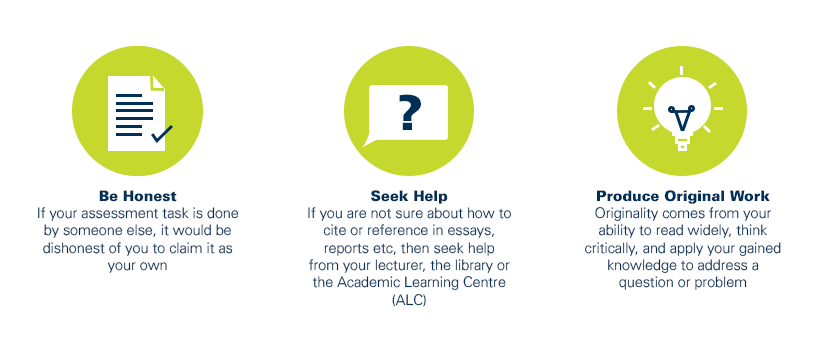
As a CQUniversity student you are expected to act honestly in all aspects of your academic work.
Any assessable work undertaken or submitted for review or assessment must be your own work. Assessable work is any type of work you do to meet the assessment requirements in the unit, including draft work submitted for review and feedback and final work to be assessed.
When you use the ideas, words or data of others in your assessment, you must thoroughly and clearly acknowledge the source of this information by using the correct referencing style for your unit. Using others’ work without proper acknowledgement may be considered a form of intellectual dishonesty.
Participating honestly, respectfully, responsibly, and fairly in your university study ensures the CQUniversity qualification you earn will be valued as a true indication of your individual academic achievement and will continue to receive the respect and recognition it deserves.
As a student, you are responsible for reading and following CQUniversity’s policies, including the Student Academic Integrity Policy and Procedure. This policy sets out CQUniversity’s expectations of you to act with integrity, examples of academic integrity breaches to avoid, the processes used to address alleged breaches of academic integrity, and potential penalties.
What is a breach of academic integrity?
A breach of academic integrity includes but is not limited to plagiarism, self-plagiarism, collusion, cheating, contract cheating, and academic misconduct. The Student Academic Integrity Policy and Procedure defines what these terms mean and gives examples.
Why is academic integrity important?
A breach of academic integrity may result in one or more penalties, including suspension or even expulsion from the University. It can also have negative implications for student visas and future enrolment at CQUniversity or elsewhere. Students who engage in contract cheating also risk being blackmailed by contract cheating services.
Where can I get assistance?
For academic advice and guidance, the Academic Learning Centre (ALC) can support you in becoming confident in completing assessments with integrity and of high standard.
What can you do to act with integrity?