Overview
This unit will introduce you to agricultural production systems, historical agricultural production methods including Indigenous agriculture, and the development of modern agricultural systems. You will learn the characteristics of important livestock, cropping and horticultural industries in Australia and discuss the economic, social and environmental sustainability of these systems. You will enhance your understanding of the pressure placed on the physical and biological resources upon which agricultural production depends. You will examine the impact of agricultural practices on the economics of primary production and on the environmental and social fabric of rural and urban communities. You will also explore the concept of agricultural production systems as managed ecosystems, and analyse the principles of ecosystems in natural and managed systems.
Details
Pre-requisites or Co-requisites
There are no requisites for this unit.
Important note: Students enrolled in a subsequent unit who failed their pre-requisite unit, should drop the subsequent unit before the census date or within 10 working days of Fail grade notification. Students who do not drop the unit in this timeframe cannot later drop the unit without academic and financial liability. See details in the Assessment Policy and Procedure (Higher Education Coursework).
Offerings For Term 1 - 2026
Attendance Requirements
All on-campus students are expected to attend scheduled classes - in some units, these classes are identified as a mandatory (pass/fail) component and attendance is compulsory. International students, on a student visa, must maintain a full time study load and meet both attendance and academic progress requirements in each study period (satisfactory attendance for International students is defined as maintaining at least an 80% attendance record).
Recommended Student Time Commitment
Each 6-credit Undergraduate unit at CQUniversity requires an overall time commitment of an average of 12.5 hours of study per week, making a total of 150 hours for the unit.
Class Timetable
Assessment Overview
Assessment Grading
This is a graded unit: your overall grade will be calculated from the marks or grades for each assessment task, based on the relative weightings shown in the table above. You must obtain an overall mark for the unit of at least 50%, or an overall grade of 'pass' in order to pass the unit. If any 'pass/fail' tasks are shown in the table above they must also be completed successfully ('pass' grade). You must also meet any minimum mark requirements specified for a particular assessment task, as detailed in the 'assessment task' section (note that in some instances, the minimum mark for a task may be greater than 50%). Consult the University's Grades and Results Policy for more details of interim results and final grades.
All University policies are available on the CQUniversity Policy site.
You may wish to view these policies:
- Grades and Results Policy
- Assessment Policy and Procedure (Higher Education Coursework)
- Review of Grade Procedure
- Student Academic Integrity Policy and Procedure
- Academic Progression Policy and Procedure
- Student Refund and Credit Balance Policy and Procedure
- Complaints Policy and Procedure
- Information and Communications Technology Acceptable Use Policy and Procedure
This list is not an exhaustive list of all University policies. The full list of University policies are available on the CQUniversity Policy site.
Feedback, Recommendations and Responses
Every unit is reviewed for enhancement each year. At the most recent review, the following staff and student feedback items were identified and recommendations were made.
Feedback from SUTE and self-reflection
Assessment data had no discernible trends and were difficult to analyse.
All assessments for this unit will be reviewed before the next offering.
Feedback from Self-reflection
Students generally welcomed and engaged guest speakers who contributed to the unit during the term.
Continue to invite guest speakers to speak and engage with students on particular topics of interest.
- Describe major agriculture production systems in Australia
- Explain the factors that have led to changes in agricultural production systems throughout history
- Explore the impact of key changes in the development of modern farming practices on the ecology of natural and agricultural systems
- Identify the concepts of social, economic and environmental sustainability in agricultural production
- Develop and review agricultural management strategies to address natural resource issues.
Alignment of Assessment Tasks to Learning Outcomes
| Assessment Tasks | Learning Outcomes | ||||
|---|---|---|---|---|---|
| 1 | 2 | 3 | 4 | 5 | |
| 1 - Group Discussion - 10% | |||||
| 2 - Written Assessment - 40% | |||||
| 3 - Written Assessment - 50% | |||||
Alignment of Graduate Attributes to Learning Outcomes
| Graduate Attributes | Learning Outcomes | ||||
|---|---|---|---|---|---|
| 1 | 2 | 3 | 4 | 5 | |
| 1 - Communication | |||||
| 2 - Problem Solving | |||||
| 3 - Critical Thinking | |||||
| 4 - Information Literacy | |||||
| 5 - Team Work | |||||
| 6 - Information Technology Competence | |||||
| 7 - Cross Cultural Competence | |||||
| 8 - Ethical practice | |||||
| 9 - Social Innovation | |||||
| 10 - First Nations Knowledges | |||||
| 11 - Aboriginal and Torres Strait Islander Cultures | |||||
Textbooks
There are no required textbooks.
Additional Textbook Information
Not applicable
IT Resources
- CQUniversity Student Email
- Internet
- Unit Website (Moodle)
- Zoom
All submissions for this unit must use the referencing style: Harvard (author-date)
For further information, see the Assessment Tasks.
r.koech@cqu.edu.au
Week 1
Begin Date: 09 Mar 2026Module/Topic
Introduction to Agricultural Systems
Chapter
Reading and other supporting materials will be provided on the Moodle site each week.
Events and Submissions/Topic
Week 2
Begin Date: 16 Mar 2026Module/Topic
The History of Agriculture
Chapter
Events and Submissions/Topic
Week 3
Begin Date: 23 Mar 2026Module/Topic
Farming Systems and Styles
Chapter
Events and Submissions/Topic
Week 4
Begin Date: 30 Mar 2026Module/Topic
Plant Production Systems
Chapter
Events and Submissions/Topic
Week 5
Begin Date: 06 Apr 2026Module/Topic
Livestock Production Systems
Chapter
Events and Submissions/Topic
Week 6
Begin Date: 13 Apr 2026Module/Topic
Natural and Agricultural Ecosystems
Chapter
Events and Submissions/Topic
Vacation Week
Begin Date: 20 Apr 2026Module/Topic
Chapter
Events and Submissions/Topic
Week 7
Begin Date: 27 Apr 2026Module/Topic
Sustainable Agriculture
Chapter
Events and Submissions/Topic
Week 8
Begin Date: 04 May 2026Module/Topic
Agricultural Technology
Chapter
Events and Submissions/Topic
Week 9
Begin Date: 11 May 2026Module/Topic
Current Challenges in Agriculture
Chapter
Events and Submissions/Topic
Week 10
Begin Date: 18 May 2026Module/Topic
Adaptation and Mitigation Strategies
Chapter
Events and Submissions/Topic
Week 11
Begin Date: 25 May 2026Module/Topic
The Social Dimensions of Sustainable Agriculture
Chapter
Events and Submissions/Topic
Week 12
Begin Date: 01 Jun 2026Module/Topic
Integration of Concepts and Revision
Chapter
Events and Submissions/Topic
Exam Week
Begin Date: 08 Jun 2026Module/Topic
Chapter
Events and Submissions/Topic
Vacation/Exam Week
Begin Date: 15 Jun 2026Module/Topic
Chapter
Events and Submissions/Topic
1 Group Discussion
This assessment requires you to participate in online group discussions during Weeks 1 to 4 of the term. These discussions will focus on the major agricultural systems in Australia and the key factors that have contributed to their changes throughout history. A Discussion Board will be set up on Moodle for this task.
The Unit Coordinator will post the weekly discussion topic or question on the Discussion Board each Monday. You are required to contribute to the discussion by Friday of that week. You must respond to the topic or question posed by the Unit Coordinator and also politely or respectfully comment at least once (agreeing or disagreeing) on what other students have posted. Each student must therefore make a minimum of two (2) posts per week, resulting in a total of eight (8) posts over the four‑week period.
The word limit for each post is 200 words (±10%).
Level of GenAI use allowed:
Level 2: You may use Al for planning, idea development, and research. Your final submission should show how you have developed and refined these ideas.
Week 4 Friday (3 Apr 2026) 11:45 pm AEST
Week 6 Friday (17 Apr 2026)
- A minimum of two (2) posts per week, resulting in a total of eight (8) posts over the four-week period, must be submitted on the Moodle Discussion Board
- Each post is 200±10% words long
- Discussion is relevant to the question asked or weekly topic of discussion
- Your discussion displays a good understanding of the changes that have occurred in the Australian agriculture and the factors that have caused them
Further details and the marking rubric will be available on the Moodle page.
- Describe major agriculture production systems in Australia
- Explain the factors that have led to changes in agricultural production systems throughout history
2 Written Assessment
In this assessment, you will prepare a report that compares farming systems and styles in relation to their productivity and sustainability. You will be provided with farm survey data from two different farming systems (conventional and organic). You will analyse the data and present the results in graphs. You will then discuss the observed trends in relation to potential economic (productivity) and ecological consequences (sustainability).
Your report will have 1500 (±10%) words with the following suggested structure:
- Title (not included in the word count).
- Introduction of the farming systems evaluated (~300 words).
- Methods: Describe the data provided. Explain how you analysed the data. (~300 words)
- Results: Describe the main findings and include at least two graphs that compare the yield data for corn and soybean grown under conventional and organic production systems (~300 words).
- Discussion: Interpret the results, including economic and ecological consequences (~500 words).
- Concluding remark (~100 words).
- References (not included in the word count). A minimum of 5 relevant references are required.
Level of GenAI use allowed:
Level 2: You may use Al for planning, idea development, and research. Your final submission should show how you have developed and refined these ideas.
Week 8 Friday (8 May 2026) 11:45 pm AEST
Week 10 Friday (22 May 2026)
- Ability to correctly analyse, interpret and present data.
- Knowledge of different farming systems and styles and sustainability concepts
- Ability to draw information from scientific literature
- Professional presentation of the report including referencing and grammar/spelling.
- Number of words: (1500±10%).
- Describe major agriculture production systems in Australia
- Explain the factors that have led to changes in agricultural production systems throughout history
- Explore the impact of key changes in the development of modern farming practices on the ecology of natural and agricultural systems
- Identify the concepts of social, economic and environmental sustainability in agricultural production
3 Written Assessment
In this assessment, each student will be allocated a weather station number linked to the Australian Bureau of Meteorology (BOM). You will use the BOM website (http://www.bom.gov.au/), Climate Data online (http://www.bom.gov.au/climate/data/index.shtml), to find the weather station. Using your allocated weather station number, download the monthly rainfall and the mean (average) maximum temperature data covering the last 65 years (1960-2025). You are then required to:
- Produce the rainfall and temperature time-series graphs using the data you have downloaded for your allocated weather station. The rainfall and temperature time-series graphs should be presented as anomalies or departures from the long-term averages. Use the full 65-year dataset to calculate the long-term averages.
- Use the graphs to describe the annual weather patterns and trends for the area.
- Research the agricultural production enterprises or systems (e.g. crops or livestock) common to the area and explain why they (the enterprises) are suitable for the area.
- Propose potential strategies for mitigation of climate change and variability for the enterprises in the area taking into account ecological, economic and social considerations.
You will present your results in the form of a report of 2000 (±10%) words. You may use the following suggested structure:
- Title (not included in the word count).
- Introduction (about 300 words). Highlight the key purpose/aim/objective of the report. Briefly describe the area or location around your allocated weather station. Insert a map showing the location of the weather station (you can use Google Maps, Google Earth, Queensland Globe, or similar programs).
- Weather patterns and trends (about 500 words). Present at least two graphs (average monthly rainfall and average maximum temperature time-series graphs presented as anomalies, covering the last 65 years). Describe the annual weather patterns and trends using the graphs you have produced.
- Agricultural production enterprises of systems common in the area (about 500 words). Explain why these enterprises are suitable for the area.
- Strategies for mitigation and/or adaptation of climate change and variability (about 500 words). With reference to the agricultural enterprises or systems common in the area, describe the methods or approaches that can be used to mitigate or adapt to climate change and climate variability. Briefly discuss the ecological, economic and social impacts of your proposed strategies.
- Conclusion (about 200 words). Summarise the key highlights or findings contained in your report.
- References (not included in the word count). Minimum of 10 relevant references are required.
Further details (e.g. your allocated weather station number) and the marking rubric will be available on the Moodle site.
Level of GenAI use allowed:
Level 2: You may use Al for planning, idea development, and research. Your final submission should show how you have developed and refined these ideas.
Exam Week Monday (8 June 2026) 11:45 pm AEST
Assessments shall be returned within 10 working days after the due date.
- Ability to search and analyse raw data in order to identify patterns and trends and extract useful information.
- Knowledge of agricultural production systems.
- Knowledge of mitigation concepts related to climate change and variability.
- Understanding of the impacts of agricultural practices on the ecology of natural and agricultural systems.
- Understanding social, economic, and environmental sustainability concepts in agricultural production.
- Ability to draw information from the scientific literature.
- Professional presentation including correct referencing and keeping to word limit.
- Explore the impact of key changes in the development of modern farming practices on the ecology of natural and agricultural systems
- Identify the concepts of social, economic and environmental sustainability in agricultural production
- Develop and review agricultural management strategies to address natural resource issues.
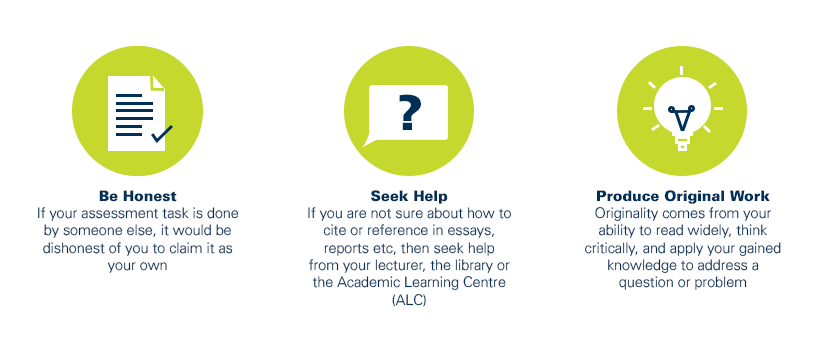
As a CQUniversity student you are expected to act honestly in all aspects of your academic work.
Any assessable work undertaken or submitted for review or assessment must be your own work. Assessable work is any type of work you do to meet the assessment requirements in the unit, including draft work submitted for review and feedback and final work to be assessed.
When you use the ideas, words or data of others in your assessment, you must thoroughly and clearly acknowledge the source of this information by using the correct referencing style for your unit. Using others’ work without proper acknowledgement may be considered a form of intellectual dishonesty.
Participating honestly, respectfully, responsibly, and fairly in your university study ensures the CQUniversity qualification you earn will be valued as a true indication of your individual academic achievement and will continue to receive the respect and recognition it deserves.
As a student, you are responsible for reading and following CQUniversity’s policies, including the Student Academic Integrity Policy and Procedure. This policy sets out CQUniversity’s expectations of you to act with integrity, examples of academic integrity breaches to avoid, the processes used to address alleged breaches of academic integrity, and potential penalties.
What is a breach of academic integrity?
A breach of academic integrity includes but is not limited to plagiarism, self-plagiarism, collusion, cheating, contract cheating, and academic misconduct. The Student Academic Integrity Policy and Procedure defines what these terms mean and gives examples.
Why is academic integrity important?
A breach of academic integrity may result in one or more penalties, including suspension or even expulsion from the University. It can also have negative implications for student visas and future enrolment at CQUniversity or elsewhere. Students who engage in contract cheating also risk being blackmailed by contract cheating services.
Where can I get assistance?
For academic advice and guidance, the Academic Learning Centre (ALC) can support you in becoming confident in completing assessments with integrity and of high standard.
What can you do to act with integrity?